
Tariffs on Kitchen Cabinets from China Import Guide
Sourcing custom cabinetry directly from China offers significant cost efficiency for multi-family residential developments, custom residential runs, and commercial interior fit-outs. However, many overseas contractors, builders, and developers hesitate when facing customs duties and international logistics.
If you are planning an overseas casework order, you likely have three straightforward questions: Will I have to pay tariff on kitchen cabinets from China? Are kitchen cabinets made in China subject to tariff rules that wipe out my project savings? And ultimately, where to buy kitchen cabinets made in China without risking container delays or compliance surprises? This guide breaks down current tariff frameworks, container logistics economics, hidden destination expenses, and direct factory procurement models to keep your project fully protected.
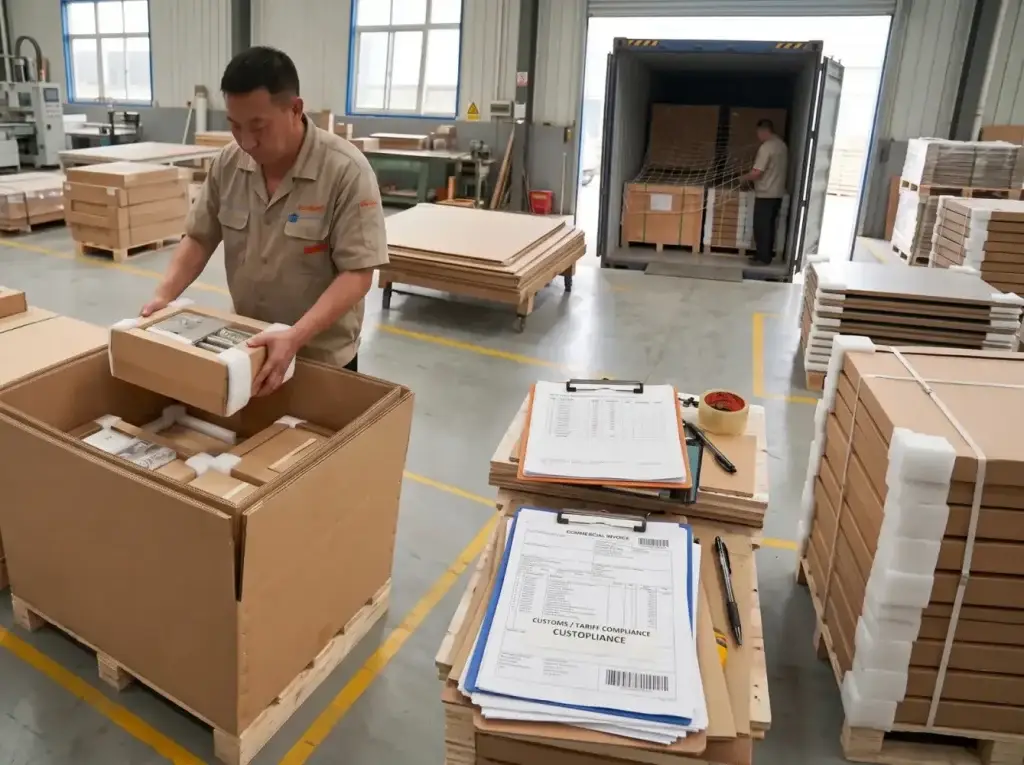
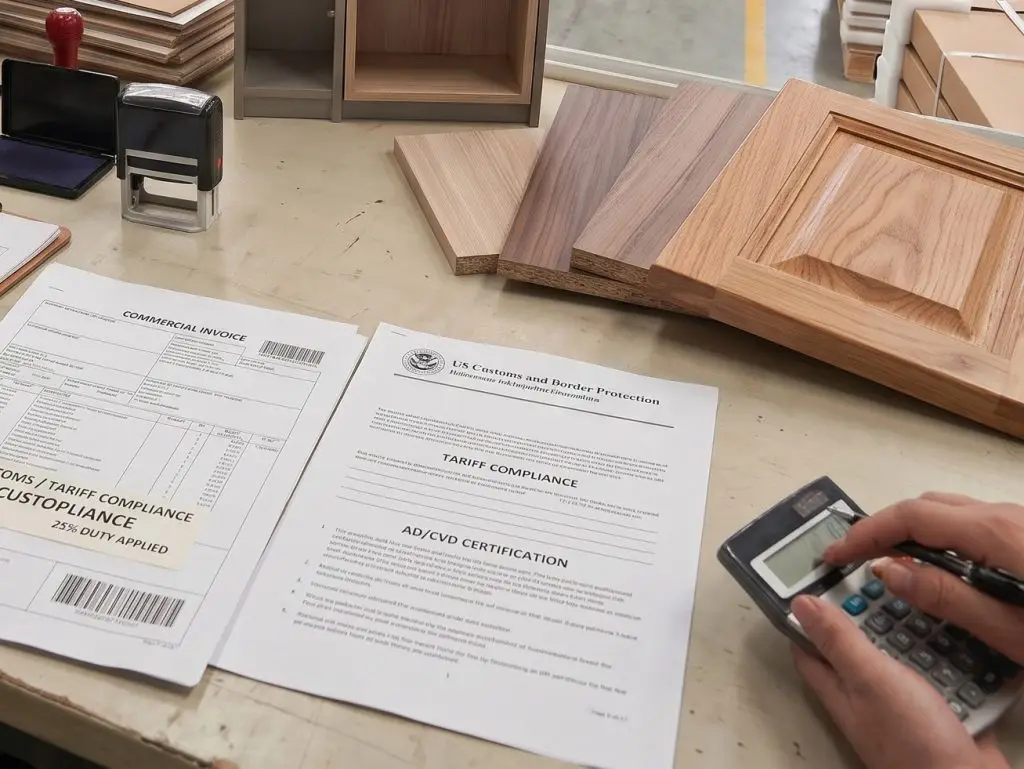
Are Kitchen Cabinets Made in China Subject to Tariff
Yes, wooden cabinetry, vanity casework, and custom millwork manufactured in China and exported to the United States are subject to customs duties and regulatory trade tariffs under established trade codes.
Most wooden cabinetry units imported into the US fall under Harmonized Tariff Schedule (HTS) heading 9403. Under Section 301 trade remedies, these products are subject to additional ad valorem tariffs (typically 25%) above the baseline general duty rate. The exact rate applied depends on product classification, material substrate ratios (such as solid timber vs. engineered plywood or MDF cores), and verifiable mill-of-origin documentation.
Additionally, the U.S. Department of Commerce and International Trade Commission maintain Anti-Dumping (AD) and Countervailing Duties (CVD) on certain wooden cabinets and vanities from China to protect domestic manufacturing against subsidized pricing. Because individual factory rates differ and depend on administrative rulings, commercial buyers should never self-declare or speculate. Safe, cost-effective importing requires working with verified export manufacturers who understand US compliance standards and collaborate directly with licensed customs brokers.
Ocean Freight and Container Pricing Mechanics
Ocean shipping represents a primary variable in your total procurement budget. Container pricing is not static; it fluctuates based on global trade volume, seasonal cycles, and destination discharge ports.
Direct West Coast shipping routes (such as Los Angeles or Long Beach) require shorter transit windows and lower baseline ocean rates than East Coast discharge ports (like New York or Savannah) or inland rail transfers (such as Chicago or Dallas). Furthermore, shipping schedules during the pre-holiday shipping surge in autumn or the pre-Chinese New Year factory rush carry peak season surcharges and general rate increases across container carriers.
Packaging configuration directly impacts your landed cost per unit. Flat-pack (knock-down/RTA) casework packaging allows up to 2.5 times more cabinet volume inside a standard 40-foot high-cube (40HQ) container compared to fully pre-assembled units. For large-scale residential developments or hotel fit-outs, flat-pack engineering dramatically slashes the freight share per room, protecting your bottom-line savings.
Hidden Landing Expenses Every Contractor Must Account For
Focusing exclusively on the factory FOB or EXW price creates unexpected budget overruns. Inexperienced buyers frequently overlook port-side processing and job-site drayage fees:
ISF and Customs Entry Filing: The Importer Security Filing (10+2) must be transmitted to US Customs at least 48 hours before vessel departure to avoid steep administrative fines.
Terminal Handling and Harbor Maintenance: Port facilities assess container crane moves, terminal handling charges (THC), and regulatory clean truck fees at destination.
Demurrage and Container Detention: If container retrieval, clearance, or empty box return exceeds contracted free-time days, carriers levy substantial daily detention fees.
Inland Drayage Trucking: Hauling containers via heavy-duty chassis from marine terminals to your job site requires pre-arranged trucking carriers familiar with residential or commercial job-site logistics.
Job-Site Staging and Offloading: Offloading standard containers requires proper site equipment, including forklifts, loading ramps, and dedicated receiving labor on delivery day.
Where to Buy Kitchen Cabinets Made in China Safely
Securing reliable casework requires bypassing trading middlemen who lack real manufacturing facilities or technical drafting staff. Sourcing directly from an established B2B manufacturer ensures engineering precision, full compliance, and predictable delivery schedules.
A qualified manufacturing partner should provide dedicated bilingual drafting engineers who translate your architectural blueprints into millimeter-accurate shop drawings before material is cut learn more about our Custom Cabinet Design Process. Ensure the factory utilizes certified, low-emission substrates that strictly comply with EPA TSCA Title VI and CARB-2 environmental regulations.
Finally, choose a manufacturer with proven DDP (Delivered Duty Paid) fulfillment channels. Under DDP terms, the factory manages the entire supply chain: production, export documentation, ocean transport, customs broker clearance, tariff disbursement, and job-site unloading. You receive an all-inclusive landed quote with zero surprise invoices upon delivery.
Secure Your Project Margins With Transparent Landed Pricing
Tariffs and ocean freight do not negate the bottom-line advantage of sourcing casework from China—provided your numbers are planned and locked in upfront. By pairing factory-direct volume pricing with a verified DDP logistics model, commercial builders and developers achieve architectural-grade millwork while significantly improving project profitability.
Take the Guesswork Out of Your Next Casework Run
Are you evaluating an upcoming multi-family build, hotel renovation, or custom residential project? Don’t let tariff confusion delay your schedule.
Upload Your Floor Plans or Architectural Blueprints: Our in-house technical drafting team will review your space, optimize your cabinet floor plan, and prepare production-ready shop drawings.
Receive an Itemized DDP Landed Quote: We calculate the exact factory production cost, Section 301 tariffs, ocean freight, and direct job-site delivery in a single transparent estimate with zero hidden surprises.