
This design and engineering analysis details the physical properties, grain integration, and colorimetric calibration formulas required to implement a zero-deflection white kitchen cabinet network across wide-span residential projects. Standard factory-painted white millwork frequently suffers from chemical yellowing under localized UV exposure, micro-fissures along solid wood joint boundaries, and light-refraction distortion inside high-ceiling architectures. To bypass these limitations, our manufacturing process shifts to a specialized multi-tier opaque conversion varnish matched with a stable engineered core matrix. This structural assembly maintains stable line continuity and accurate tone profiling across all white kitchen cabinet doors, preserving the tight geometric alignment demanded by North American luxury home builders.
Advanced Architectural Layouts and Core Material Engineering
Specifying large-scale cabinetry within high-volume open environments requires managing both moisture-driven wood cells and room light behavior. When selecting white kitchen paint colors for premium projects, standard lumber will shift along its tangential plane as relative humidity changes. This micro-movement instantly ruins the alignment of full-overlay doors. Controlling this dimensional stress requires selecting optimized wood species and applying specialized structural coatings.
Color Uniformity in White on White Kitchen Paint Colors
To deliver high color continuity in multi-zone layouts featuring white on white kitchen paint colors, our paint line utilizes non-yellowing, aliphatic polyurethane coatings. Traditional paints react with grease and ambient solar rays, which causes localized yellowing near cooking zones. Our specialized coating chemistry features embedded light-absorbing blockers that stop surface chemical breakdown. This technique guarantees that the clean, crisp profiles of white kitchens retain their exact color balance across decades of continuous residential service.
Density Controls in Painted White Kitchen Cupboards
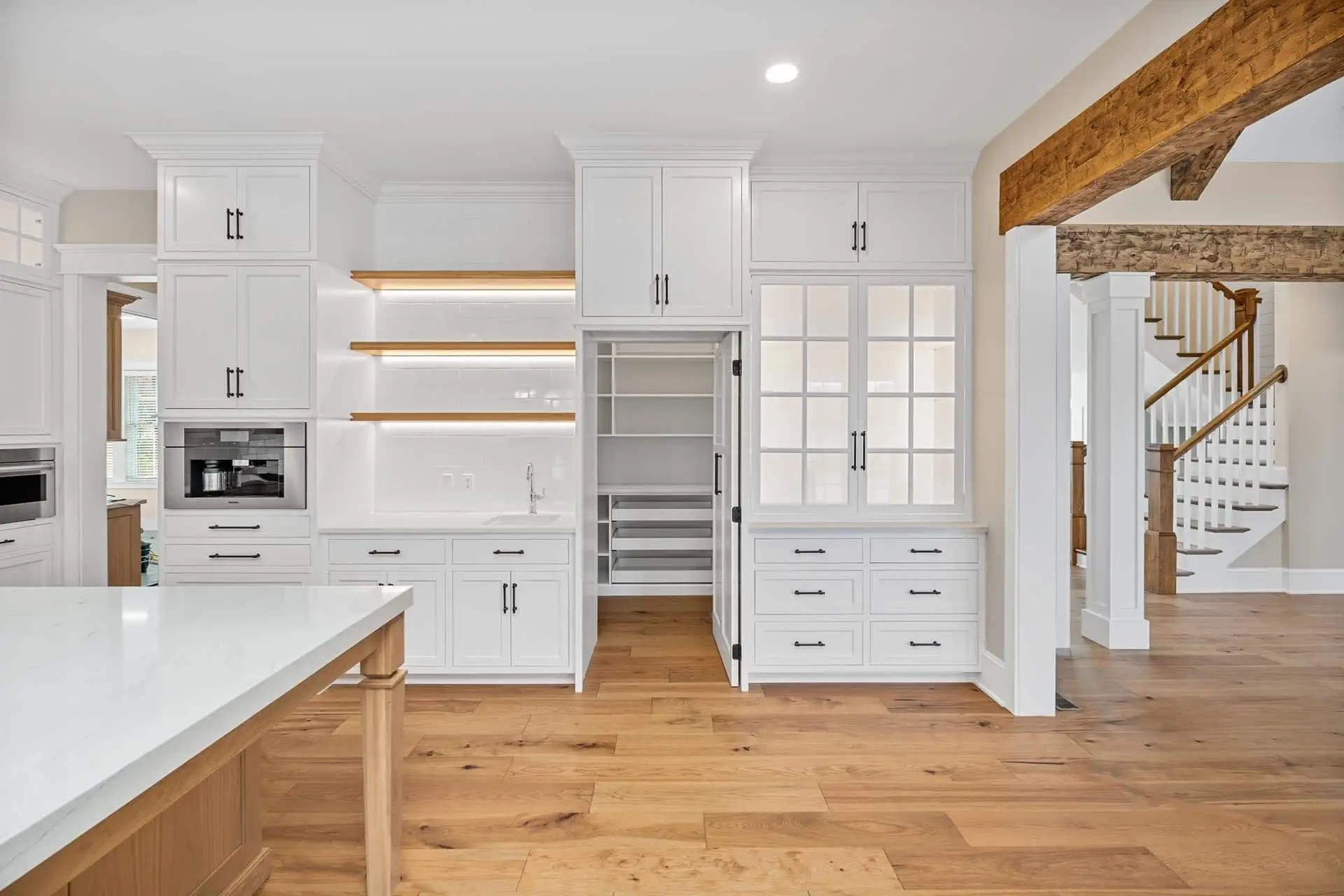
Perimeter wall storage lines and upper display cases built as painted white kitchen cupboards leverage premium high-density fiberboard (HDF) substrates for painted surfaces. Solid hardwood panels often shrink and swell inside their slots, leaving unpainted wood lines exposed at the frame joints. Using an isotropic, non-directional HDF core completely stops joint checking and panel movement. This provides a flat, stable face for painting kitchen cabinets white, preventing moisture from creeping into the wood seams.
Joint Stability in White Shaker Kitchen Cabinets
Standard cope-and-stick joints can show fine seam separations over time as temperature levels shift. To ensure clean lines on our white shaker kitchen cabinets, each perimeter frame is assembled using a precision 45-degree mitered mortise-and-tenon connection. This system increases the surface area available for structural glue binding along the corner seams. Reinforced with cross-linked adhesives, our shaker white kitchen cabinets stay perfectly square, eliminating sagging risks on tall utility doors.
Factory Coating Controls and the Best White Paint for Kitchen Cabinets
Achieving a smooth, flat finish on a white cabinet kitchen depends on strict factory environmental controls. Our automated finish loop sprays the best white paint for kitchen cabinets inside a cleanroom to keep dust out of the wet varnish layer. The multi-stage paint cycle includes two coats of high-fill sandable primer, followed by two topcoats of post-catalyzed conversion varnish. This application path delivers an impact-resistant shell, securing a Category 5 AWI durability rating for premium kitchen white cabinets installations.
Spatial Integration and Material Contrasts
Designing Balanced Profiles with a White Kitchen with Wood Island Layout
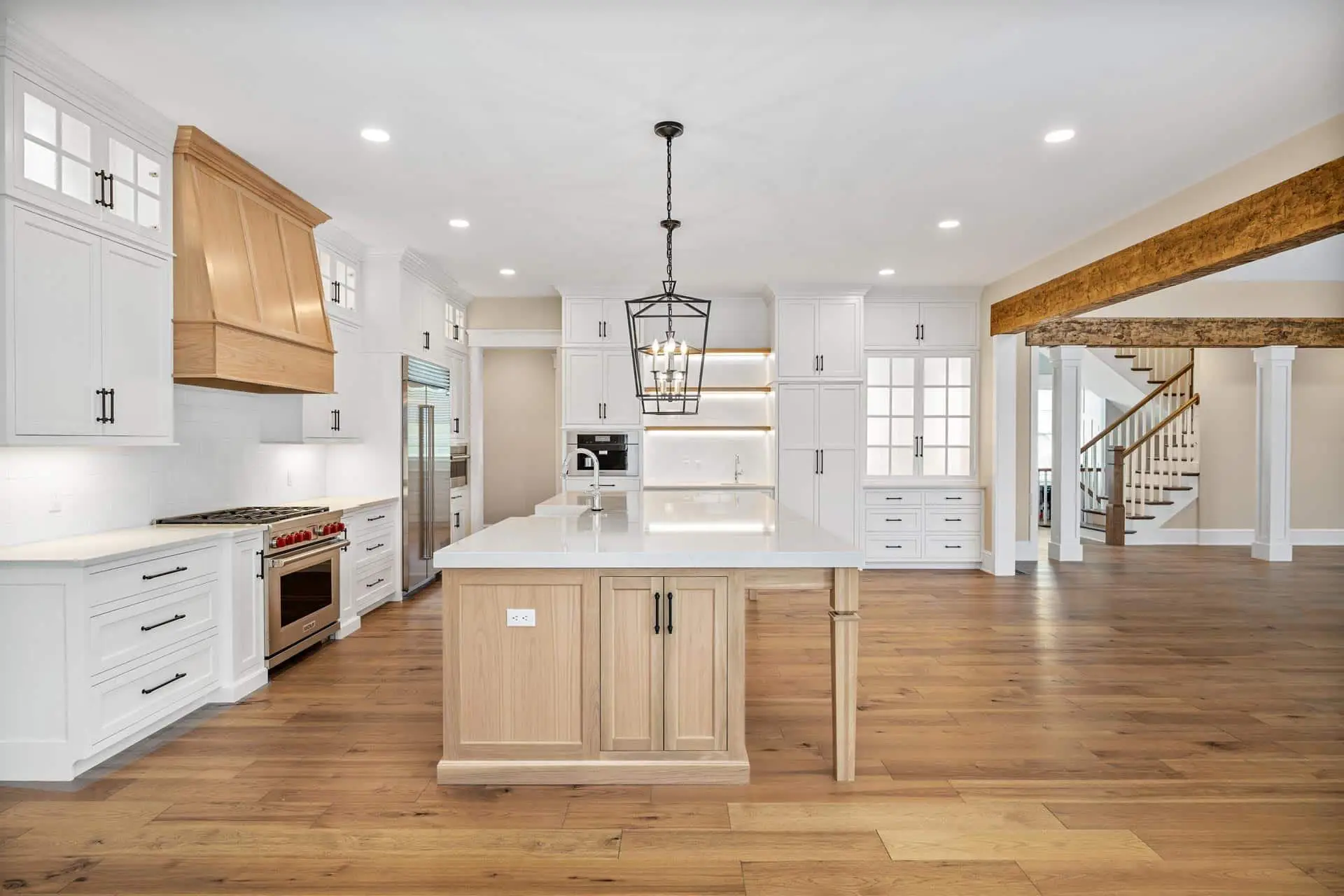
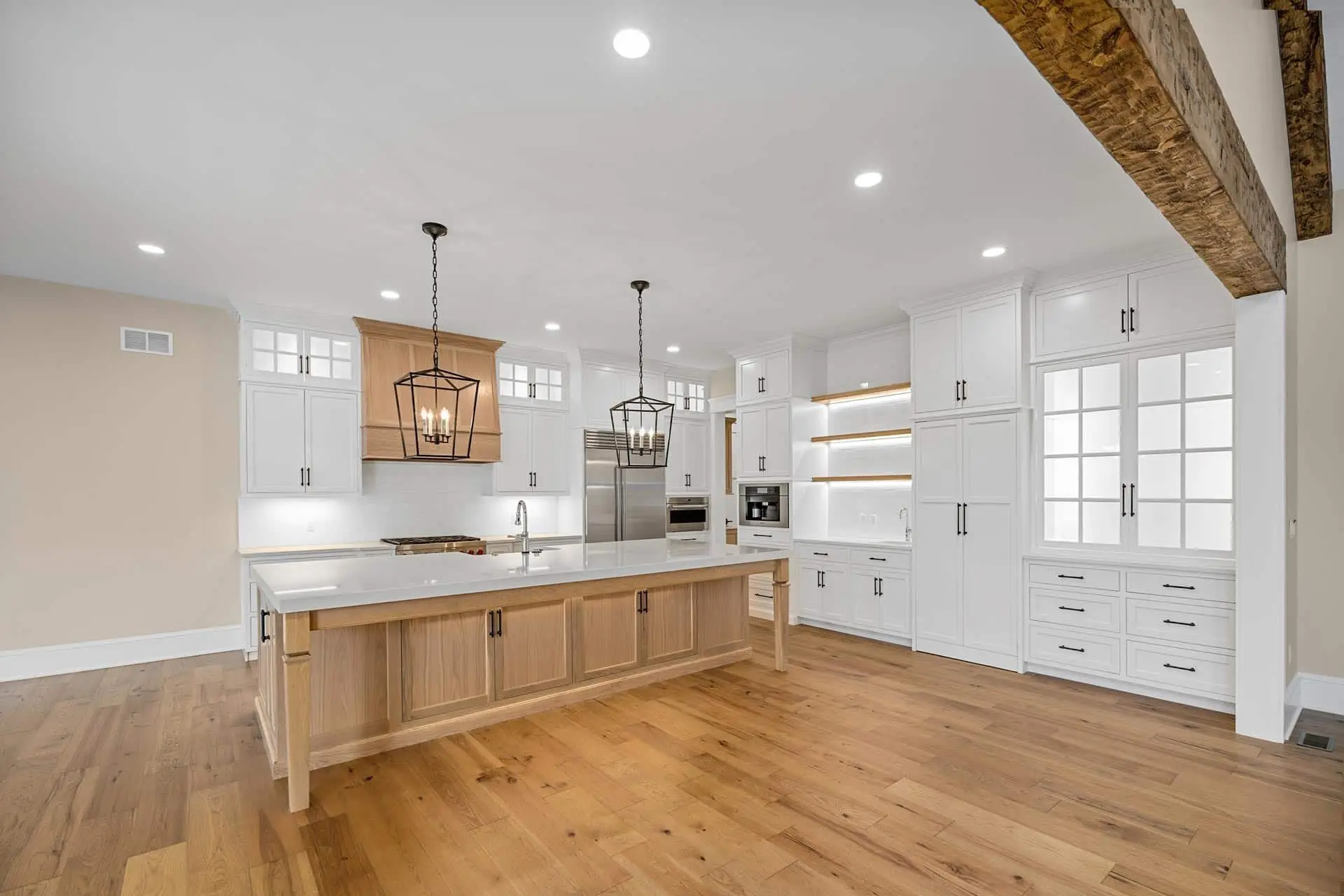
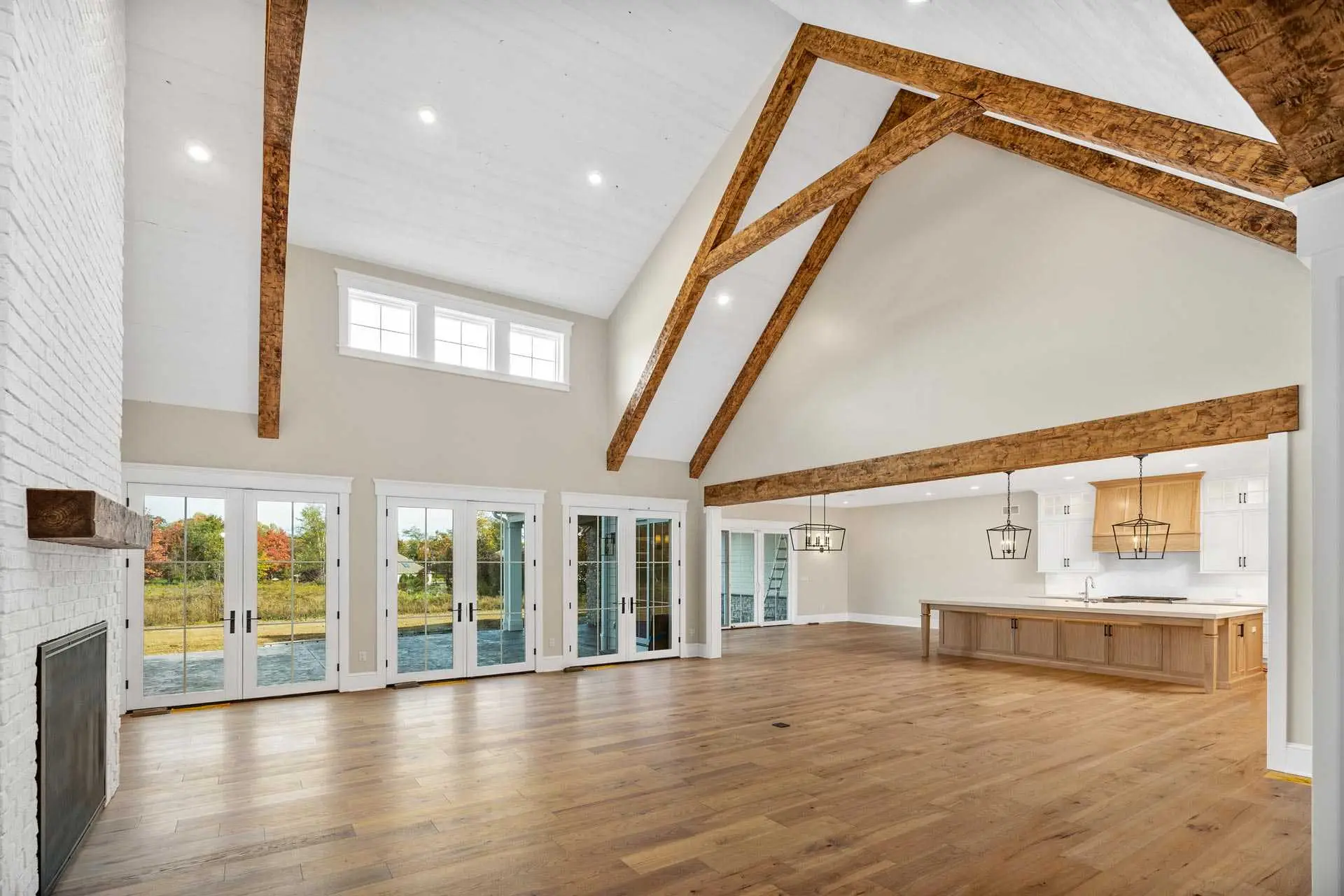
In open-concept architectural floor plans, implementing a white kitchen with wood island configuration prevents the space from feeling too clinical. The light-reflective perimeter white cabinets kitchen towers lift the room’s boundary lines, while a central island built from rift-sawn white oak adds natural grain texture. This design strategy anchors the center of the kitchen, combining clean, crisp painted cabinetry with the organic warmth of natural wood grain.
Coordinated Visual Flow in Modern White Kitchen Designs
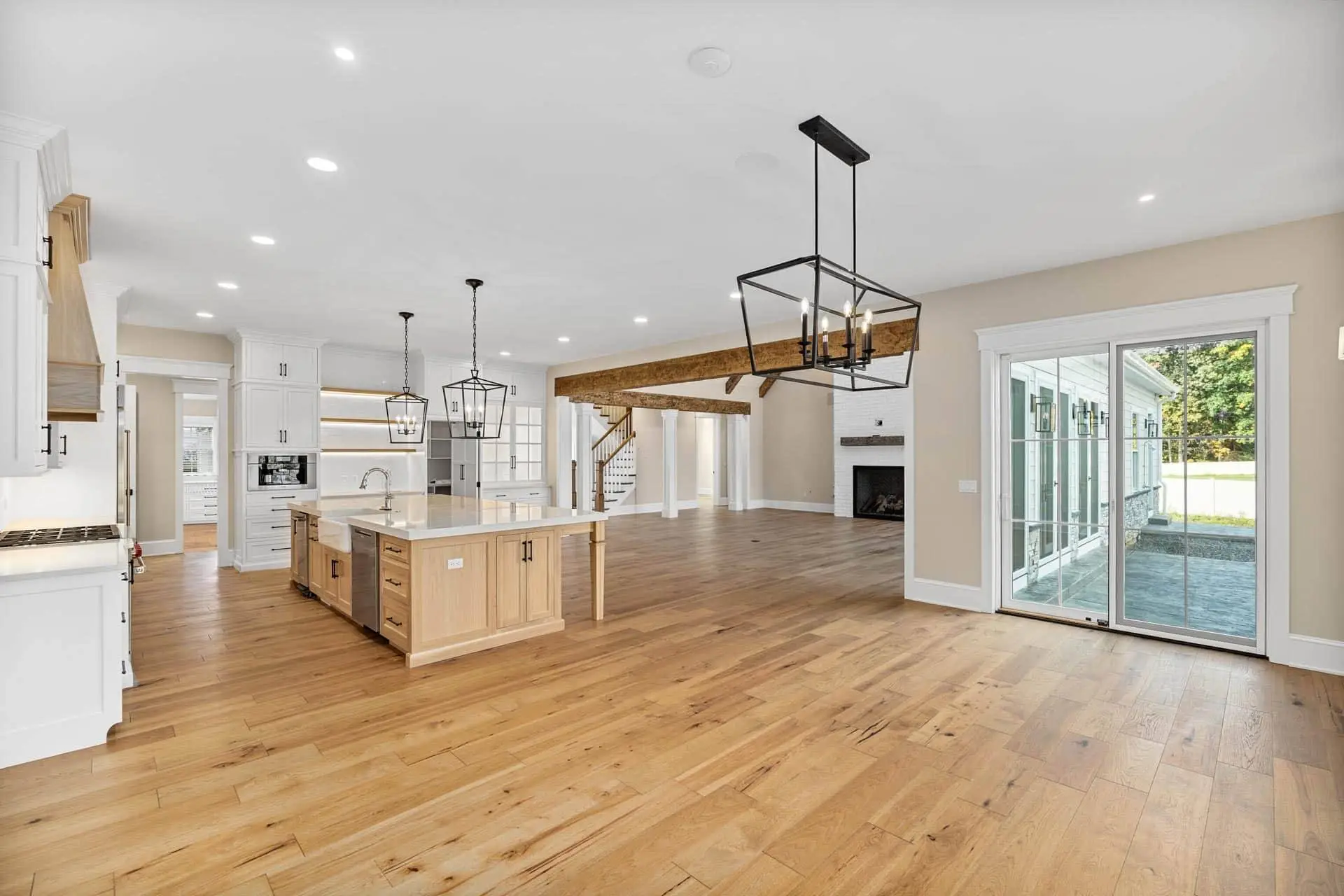
When planning layouts for a modern white kitchen, keeping your design clean and uncluttered is essential. Utilizing full-overlay modern white kitchen cabinets with minimalist hardware profiles hides internal storage boxes from view, creating smooth vertical planes. This sleek framing system blends the kitchen millwork into adjacent living areas, matching the high standards of luxury white kitchen designs.