
Executing a large-scale, high-capacity oak cabinet veneer program within contemporary North American luxury residences demands an advanced engineering balance between precise grain matching, anti-warping door substrate selection, and structural load-bearing box construction. As luxury interior architecture pivots toward warm minimalism and quiet luxury, rift-cut white oak has emerged as the premier material for modern estate kitchens. However, specifying real timber surfaces across expansive floor-to-ceiling storage walls, cantilevered range hood shrouds, and dual island modules introduces severe physical liabilities if handled with standard woodworking methods. Natural wood veneers pressed over raw solid lumber or unstable particleboard cores are highly vulnerable to seasonal humidity shifts. When raw wood substrates absorb ambient moisture, internal expansion stresses cause surface telegraphing, edge-band delamination, and severe panel warping across full-height slab runs.
Our automated manufacturing facility overcomes these climate-induced vulnerabilities by applying a dual-substrate engineering strategy: high-density MDF cores for painted and veneered slab doors to guarantee permanent flatness, combined with 3/4-inch multi-ply marine plywood for all cabinet carcasses. By hot-pressing hand-selected oak veneer sheets for cabinets over dimensionally stable engineered door cores, we guarantee zero panel warping and flawless surface smoothness over decades of use. Meanwhile, our 3/4-inch plywood box construction provides the immense screw-holding power and structural rigidity required to support heavy natural quartzite waterfall countertops and integrated sub-zero appliances. Every component—from full-height white oak slab cabinets to integrated handleless channel profiles—undergoes multi-axis CNC machining and cleanroom matte finishing to achieve an AWI Category 5 performance rating. This technical specification guide provides general contractors, custom home builders, and interior architects with the structural standards, hardware tolerances, and spatial planning guidelines needed to specify contract-grade oak cabinet veneer systems that combine organic texture with commercial-grade durability.
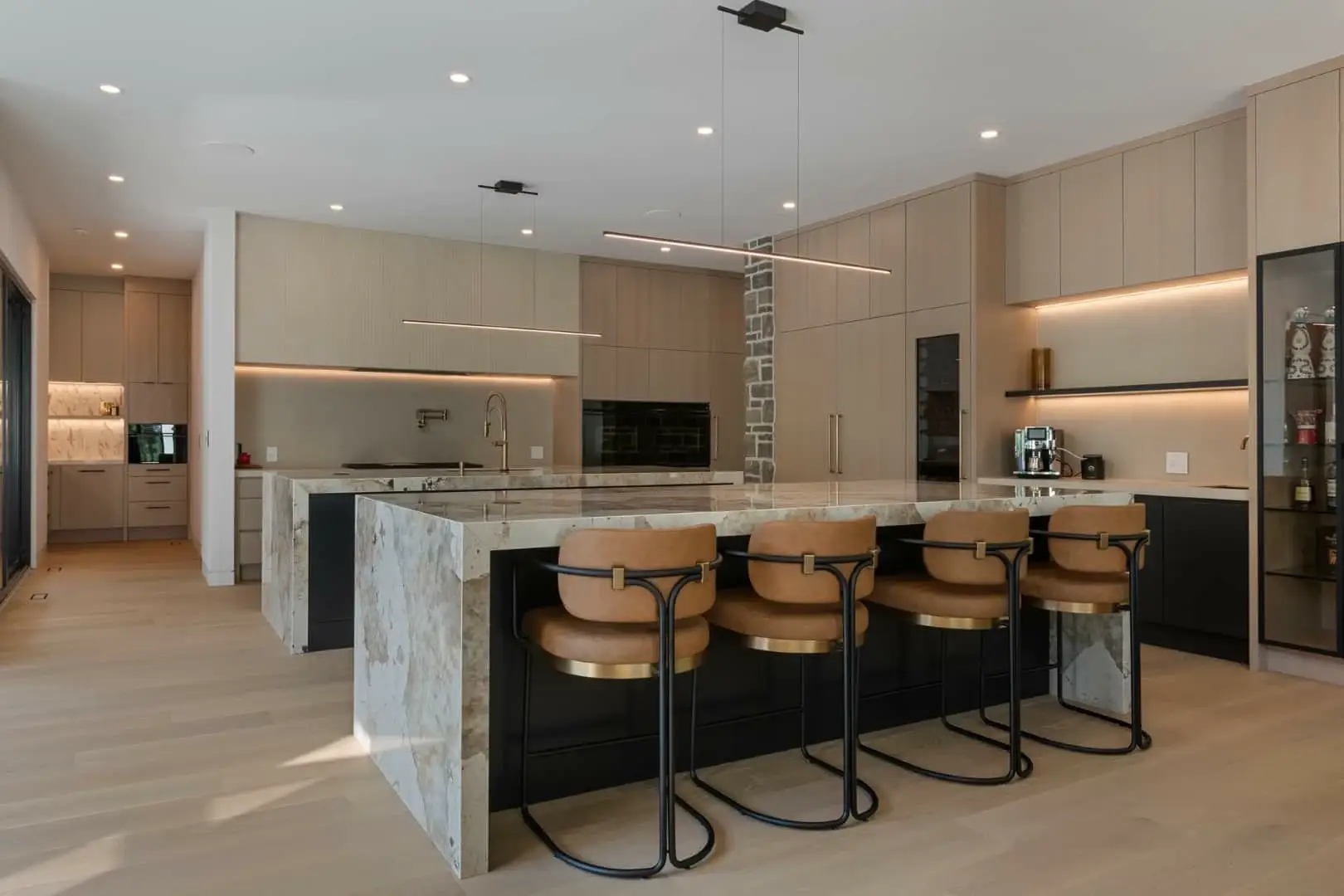
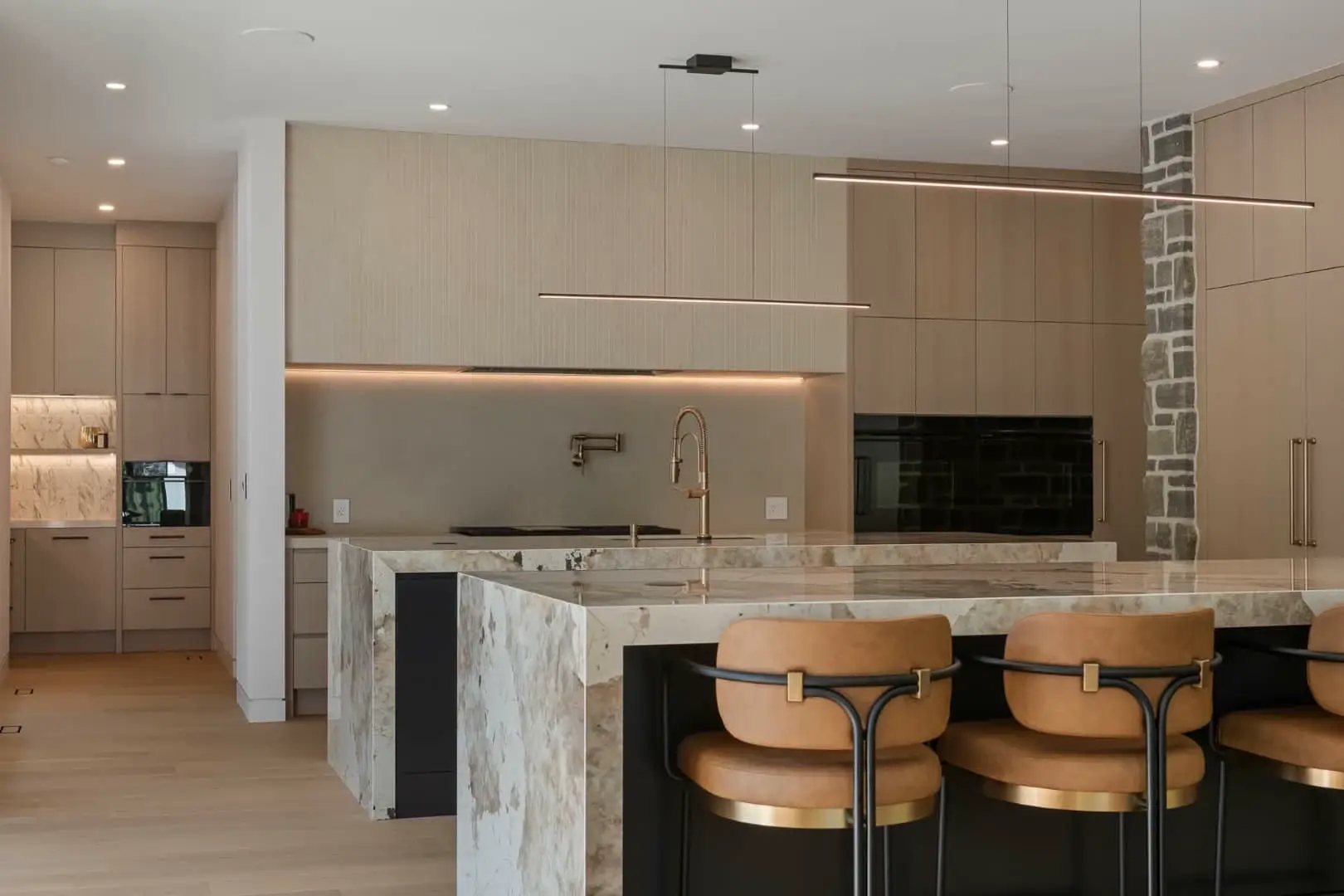
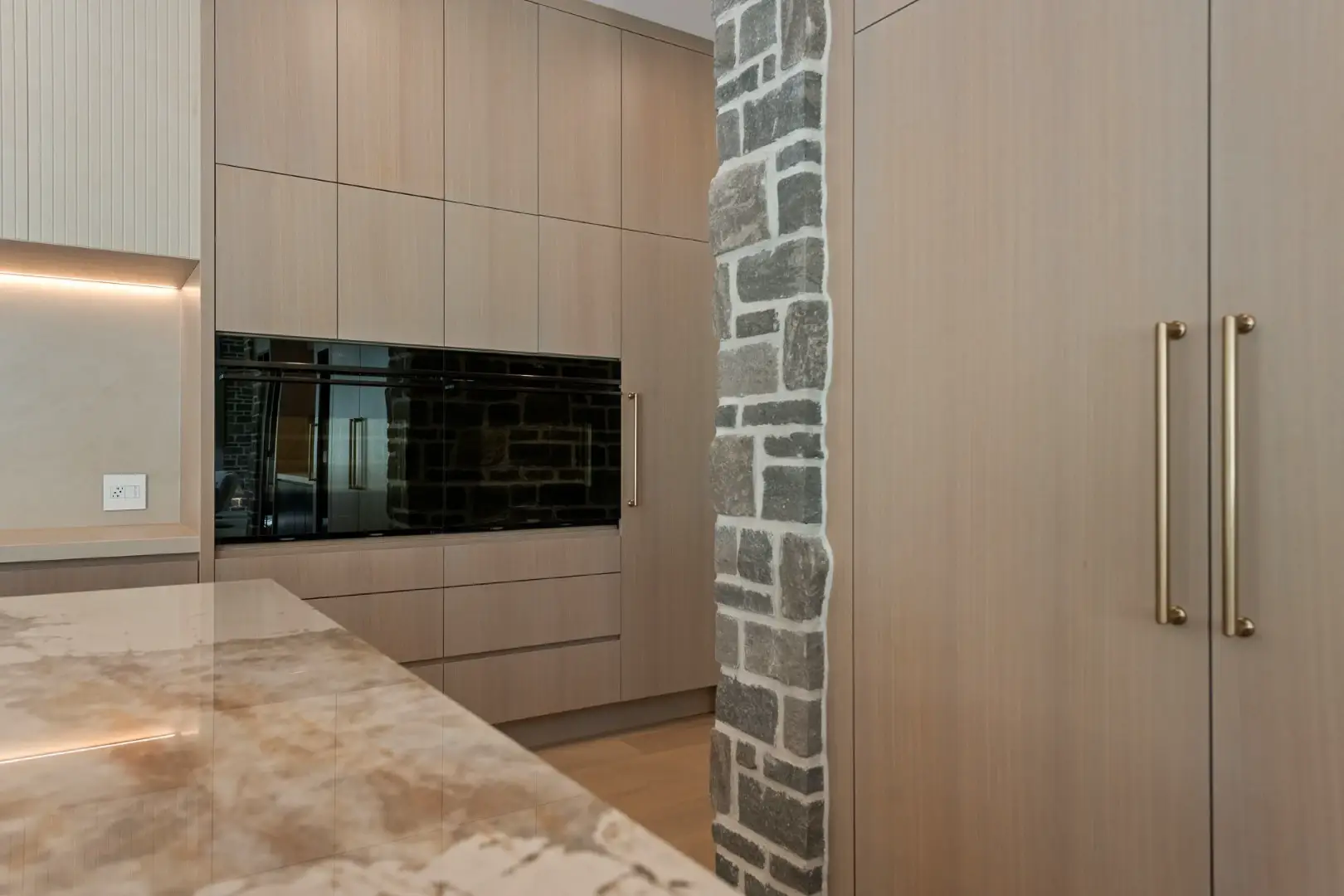
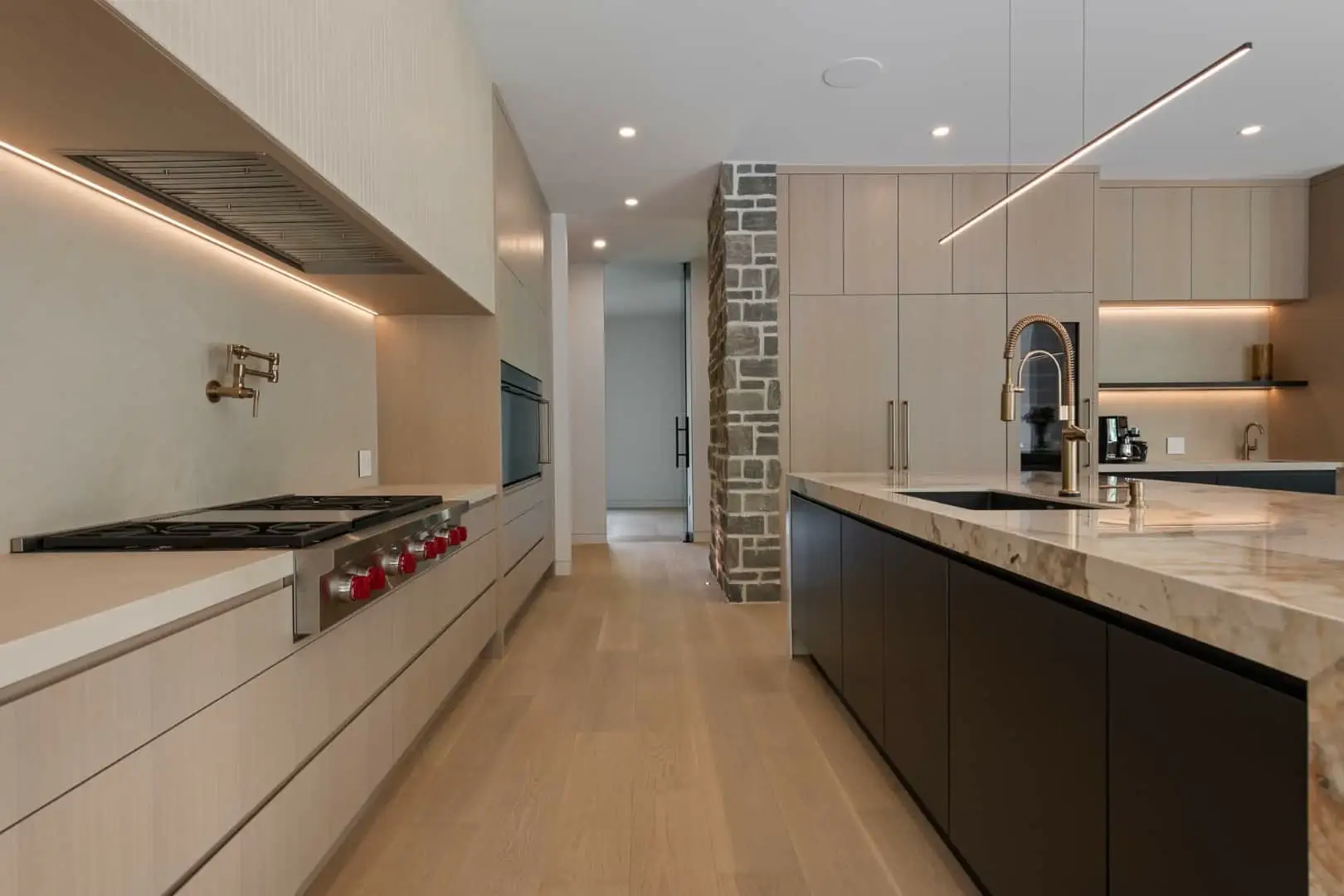
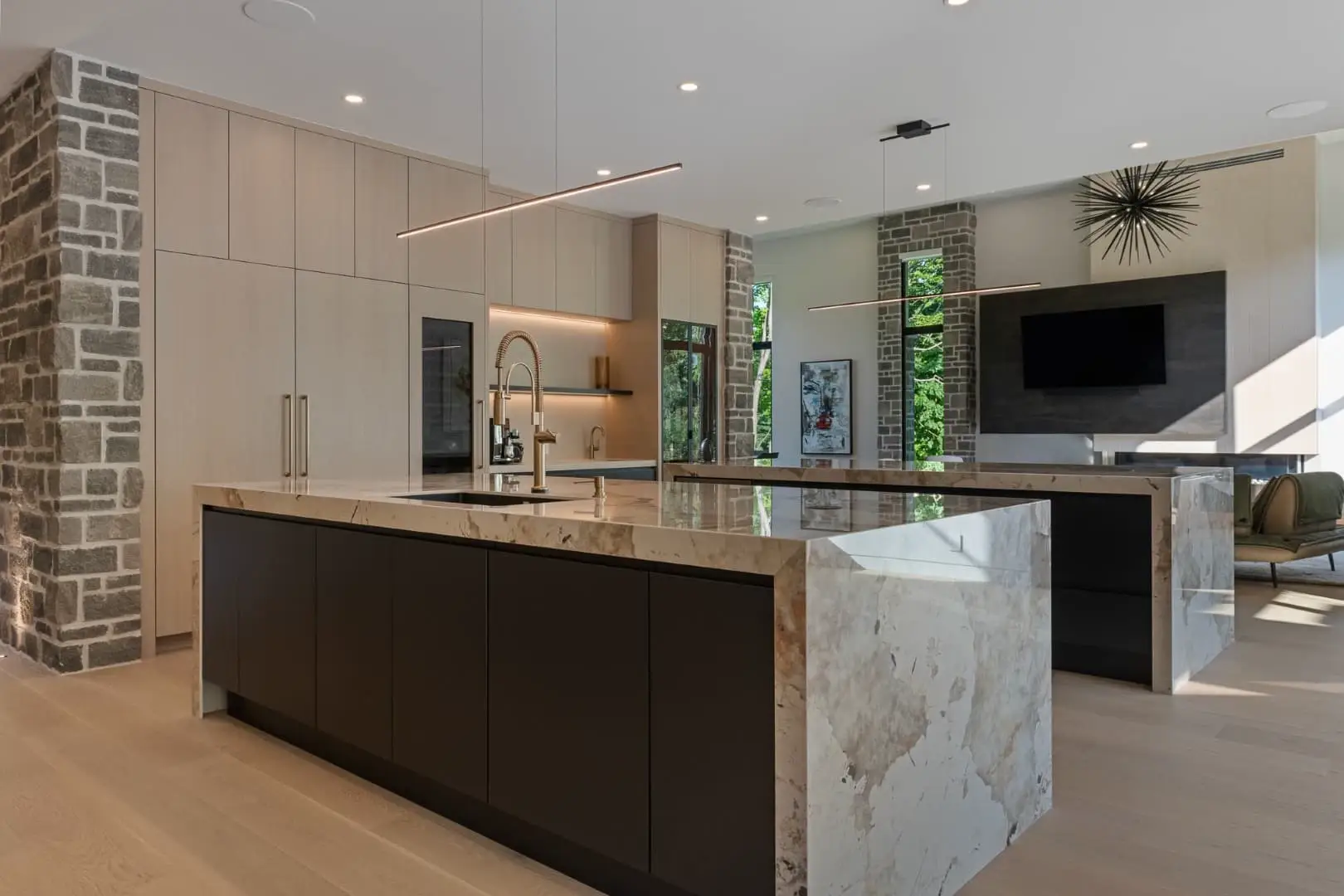
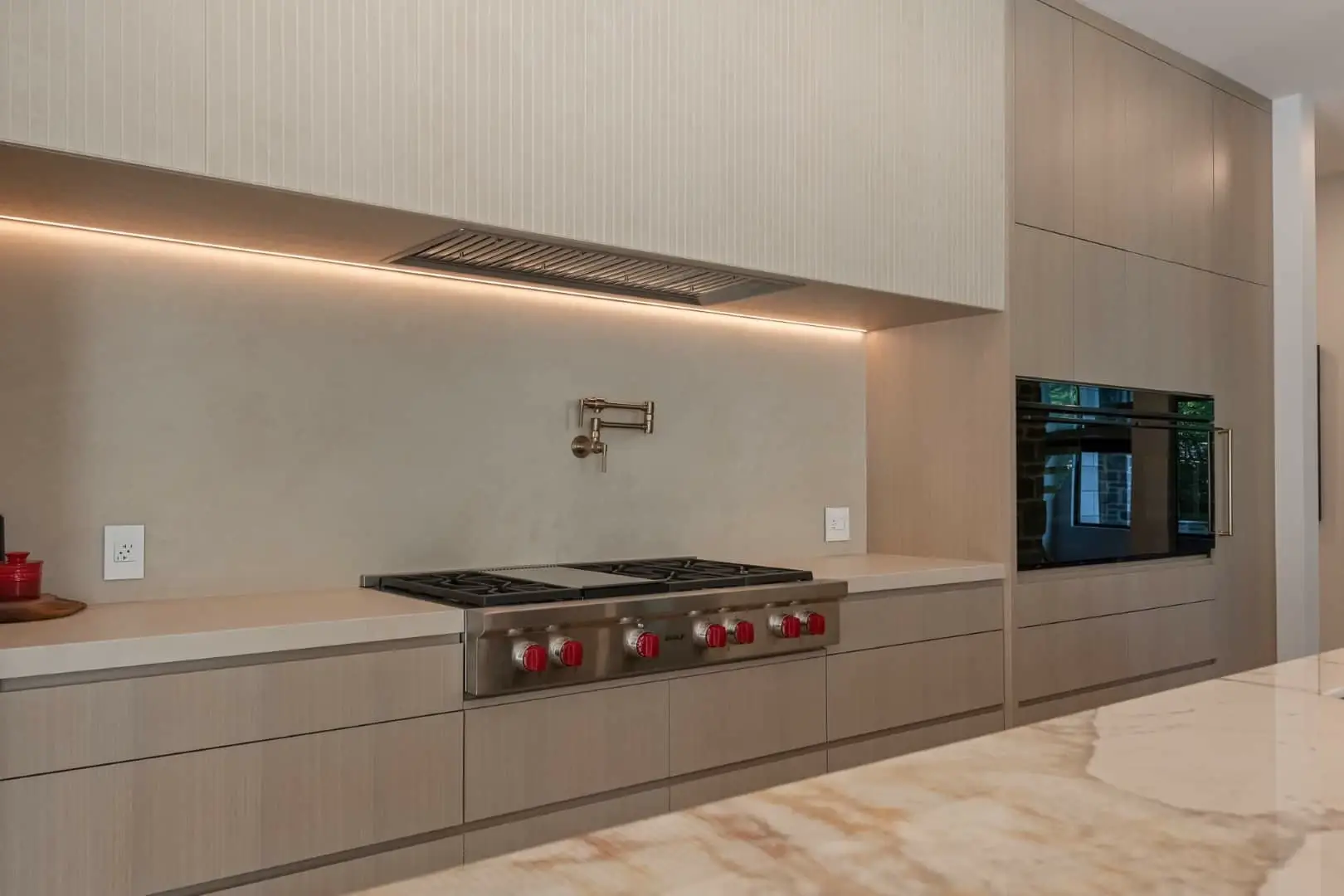
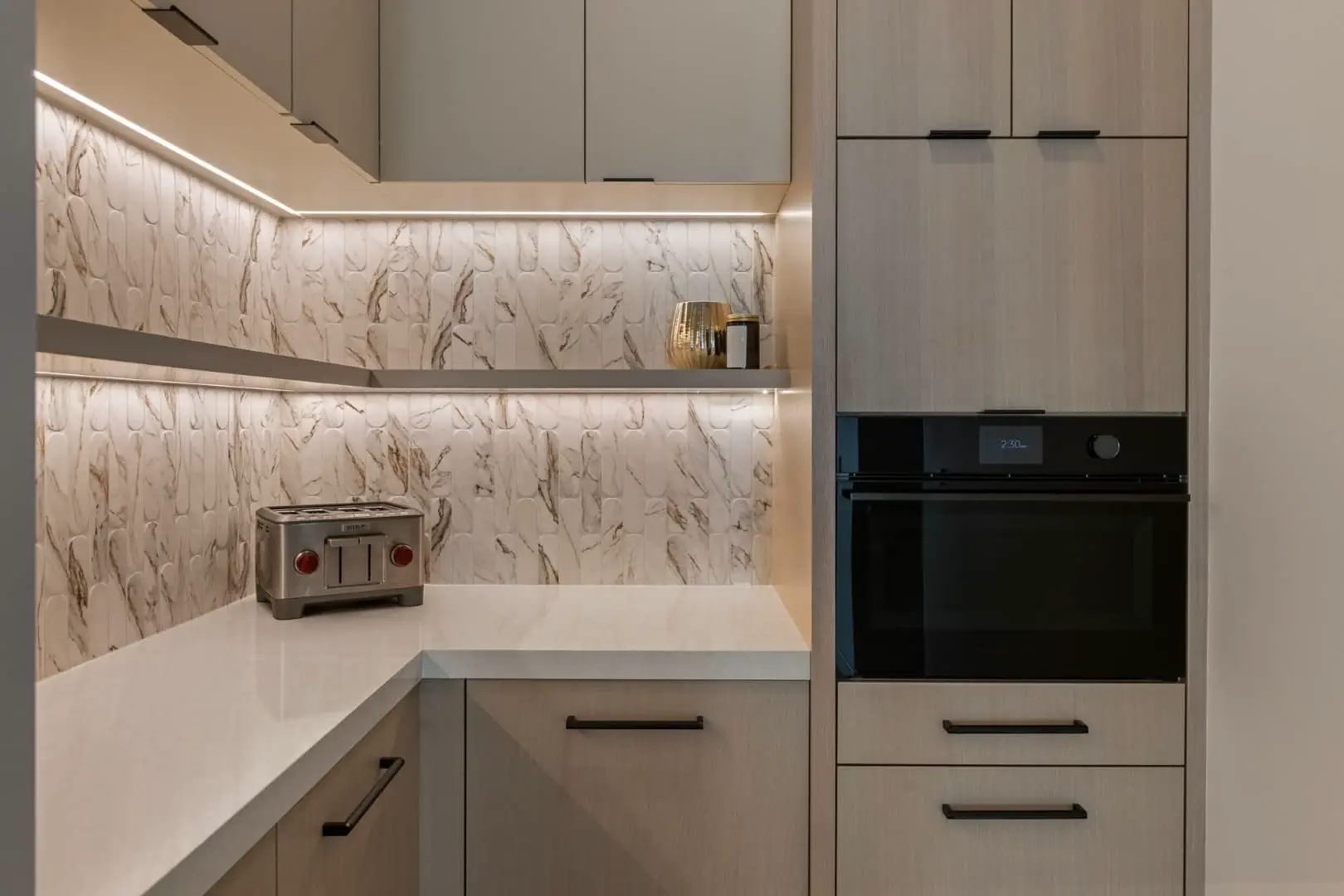
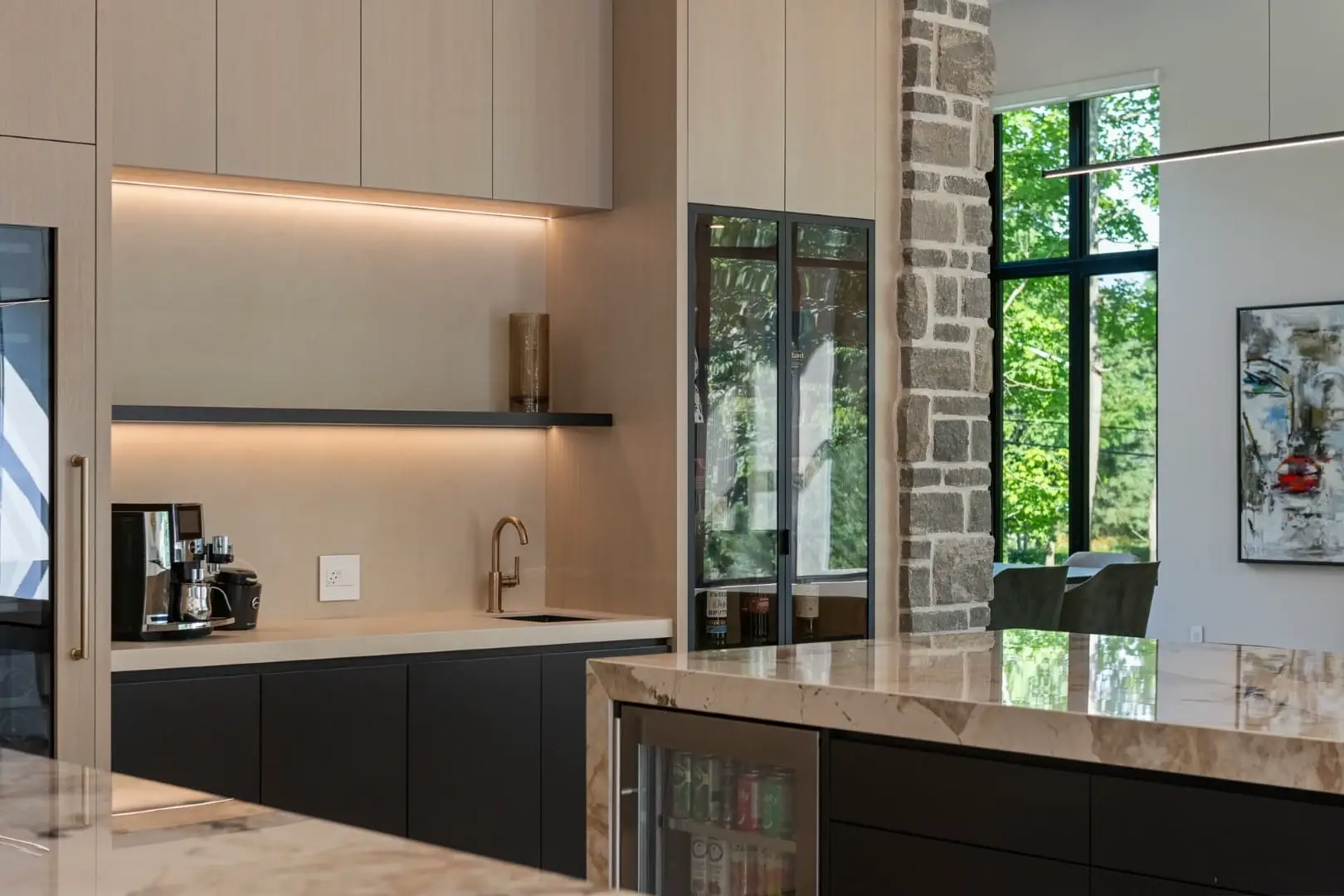
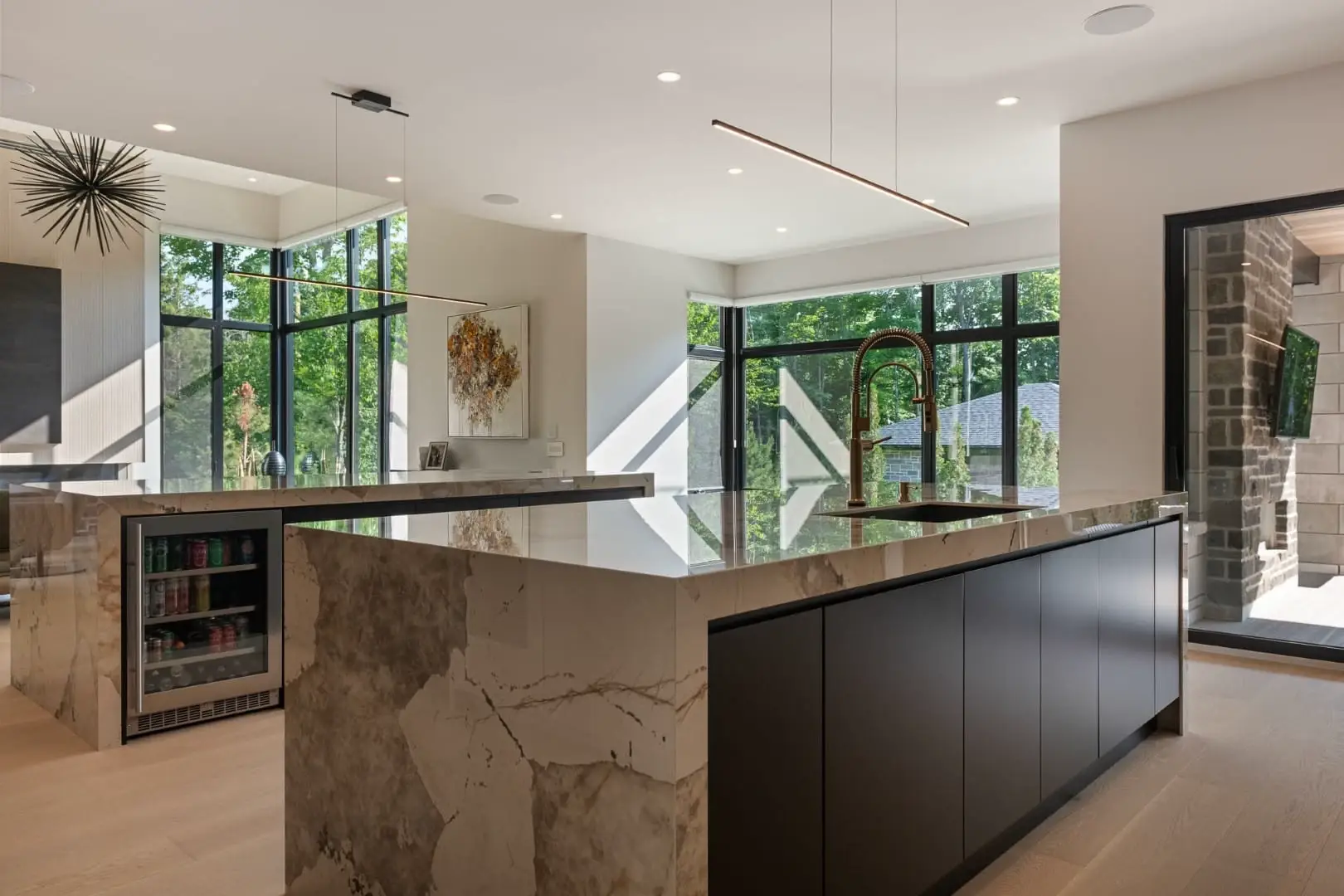
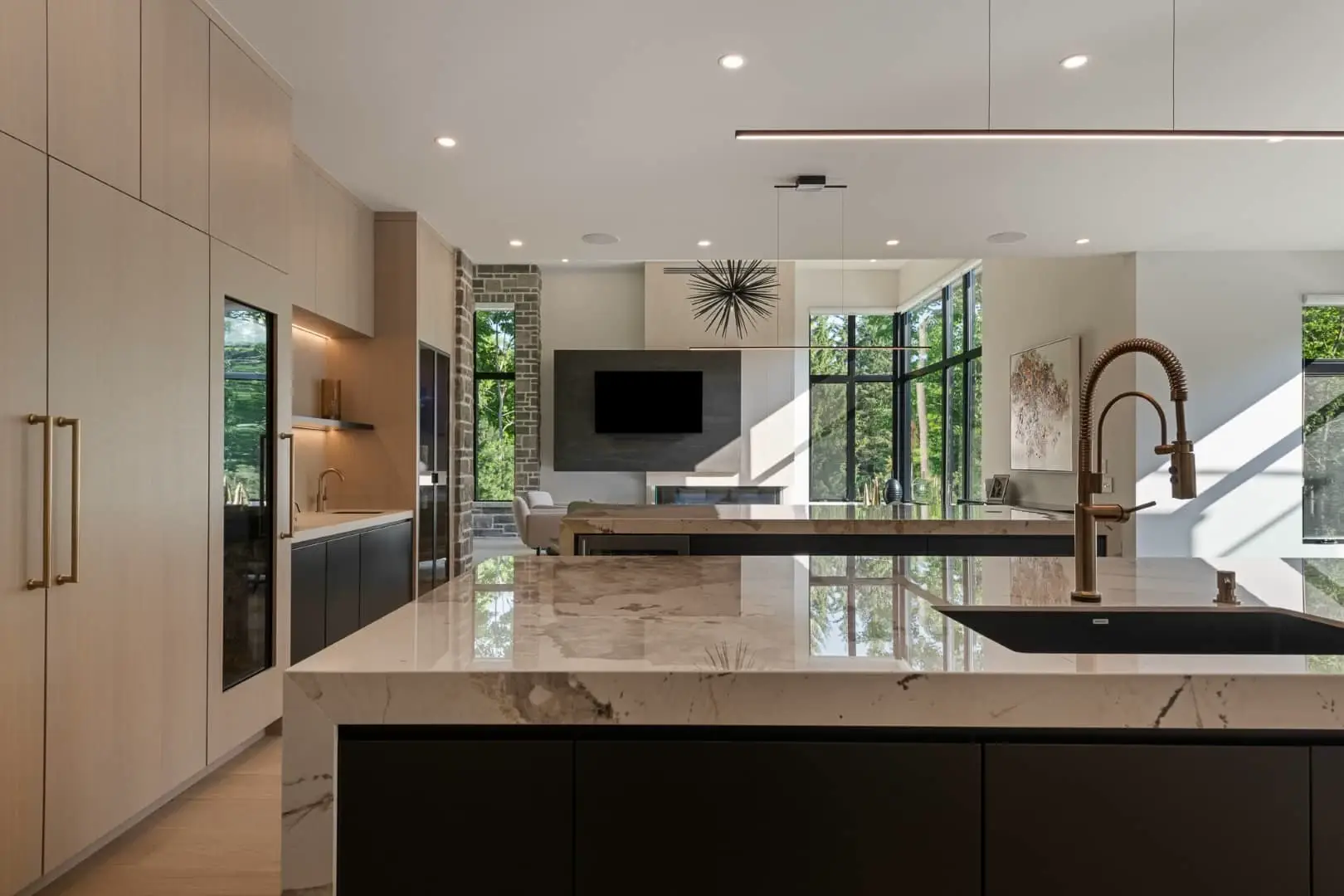
Material Science and Substrate Engineering in White Oak Veneer Cabinets
Achieving a seamless, architectural look across expansive oak veneer cabinet layouts requires strict engineering discipline regarding substrate behavior and veneer application. Unlike standard modular cabinetry that uses uniform particleboard throughout, bespoke estate millwork utilizes specialized substrates tailored specifically to the mechanical demands of doors versus structural cabinet carcasses.
MDF Door Cores for Zero Warping in White Oak Slab Kitchen Cabinets
To deliver a dead-flat aesthetic across every white oak slab kitchen cabinets program, our engineering team specifies high-density, moisture-resistant MDF cores for all veneered slab doors. Solid wood or multi-ply plywood panels contain directional grain tension that naturally reacts to humidity fluctuations, causing long floor-to-ceiling doors to bow or twist over time. High-density MDF provides an isotropic, non-directional core that remains perfectly dimensionally stable under changing climates.
Furthermore, hot-pressing sequence-matched white oak veneer cabinets flitches over ultra-smooth MDF surfaces eliminates the risk of telegraphing—where underlying wood grain or ply seams telegraph through thin wood veneers. This engineered precision ensures that every white oak veneer cabinets door opens smoothly with razor-sharp, uniform reveal lines across entire cabinetry runs.
3/4-Inch Plywood Box Construction for Heavy Stone Load Capacity
While MDF excels as a flat door substrate, structural cabinet boxes require the superior mechanical strength of 3/4-inch multi-ply marine-grade plywood. Supporting multi-ton quartzite waterfall countertops, heavy undermount prep sinks, and integrated refrigeration columns places severe downward shear loads on cabinet side walls and interior shelf pins.
Our 3/4-inch plywood carcass construction provides exceptional screw-holding capacity, high impact resistance, and superior moisture defense around active plumbing zones. This heavy-duty carcass framework prevents box deflection or joint sagging, keeping top stone seams perfectly aligned while ensuring lower matte black drawer units operate flawlessly under full load capacity.
Modern Spatial Architecture: True Handleless Kitchens with Dual Waterfall Islands
Designing a high-performing culinary center using handleless kitchens architecture relies on precise spatial planning and integrated hardware engineering. Modern open-concept floor plans demand clean, unbroken cabinet faces that create smooth transitions between prep zones, dining areas, and adjoining living rooms.
Integrated Channels for True Handleless Kitchen Millwork
Achieving a true handleless kitchen layout requires replacing surface-mounted handles with continuous aluminum J-pull or C-pull channels recessed into cabinet box frames. This construction technique allows users to open doors and drawers smoothly by gripping the top or side edge of the panel.
Our CNC routers cut clean channel recesses directly into 3/4-inch multi-ply plywood box edges, securing anodized black or matte brass profile tracks flush with cabinet faces. This mechanical integration guarantees effortless operation across handleless kitchen doors, maintaining sleek, clutter-free sightlines across the entire kitchen.
Ultra-Matte Clear Finish Chemistry for Natural Wood Protection
Preserving the raw, organic feel of real wood while protecting it against kitchen grease and moisture demands specialized finish chemistry. Standard polyurethane coatings can add an artificial plastic sheen or cause light-colored wood to turn yellow over time.
Our cleanroom spray line applies custom-formulated, water-white post-catalyzed conversion varnishes engineered with UV-blocking agents. Cured to an ultra-matte 3-degree sheen, this clear protective armor seals wood pores against water penetration, grease absorption, and sunlight discoloration without altering the tactile warmth of the natural oak timber.
Auxiliary Zone Integration and Whole-House Custom Millwork Coordination
Butler's Pantry and Beverage Station Built-Ins
Designing a dedicated beverage station or secondary prep pantry adjacent to the primary dining zone adds hosting functionality while keeping main countertops clutter-free. Custom-built white oak slab cabinets combined with matte black base units, glass-front display cabinets, and integrated wine refrigeration create an attractive entertaining hub.
By specifying identical ultra-matte clear coatings and precision box construction across auxiliary built-ins, these secondary service areas withstand daily water vapor and frequent use while reflecting the elevated style of the primary kitchen.
Living Room Fireplace Surrounds and Whole-House Millwork Flow
Extending custom cabinetry past the kitchen into the main living room anchors the home’s open floor plan. Building custom stone-framed fireplace surrounds paired with matching oak veneer panelling and low storage units creates a smooth transition between cooking and living zones.
Utilizing single-batch timber sourcing and factory-calibrated spray finishing ensures that wood grain tones, paint sheen levels, and reveal margins match perfectly across all rooms, satisfying the strict quality standards of modern custom home developments.
Advanced Manufacturing Calibration and Tolerances for Contract Joinery
Producing contract-grade architectural millwork requires advanced automated machinery paired with strict quality control standards at every step of production. To deliver cabinetry packages that install efficiently on-site without field modification, our manufacturing facility operates under strict German-standard tolerance metrics, controlling every cut, rout, and finish layer to precise fractions of a millimeter.
Precision CNC Cutting and Box Construction
Every panel component undergoes automated moisture testing and dimensional inspection before entering the production line. Our multi-axis CNC machining centers cut, bore, and dado panel substrates with an accuracy margin within 0.1mm, ensuring that every cabinet box is square. This precise dimensional control prevents cumulative alignment errors across long cabinet runs, guaranteeing that face frames, door fronts, and crown moldings fit together seamlessly on the job site.