
Executing a hand-crafted distressed kitchen cabinets program within luxury European-style estates demands an advanced engineering balance between multi-layer glaze application, raised-panel profile milling, and load-bearing carcass construction. As high-end residential architecture embraces timeless French Country, Mediterranean, and Tuscan aesthetics, incorporating antiqued painted finishes with hand-rubbed distressing has become the premier specification for custom estate homes. The warm patina of hand-glazed antique white paint paired with detailed architectural moldings creates an inviting, heirloom-grade atmosphere across sprawling culinary spaces. However, specifying hand-distressed millwork across expansive full-height appliance walls, double preparation islands, and custom display cabinetry introduces severe physical vulnerabilities if manufactured using standard off-the-shelf modular methods. Poorly executed antique finishes applied over low-density particleboard cores suffer from paint chipping along door seams, moisture absorption around sink bases, and severe panel warping across tall storage runs.
Our automated manufacturing facility overcomes these technical challenges through a specialized dual-substrate engineering protocol: moisture-resistant, high-density MDF door cores combined with 3/4-inch multi-ply marine-grade plywood cabinet boxes. By utilizing engineered MDF cores for all painted distressed white kitchen cabinets, we ensure an isotropic substrate that naturally resists bowing, twisting, or checking under seasonal humidity shifts. Simultaneously, our hand-selected rustic distressed kitchen cabinets utilize 5-piece raised-panel doors with mitered Ogee moldings, finished using a multi-step antiquing process that includes base priming, hand-applied glaze wiping, and clear conversion varnish topcoats. Supported by 3/4-inch marine plywood boxes, these custom units easily support heavy Calacatta marble counter slabs, cast stone range hood shrouds, and panel-ready Sub-Zero appliance towers. Every cabinet component—from X-braced island end caps to mullion glass storage towers—undergoes cleanroom finishing to achieve an AWI Category 5 performance rating. This technical specification document provides general contractors, custom home builders, and interior architects with the structural standards, hardware tolerances, and finishing guidelines needed to specify contract-grade distressed cabinets in kitchen layouts that combine Old-World European artistry with commercial-grade durability.
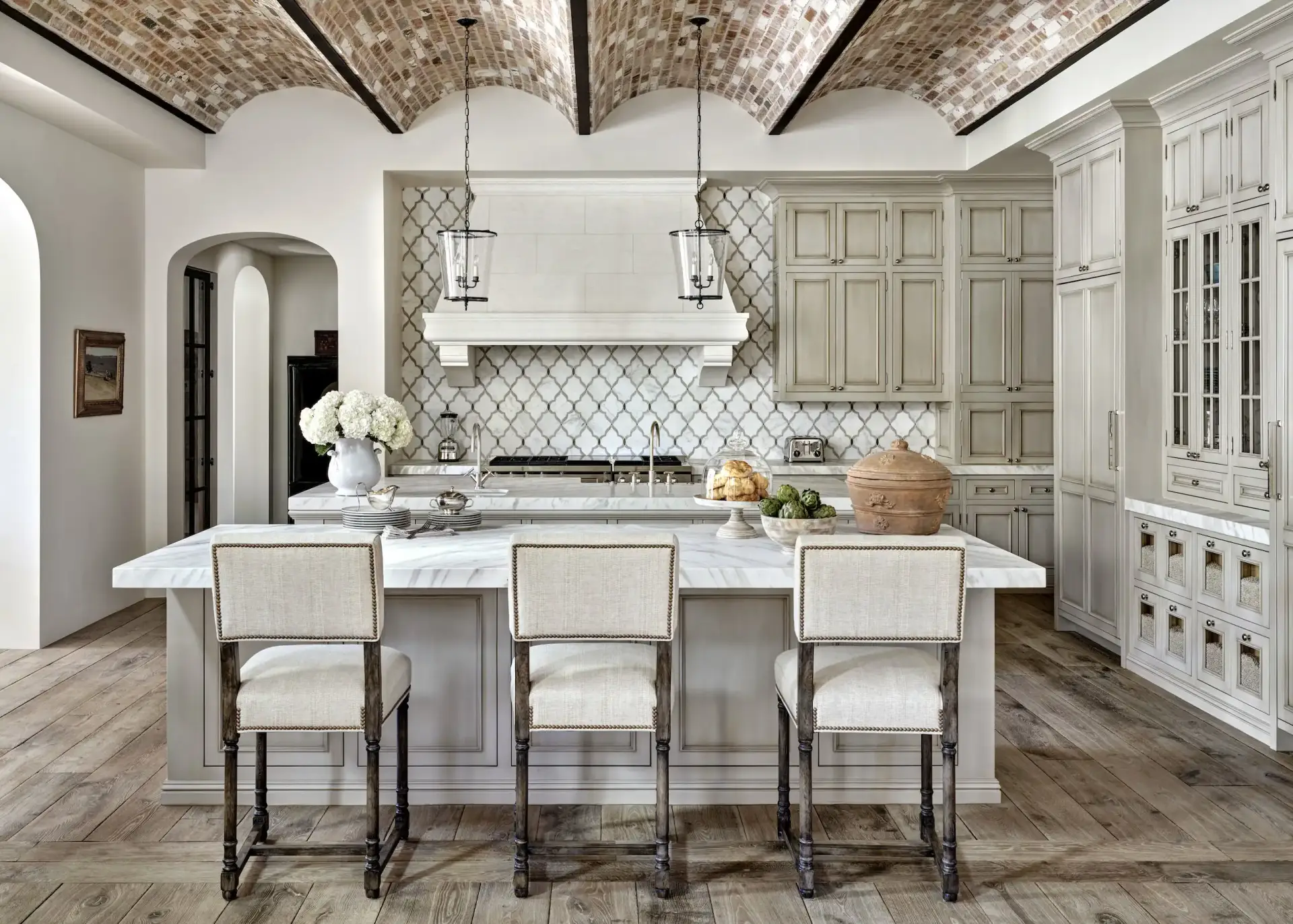
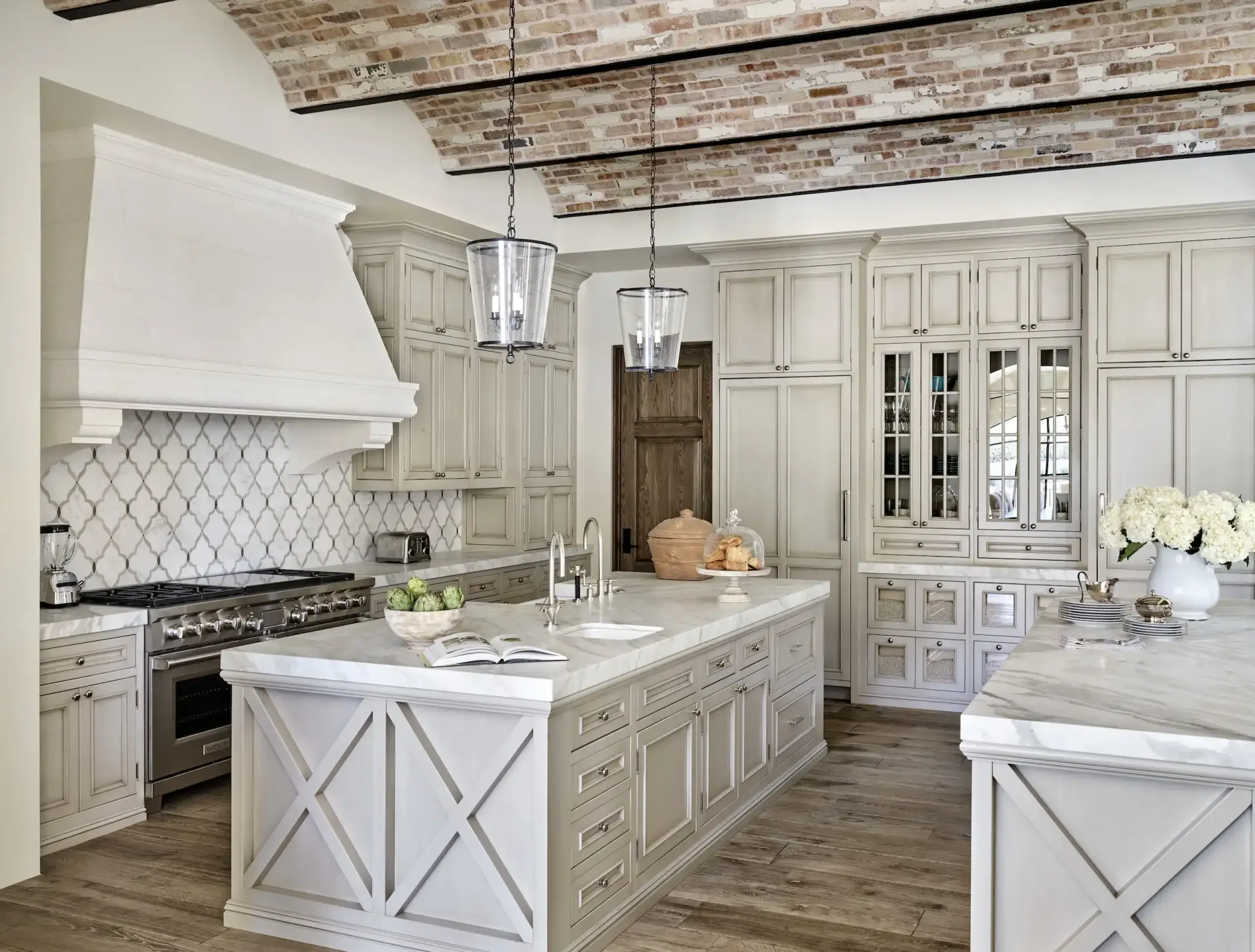
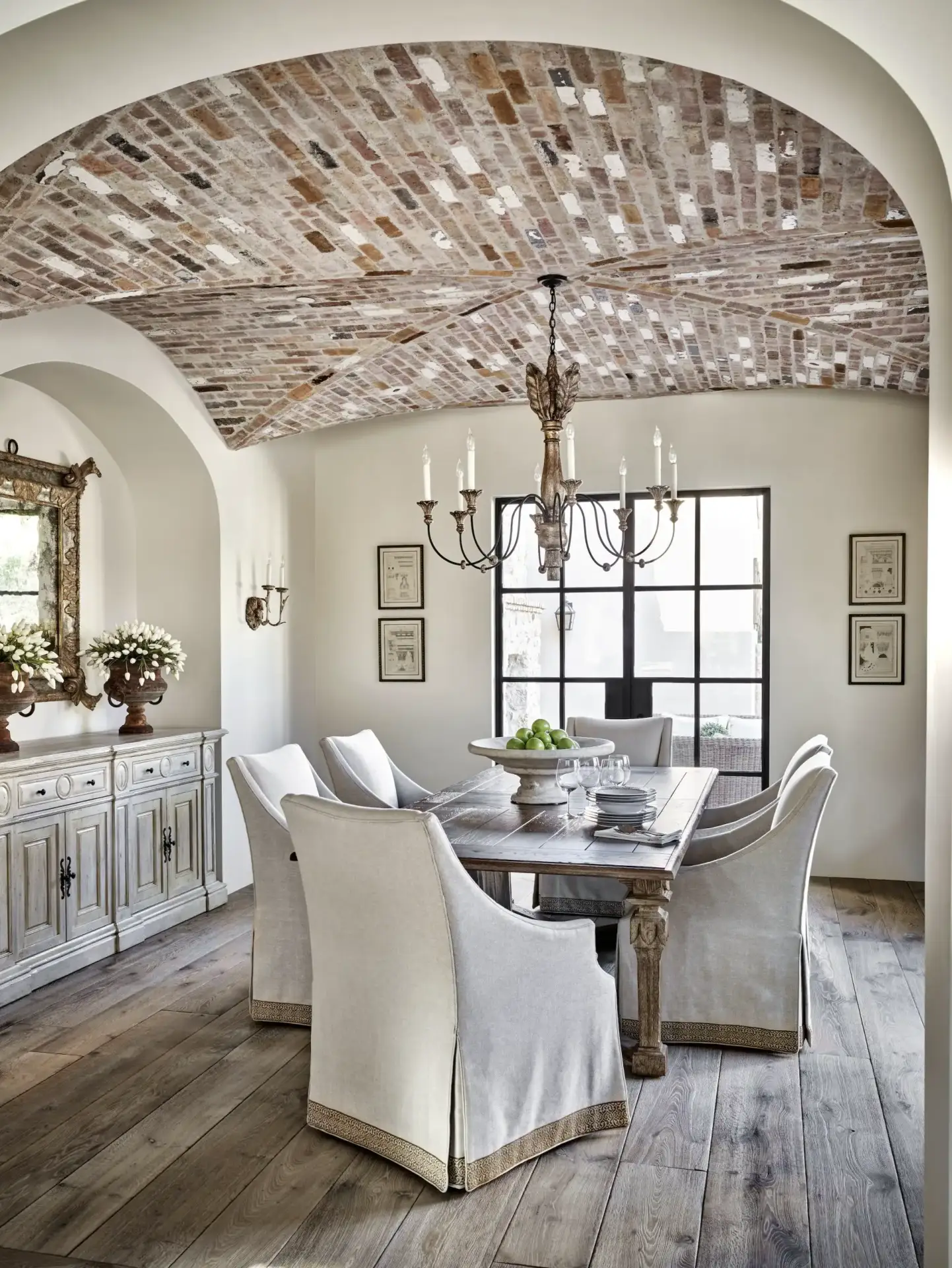
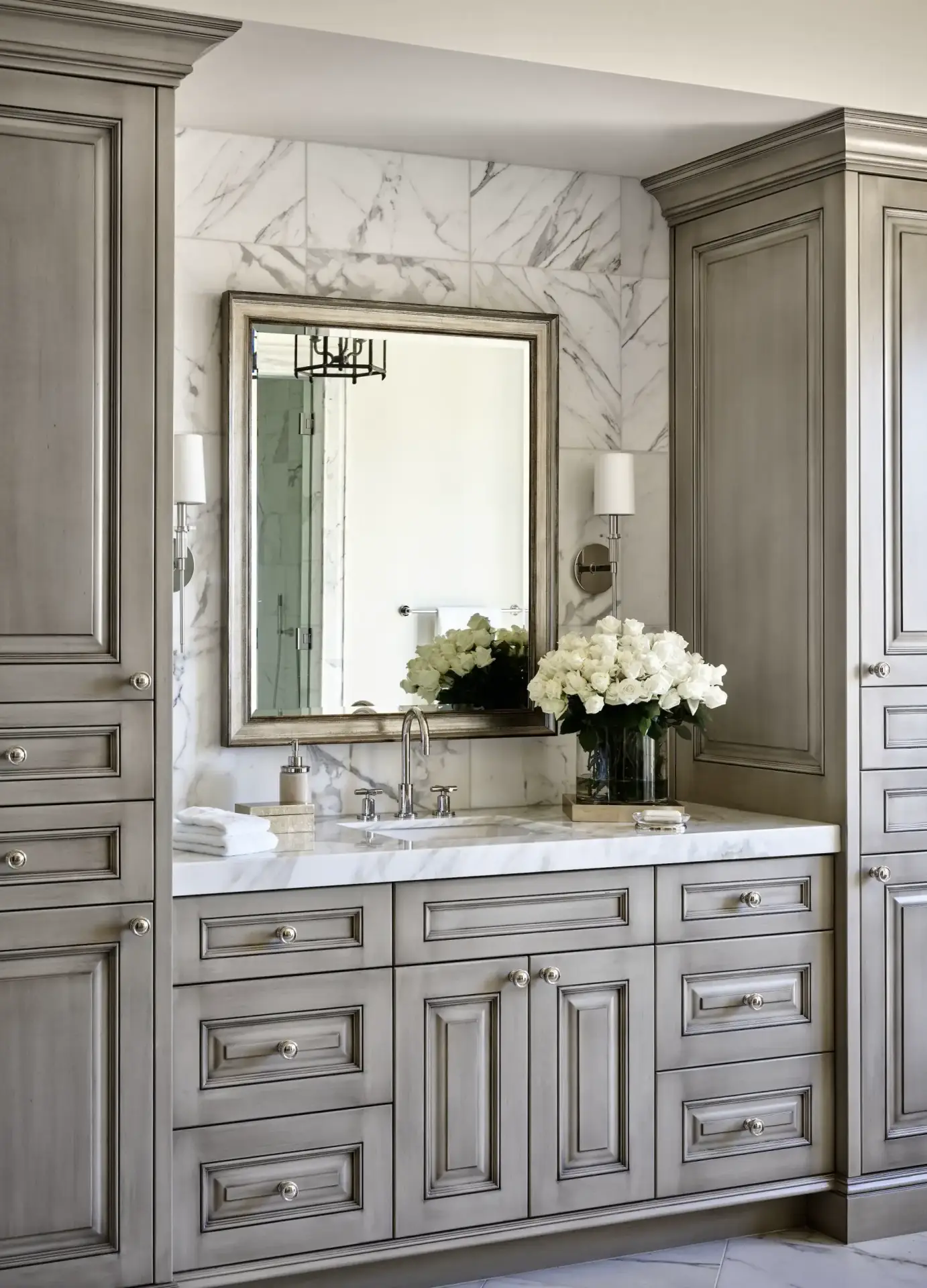
Artisan Finishing Science and Substrate Engineering for Distressed Cabinets
Executing authentic distressed antique white kitchen cabinets requires rigorous discipline regarding multi-layer finish chemistry, precision door profile milling, and core stability. Achieving an heirloom look demands more than simple paint distressing; it relies on layer-by-layer hand glaze wiping along profile recesses to recreate decades of natural age.
Multi-Step Antiqued Finish Chemistry and Glaze Application
To manufacture high-performance antique white distressed kitchen cabinets, our finishing department executes a 6-stage coating process. The raw substrate receives a moisture-blocking primer followed by two full coats of pigmented off-white enamel. Once cured, artisans apply a dark brown glazing stain by hand, working the pigment deep into the Ogee profile recesses of distressed kitchen cupboards.
After hand-wiping the high spots to expose the soft white base coat, microscopic corner distressing and fly-specking are applied to simulate authentic Old-World wear. The entire surface is sealed under a clear, non-yellowing conversion varnish topcoat. This protective barrier seals the hand-rubbed glaze, making white distressed kitchen cabinets impervious to cooking oils, moisture, and daily cleaning detergents.
Dimensional Stability via MDF Raised-Panel Doors
Intricate raised-panel profiles featuring heavy perimeter Ogee moldings are susceptible to paint cracking if crafted entirely from solid wood. Solid timber panels naturally expand and contract across their grain, causing paint lines at frame joints to shear open in high-humidity waterfront or mountain environments.
To ensure flawless paint adhesion across farmhouse distressed white kitchen cabinets, we engineer 5-piece doors using high-density, moisture-resistant MDF for all door components. MDF provides an isotropic, joint-free painting surface that experiences zero expansion stress. This engineered foundation ensures that distressed kitchen cabinet doors maintain dead-flat alignments without seam separation across decades of service.
3/4-Inch Marine Plywood Box Construction for Heavy Stone Countertops
While engineered cores preserve door flatness, structural cabinet carcasses require the mechanical rigidity of 3/4-inch multi-ply marine-grade plywood. Supporting thick Calacatta marble tops, double preparation sinks, and cast stone range hoods places immense shear loads on lower cabinet carcasses across distressed wood kitchen cabinets runs.
Our 3/4-inch marine plywood boxes feature dado-interlocking joinery, solid birch interior faces, and heavy-duty corner bracing. This rigid box foundation prevents cabinet racking, keeping stone countertop seams perfectly aligned while ensuring lower drawer banks fitted with 100-lb soft-close slides operate smoothly under full capacity.
Architectural Feature Integration: Double Islands and Brick Vault Ceilings
Designing an expansive estate kitchen around distressed farmhouse kitchen cabinets relies on thoughtful architectural integration, functional zone division, and authentic European masonry pairings. Sprawling luxury floor plans demand smooth transitions between active prep zones, central gathering islands, and dedicated butler pantries.
Double Preparation Islands with X-Braced Crossbuck End Panels
In high-capacity custom estates, specifying double preparation islands provides separate zones for cooking prep and guest seating. To anchor these massive islands within kitchen distressed cabinets layouts, our factory crafts custom X-braced end panels (Crossbuck panels) for the outer island cabinets.
These structural X-braces mimic traditional European winery timber work, adding bold architectural shadow lines to the island ends. Fitted with undermount prep sinks, solid brass gooseneck faucets, and thick mitered marble countertops, these dual islands serve as the visual focal points of the great room.
Cast Stone Range Hood Shrouds and Arabesque Tile Backsplashes
Framing the primary cooking workstation with full-height distressed kitchen cupboards creates a commanding focal anchor along the main elevation. Our factory integrates custom cast stone range hood shrouds with hand-carved mantel shelf details, transforming the ventilation hood into a grand architectural hearth.
Paired with full-height Arabesque (lantern-pattern) marble mosaic tile backsplashes, bridge-style deck faucets, and wall-mounted pot fillers, the cooking zone balances European heritage style with commercial-grade culinary performance.
Auxiliary Zone Extensions: Glass Mullion Towers and Master Bath Vanities
Glass Mullion Display Towers and Woven Wire Drawer Inserts
Flanking the perimeter wall in custom distressed farmhouse kitchen cabinets layouts, full-height display towers feature glass mullion doors with interior LED channel lighting. These glass towers showcase fine glassware and serving pieces against painted wood interiors.
Below the glass towers, lower drawer banks integrate woven metal wire inserts (chicken wire mesh) behind door frames. This historic detail provides ventilation for stored linens and root vegetables while adding tactile Old-World charm to secondary storage units.
Matching Antiqued Vanity Joinery for Master Suites
Carrying the hand-rubbed antique finish into master bathroom suites creates a hotel-grade retreat. Custom vanity units crafted with raised-panel door fronts, stacked crown moldings, and fluted corner pilasters surround marble mirror enclosures and undermount porcelain sinks.
Fitted with moisture-blocking conversion varnish clear coats and solid brass hardware, these vanity units handle high bathroom humidity while matching the quality seen in images of distressed kitchen cabinets throughout the estate.
Advanced Manufacturing Calibration and Tolerances for Contract Joinery
Producing contract-grade architectural millwork requires advanced automated machinery paired with strict quality control standards at every step of production. To deliver cabinetry packages that install efficiently on-site without field modification, our manufacturing facility operates under strict German-standard tolerance metrics, controlling every cut, rout, and finish layer to precise fractions of a millimeter.
Precision CNC Cutting and Box Construction
Every panel component undergoes automated moisture testing and dimensional inspection before entering the production line. Our multi-axis CNC machining centers cut, bore, and dado panel substrates with an accuracy margin within 0.1mm, ensuring that every cabinet box is square. This precise dimensional control prevents cumulative alignment errors across long cabinet runs, guaranteeing that face frames, door fronts, and crown moldings fit together seamlessly on the job site.