
This technical engineering and design portfolio provides an exhaustive analysis of the architectural specifications, substrate calibrations, and coating technologies required to execute high-performance custom coastal kitchens for estate-scale residential developments in North American oceanfront environments. Building high-end cabinetry networks within shoreline zones presents a challenging array of mechanical risks, primarily driven by high relative humidity cycles, airborne salt micro-particles, and rapid indoor temperature changes from expansive open-air sliding multi-panels. Without advanced manufacturing interventions, natural solid lumber components and low-tier fiberboard materials will continuously absorb atmospheric vapor, generating relentless volumetric shifting, expansion stress along joint lines, and substrate swelling. These forces inevitably result in finish tracking fissures, rail-to-stile splitting, door binding, and hardware fastening failures.
Our industrial production infrastructure completely counteracts these environment-driven structural failures. By replacing unstable solid woods with isotropic, marine-grade substrates and cross-linked polyurethane conversion coatings, we deliver a beautifully stable, low-maintenance architectural installation. This comprehensive guide outlines the physical principles and construction profiles required to deliver flawless, zero-tolerance coastal kitchen designs that maintain strict 3/32-inch reveal alignments across decades of active service, providing general contractors and custom builders with an elite product line engineered for the most demanding environments.
Material Science and Volumetric Equilibrium in High-Salinity Environments
Specifying extensive storage networks within a luxury modern coastal kitchen project demands absolute control over the cellular properties of the chosen substrates. Traditional solid wood cabinetry milled via standard plainsawing methods exhibits high anisotropic movement, expanding and contracting aggressively along its tangential plane when exposed to fluctuating sea breezes and seasonal humidity variations. In high-end oceanfront builds, managing these environmental loads requires substituting raw timbers with structurally modified engineered foundations that isolate organic fiber stress.
Moisture Isolation and Substrate Calibration in Coastal Kitchen Cabinets
To ensure perfect line alignment across our premium coastal kitchen cabinets product lines, our factories utilize an isotropic core matrix composed of multi-ply, marine-grade hardwood plywood and ultra-dense engineered wood fiber panels for all overlay profiles. Standard wood inserts experience irregular cross-grain expansion, which quickly cracks the outer finish coat at the corner seams. By utilizing a non-directional core block, we provide a mathematically stabilized face for the cabinet doors. This structural approach stops joint checking and panel movement before the components move onto our automated CNC machining tracks, guaranteeing that flush insets and full-overlay profiles stay completely flat and plumb despite shifting coastal humidity.
Chromatic Performance and Chemical Shields for Coastal Kitchen Cabinet Colors
The choice of coastal kitchen cabinet colors involves far more than visual aesthetics; it requires advanced chemical defense to resist the aggressive yellowing and chalking caused by intense UV rays reflecting off large ocean surfaces. Our automated cleanroom finishing lines spray all white and soft-toned coastal kitchen cabinet colors with a premium post-catalyzed conversion varnish system infused with specialized hindred-amine light stabilizers (HALS). This industrial coating cures under heat to form a dense molecular bond that seals the underlying fibers against moisture, dynamic grease, and chemical cleaners. This application path guarantees that the bright, fresh finishes characteristic of premium modern coastal kitchens retain their exact chromatic balance without fading or peeling over decades of coastal exposure.
Spatial Architecture and Indoor-Outdoor Visual Balancing
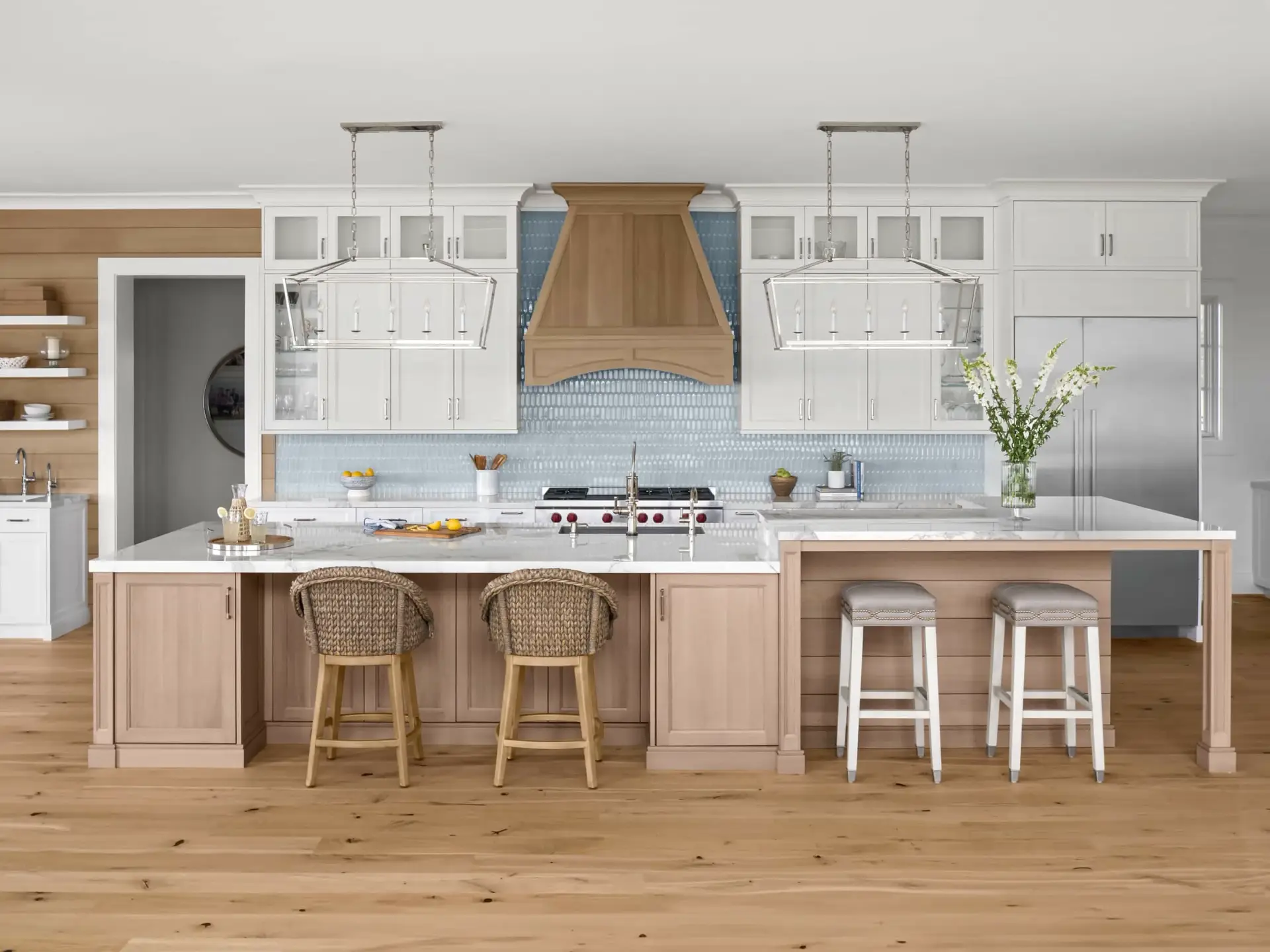
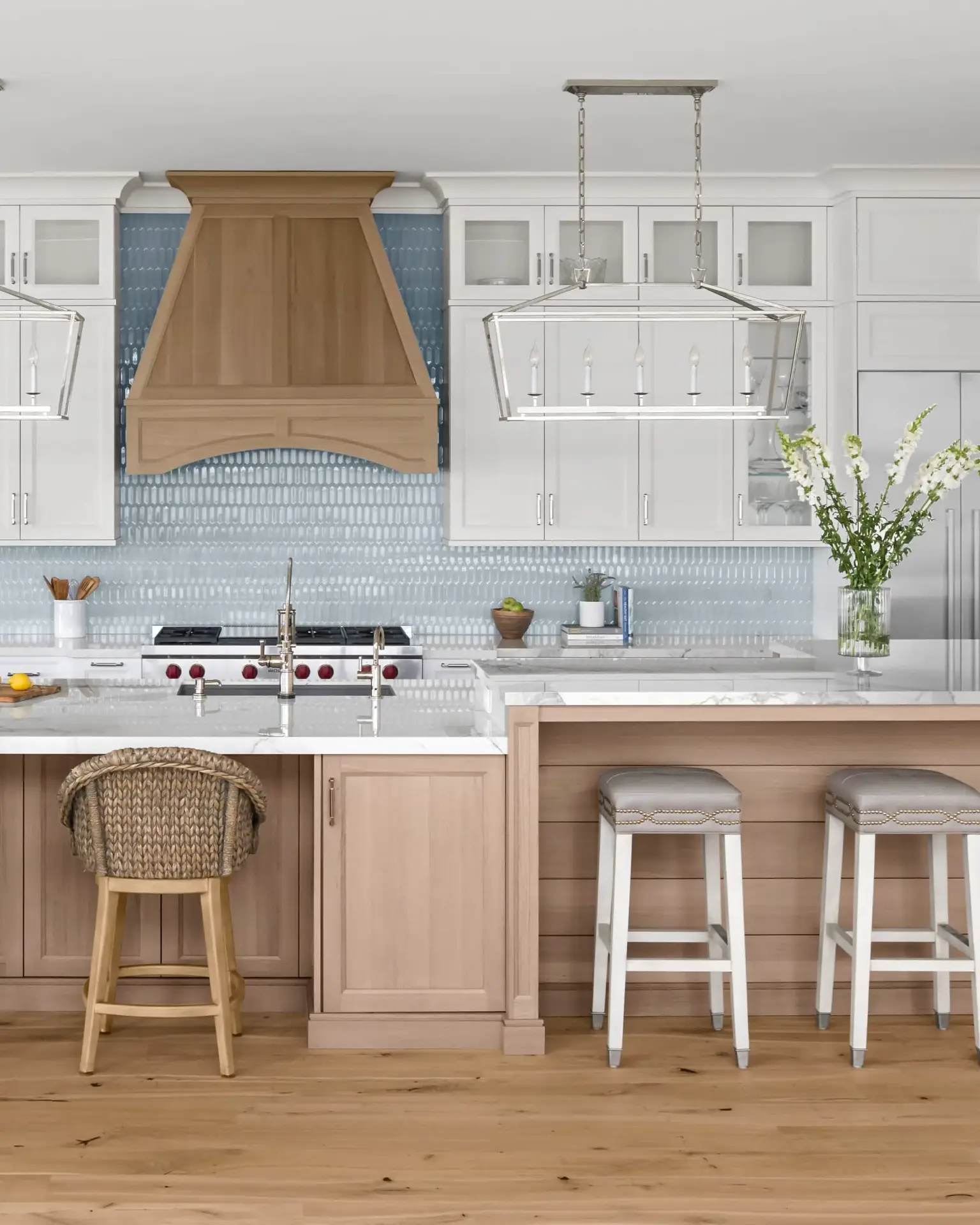
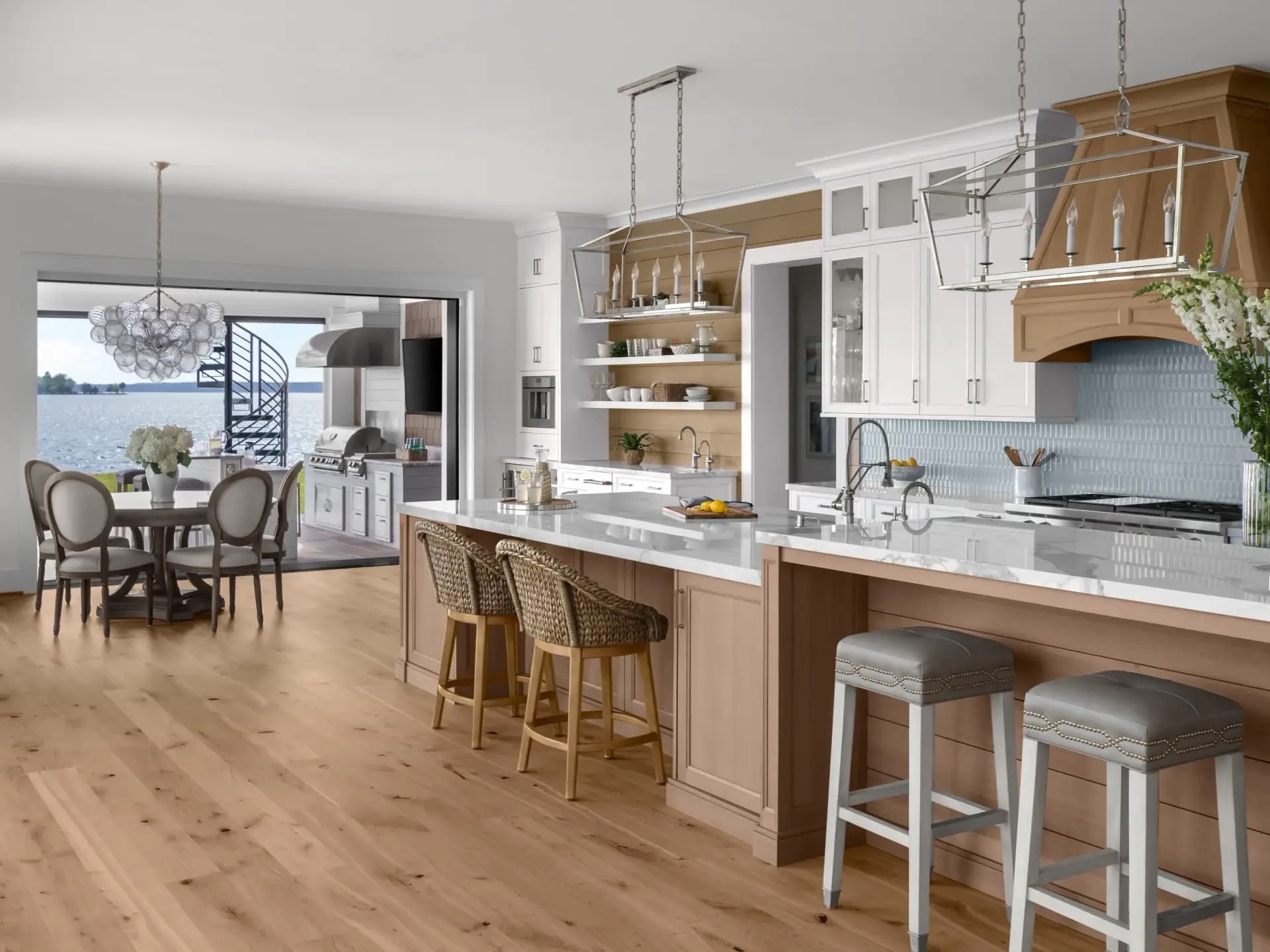
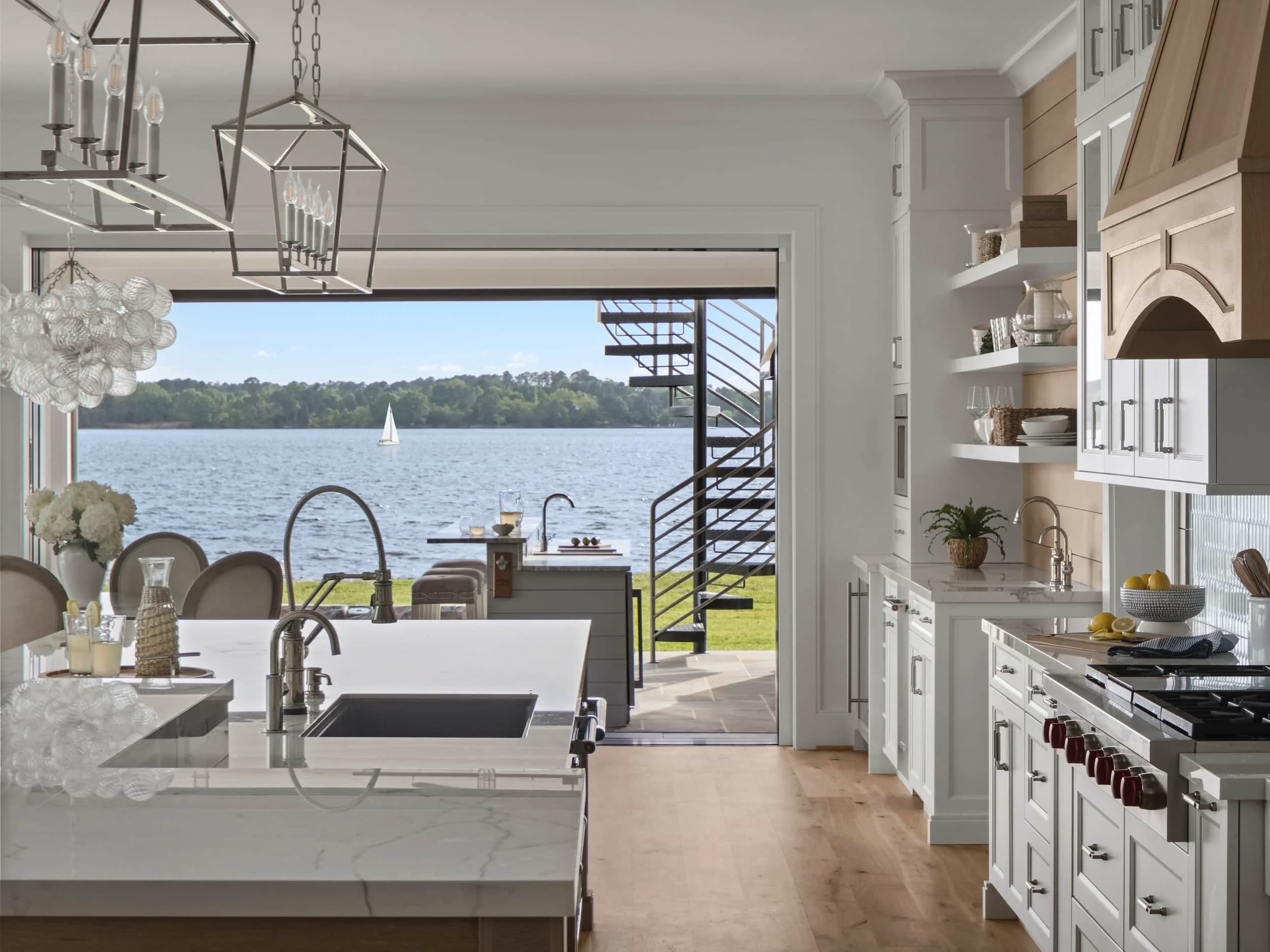
Designing a cohesive layout for a seaside coastal kitchen design requires managing visual scale, light refraction, and structural durability across integrated indoor and outdoor living areas. Combining light-reflective painted perimeter cabinet runs with the rich organic textures of natural rift-sawn wood features creates a grounded architectural flow that blends seamlessly with expansive ocean views.
Visual Anchoring in Modern Coastal Kitchen Ideas
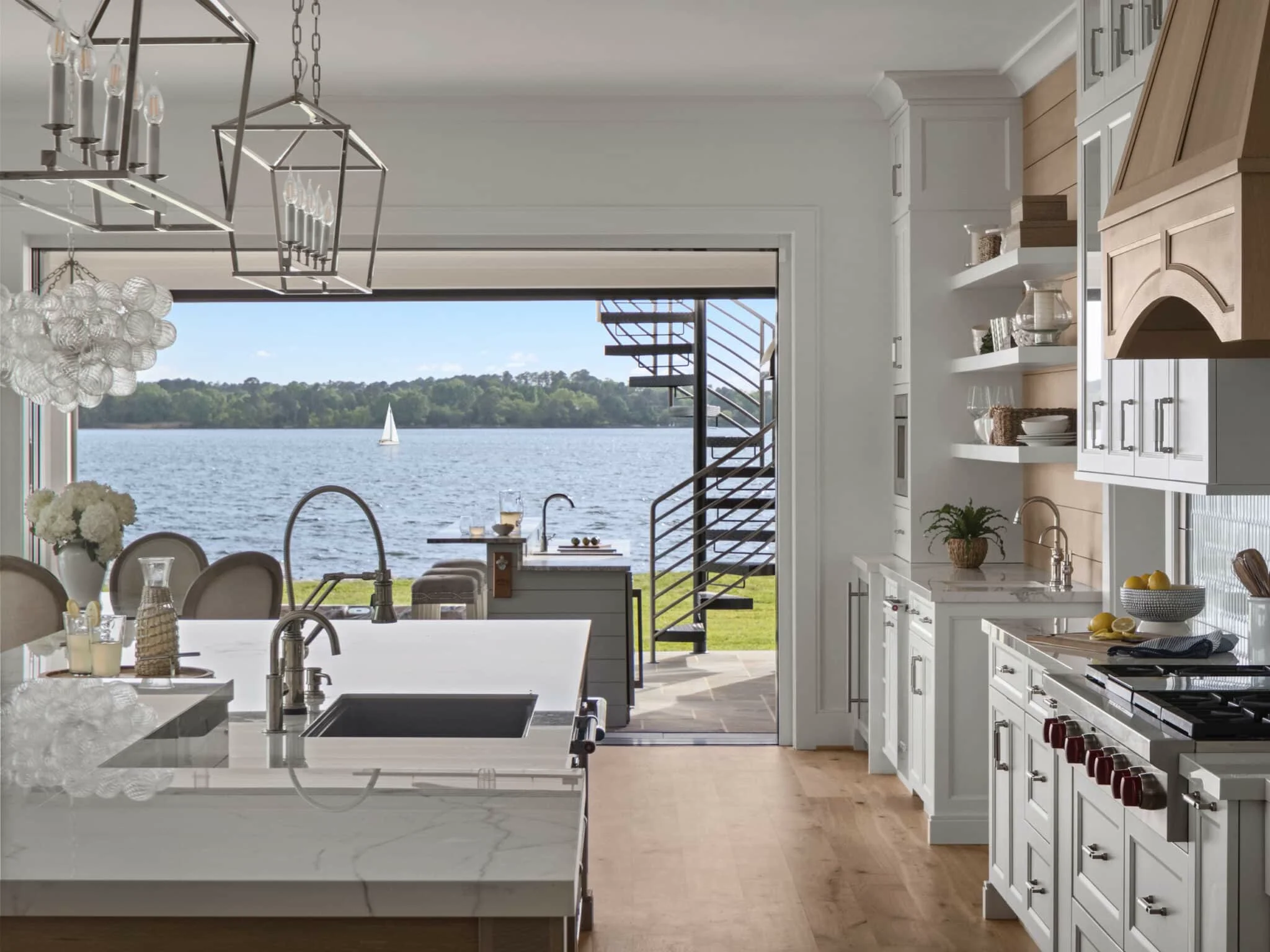
In wide-span custom residential layouts, utilizing smart modern coastal kitchen ideas allows developers to maximize views without making the space feel sterile. Implementing bright, light-reflective cabinet runs along the upper walls bounces natural light deep into the home’s open floor plan, while placing soft wood or textured finishes along the lower rows and central islands adds natural warmth. This design path can be enhanced by incorporating a high-durability boho coastal kitchen aesthetic, using organic inset screen panels and natural wood grain islands to establish a soft, tactile contrast that coordinates beautifully with luxury white quartz stone countertops.
Seamless Flow Controls in Coastal Modern Kitchen Architecture
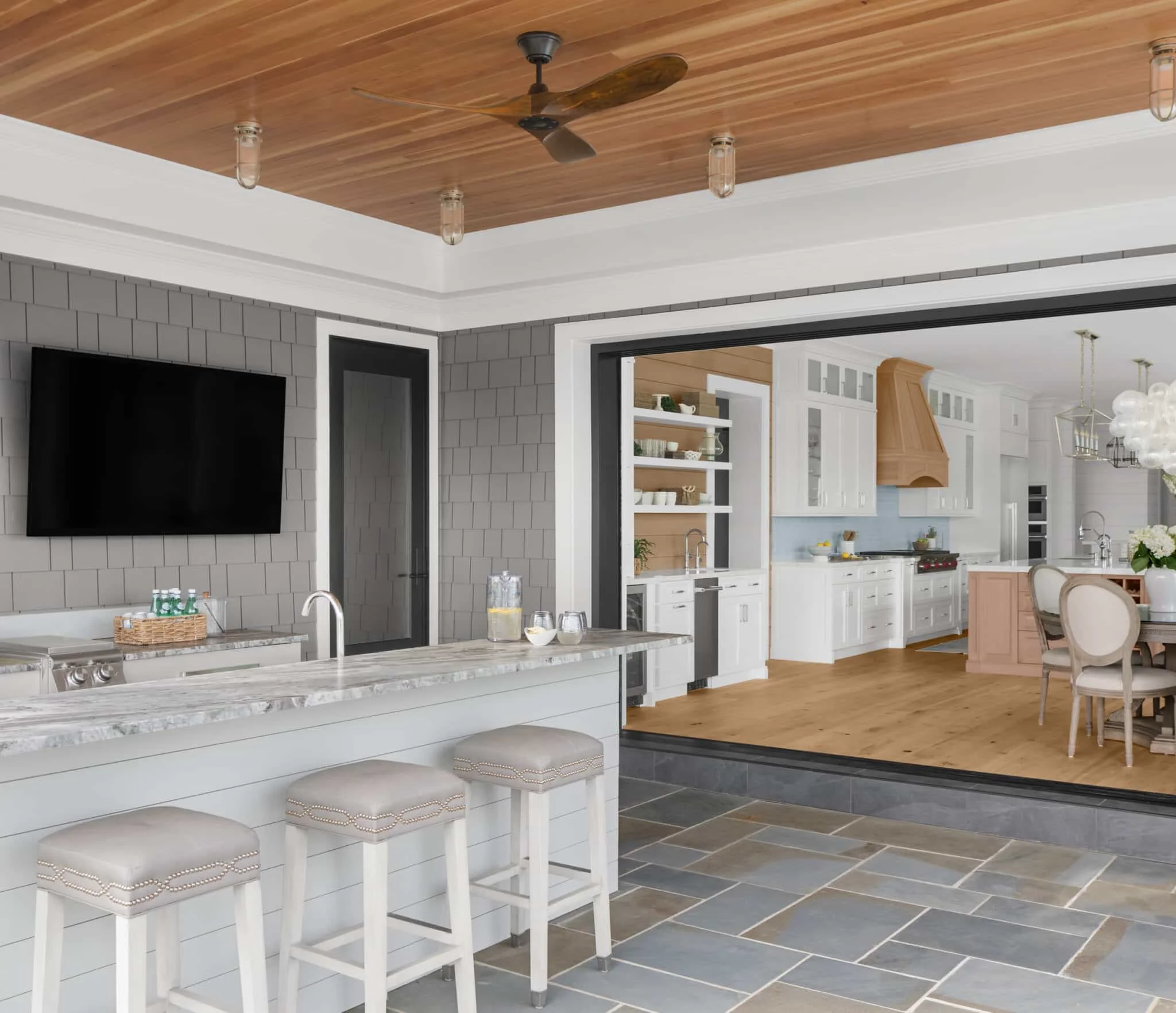
When detailing plans for an open-concept coastal modern kitchen, maintaining long, clean horizontal lines is essential for a fluid transition into adjacent dining spaces and outdoor entertainment decks. Utilizing flush-to-frame column integration panel systems hides heavy refrigeration columns, while matching shiplap accent details on ventilation hoods creates a uniform design language. This alignment strategy effectively conceals the functional cabinetry infrastructure, allowing the kitchen to flow naturally into outdoor cooking pavilions and satisfying the strict visual requirements of contemporary coastal contemporary kitchens.
Extension of Coordinated Millwork into Secondary Coastal Zones
Design Continuity in Coastal Beach House Kitchen Blueprints
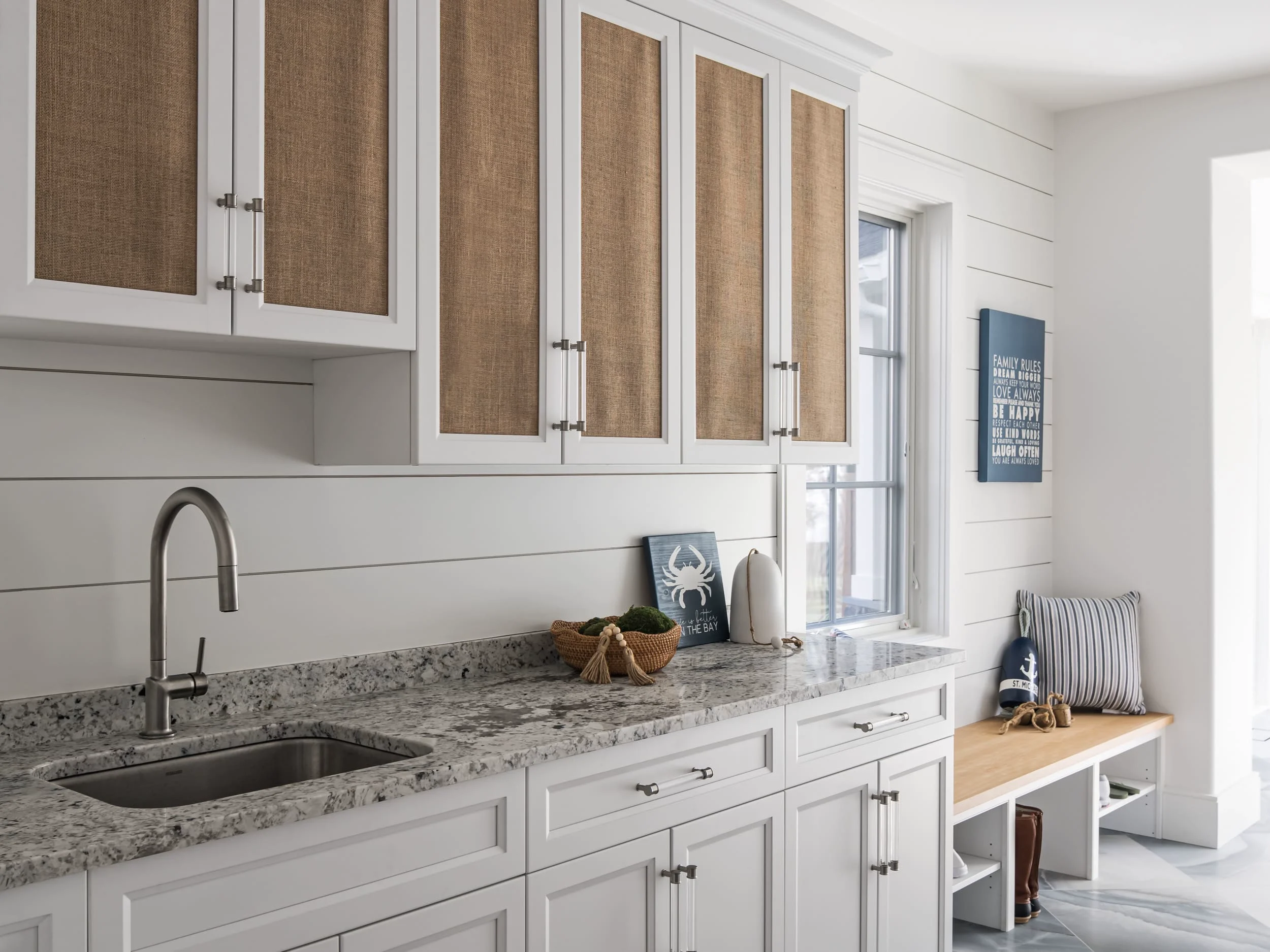
When detailing layouts for premium custom homes, utilizing inspiring coastal kitchens ideas ensures that secondary spaces perform with the same high level of finish as the main cooking area. Integrating custom built-in mudroom seating banks, open linen shelves, and storage lockers with matching frame profiles ensures a consistent visual rhythm as you move through active entry zones. This thorough design flow successfully blends entryways and utility rooms into the home’s main living spaces, satisfying the strict quality standards of high-end custom builds.
Durability Standards for High-Traffic Sculleries and Beach Mudrooms
Secondary service zones, walk-in dry storage pantries, and beach house drop zones experience high foot traffic and regular exposure to wet gear, sand, and coastal moisture. To provide optimal durability, our custom auxiliary storage modules utilize the same multi-ply plywood box boxes and impact-resistant edge banding engineered for the main kitchen. This manufacturing focus delivers exceptional scratch resistance, structural squareness, and quiet hardware tracking across all home organizational hubs.
Advanced Manufacturing Calibration and Tolerances
The production of premium architectural millwork requires an integration of advanced automated machinery and strict structural quality control check-points. To deliver cabinetry packages that install seamlessly on-site without field modification, our production facilities operate under strict German-standard tolerance metrics, controlling every cut, bore, and finish coat down to a fraction of a millimeter.
Precision Sizing and Squaring Control
Every individual wood blank destined for a custom face frame or door panel undergoes computerized moisture testing before entering the automated sizing line. Our multi-axis computerized sizing cells cut panel substrates with an accuracy margin within 0.1mm, ensuring that every cabinet box is perfectly square. This strict control over sizing tolerances prevents cumulative errors across long cabinetry runs. It guarantees that when multiple custom modules are tied together on the job site, the top leveling lines and vertical vertical tracks align perfectly without requiring on-site cutting or shimming by your installation crews.