
For high-end North American residential architects, general contractors, and speculative developers, interior finishing schedules are far more than aesthetic checklists—they are strategic exercises in financial risk management. Within the luxury real estate sector, the kitchen perimeter remains the primary battleground for securing peak appraisal values and driving immediate sales velocity. While the geometric silhouette of the classic five-piece Shaker door provides a universally respected structural foundation, the modern affluent buyer’s purchasing decision is increasingly triggered by an entirely different, highly sensitive psychological variable: the color execution. Sourcing and selecting the right palette within the modern ecosystem of shaker cabinet colors requires shifting from reactive, consumer-driven retail design trends to a proactive, highly analytical color staging methodology. This practice must balance fast market absorption with strict material engineering, ensuring that the visual first impression translates directly into real estate equity.
The primary friction in volume luxury building is no longer whether to specify a Shaker layout, but how to calibrate the exact hue, saturation, and Light Reflectance Value (LRV) to harmonize with the home’s architectural volume and localized geographic daylight conditions. A high-end palette that commands a major premium in a sun-drenched Miami penthouse will completely flatten property value and look depressing in a low-light Pacific Northwest modern custom build, where cool undertones are amplified by overcast skies. Furthermore, applying high-pigment custom cabinet finishes introduces distinct chemical challenges regarding surface coating longevity, mechanical chipping at the seams, and long-term resistance to skin lipids and household cleaning reagents. Sourcing high-performance cabinetry demands an elite manufacturing partner that can seamlessly integrate custom-formulated coating aesthetics with industrial-grade finish durability, thereby eliminating installation-phase surface failures, minimizing job-site touch-ups, and preventing subsequent warranty callbacks that destroy developer profit margins.
Chromatic Foundations: Mitigating Architectural Sterility via Sophisticated Light Refraction
Calibrating High-Volume Velocity: The Evolution of White Shaker Kitchen Cabinets
Across the historic transaction records of the United States and Canadian luxury housing markets, white shaker kitchen cabinets consistently represent the bedrock asset for mass-market liquidity and risk aversion. Speculative developers, asset managers, and multi-family procurement officers rely heavily on the white kitchen as a bulletproof, historically validated mechanism to ensure universal buyer appeal and create an illusion of expansive volume. However, under high-intensity modern residential LED lighting (specifically those calibrated around the 3000K to 4000K color temperature range), standard off-the-shelf white lacquers present an acute architectural trap. A standard, pure industrial titanium white paint refracts shortwave light with intense, uncompromising harshness. This harsh refraction strips a premium space of its geometric depth, brutally exposes microscopic core variations or substrate seams, and creates an institutional, clinical atmosphere that subconsciously repels affluent buyers who equate over-brightness with cheap, uncalibrated commercial construction.
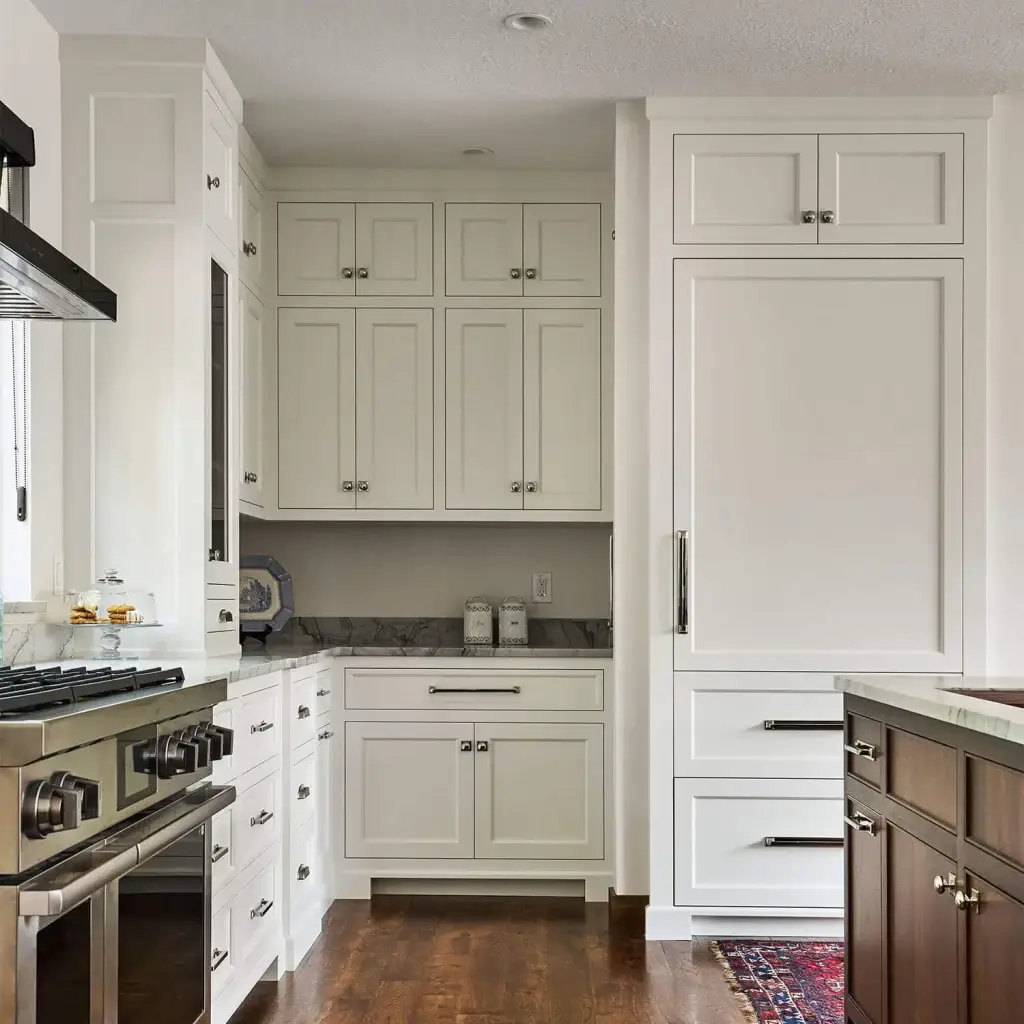
To execute this foundational, universally liquid kitchen layout while strictly preserving architectural prestige and premium real estate positioning, elite custom developers substitute stark industrial whites with carefully formulated tonal variations. Specifying off white shaker kitchen cabinets infuses the custom millwork perimeter with micro-pigments of warm mineral umber, soft ochre, and raw grey. These elements successfully tone down the Light Reflectance Value (LRV) to a balanced, visually comfortable 76% to 83% range. This controlled formulation absorbs harsh, piercing light wavelengths, establishing a soft-focus, sophisticated velvet refraction effect across the face of the stiles and rails. For estate-level projects emphasizing classical classical proportions, custom hearth features, or transitional warmth, moving to cream shaker kitchen cabinets adds an antique velvet luxury layer. This specialized coating technique transforms a basic white perimeter wall into a rich visual texture that beautifully highlights unlacquered brass hardware and natural premium stone veining, effectively converting a standard kitchen floor plan into a highly customized, high-end architectural focal point.
The Greige Paradigm: Designing Nuanced Textures for Modern Neutral Spaces
Mastering Sophisticated Neutrals: The Global Demand for Gray Shaker Kitchen Cabinets
In the metropolitan luxury markets across North America, the definition of a neutral interior has undergone a deep, permanent evolution over the past several years. Architectural sourcing data indicates that specifying gray shaker kitchen cabinets has shattered historical builder-grade limitations, transitioning from a passing contemporary preference into an enduring industry benchmark for upscale multi-family urban penthouses and mid-rise residential developments. Modern real estate developers understand that managing neutral surfaces requires recognizing that buyers are drawn to complex, layered hues. This is why high-end custom specifications often use premium grey shaker kitchen cabinets to describe a sophisticated, taupe-heavy greige tone formulated with earth-based pigments. This organic, warm hue reflects the organic modernism and biophilic design movements currently dominating luxury residential interior architecture, standing out beautifully against traditional, colder industrial grays.
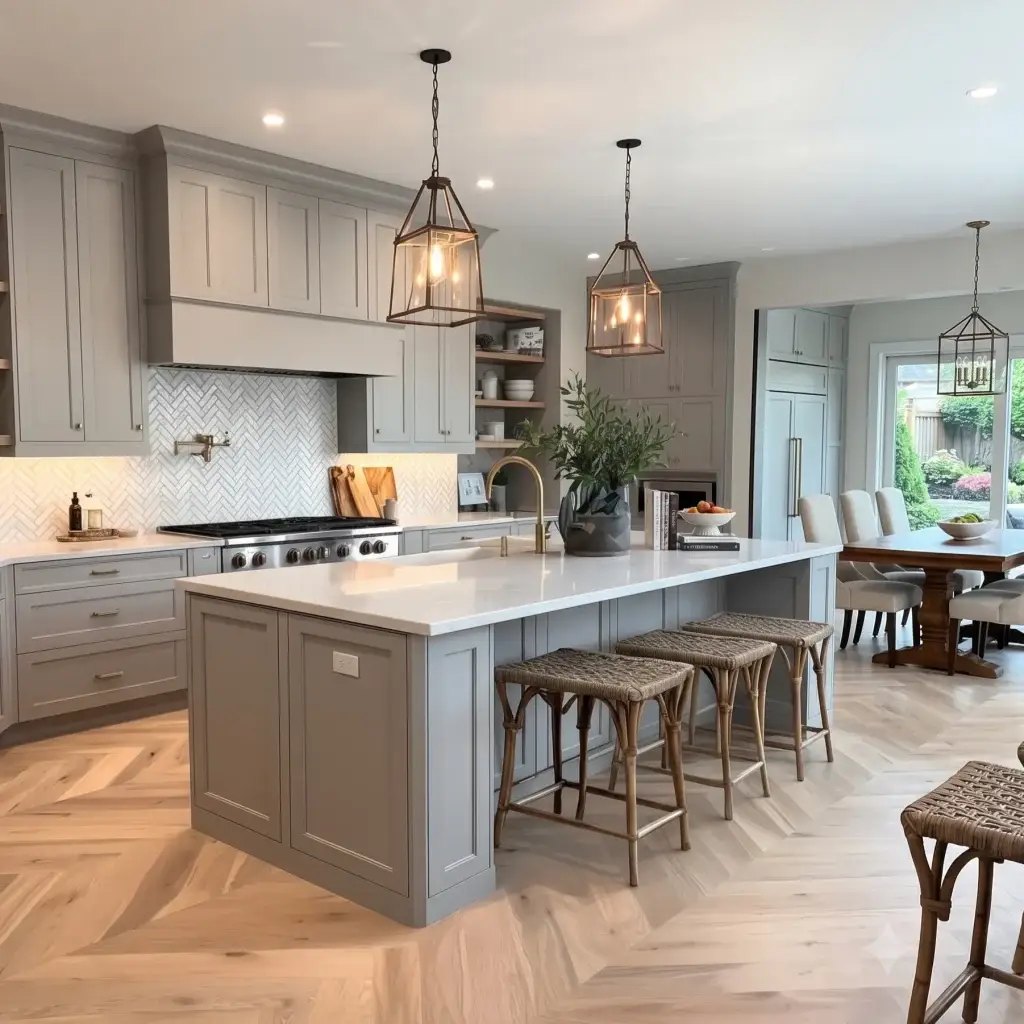
To balance this neutral palette perfectly without making a high-end space look dark, muddy, or institutional, developers must precisely match their selected gray saturation levels with the specific ambient light volumes and glazing specs of the property. Specifying light gray shaker kitchen cabinets or its warmer, soft-toned equivalent, light grey shaker kitchen cabinets, acts as an incredibly effective spatial expander for open-concept floor plans that feature constrained windows or deep architectural overhangs. These subtle grey shades soften the traditional, harsh 90-degree Shaker frame shadow lines, blending them down into clean, crisp pencil reveals that track beautifully across long kitchen walls. This refined linear proportion delivers exactly what modern upscale home buyers demand: the geometric simplicity and clean horizontal lines of a flat panel, combined with the proven structural strength, dimensional depth, and timeless market longevity of a multi-piece wood Shaker door.
Saturated Distinction: Dominating the Luxury Market via Bold Chromatic Statements
The Structural Resilience of Deep Tones: Black, Blue, and Green Shaker Cabinets
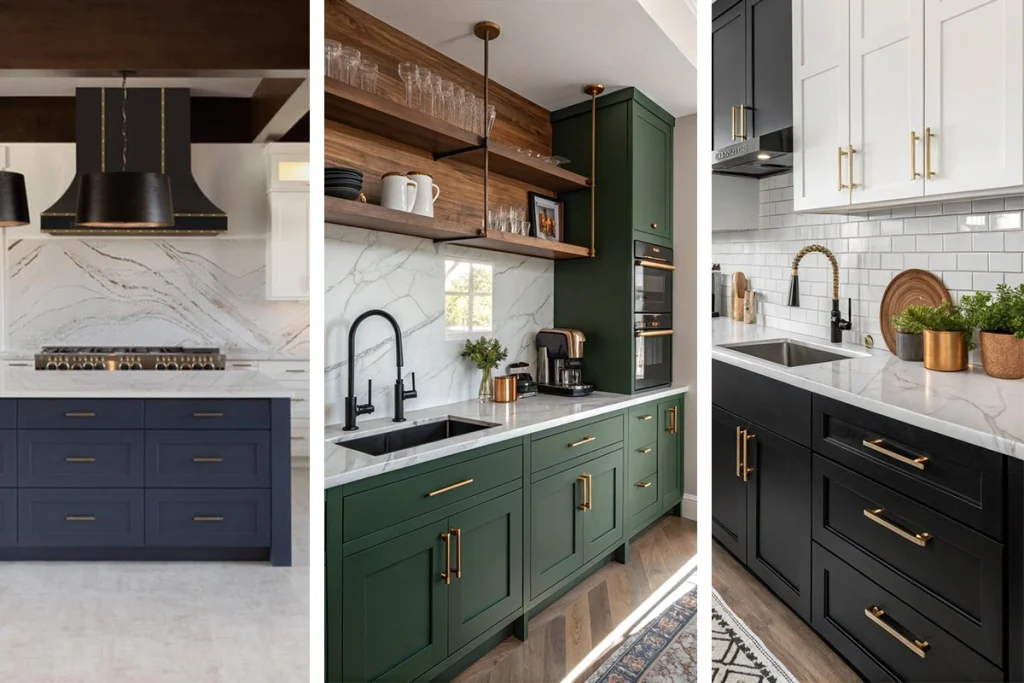
While classic neutral palettes represent a safe, reliable strategy for maintaining broad property velocity, modern high-net-worth real estate buyers increasingly view customized architectural statements as the definitive marker of genuine luxury. This consumer behavioral shift has generated a clear, sustained surge in specifications for bold, rich color tones, specifically black shaker kitchen cabinets, blue shaker kitchen cabinets, and green shaker kitchen cabinets. Employed as a high-contrast focal point on a large central kitchen island, an integrated wet bar, or a full-height butler’s pantry, a deeply saturated Shaker door completely breaks the monotony of standard residential layouts, transforming the kitchen into an upscale, custom environment. However, specifying high-pigment dark surfaces introduces severe physical, chemical, and performance challenges regarding finish coating adhesion and impact resistance that standard commodity manufacturing facilities simply cannot manage.
The primary structural vulnerability of dark pigments is their physical tendency to highlight minor surface defects, such as oily fingerprints, microscopic abrasions, and wood joint movement caused by seasonal moisture shifts. On a dark matte surface, natural skin lipids leave prominent glossy smudges that degrade the clean look of the kitchen cabinet installation. To eliminate this issue for our development partners, ALLAND utilizes an industrial-grade, multi-stage spray coating process utilizing premium-grade polyurethane coatings. Applied in dust-free, positive-pressure automated spray booths and subjected to meticulous thermal-controlled baking and flow-and-leveling cycles, this multi-layer finish forms an incredibly dense, cross-linked protective shell over the substrate. Our dark finishes consistently achieve a true ultra-matte gloss level below 5%, offering robust day-to-day resistance against kitchen steam, oils, and minor physical impacts without experiencing color fading, surface micro-chipping, or joint separation at the door seams.
Mastering the Botanicals: The Premium Equity of Sage Green Shaker Kitchen Cabinets
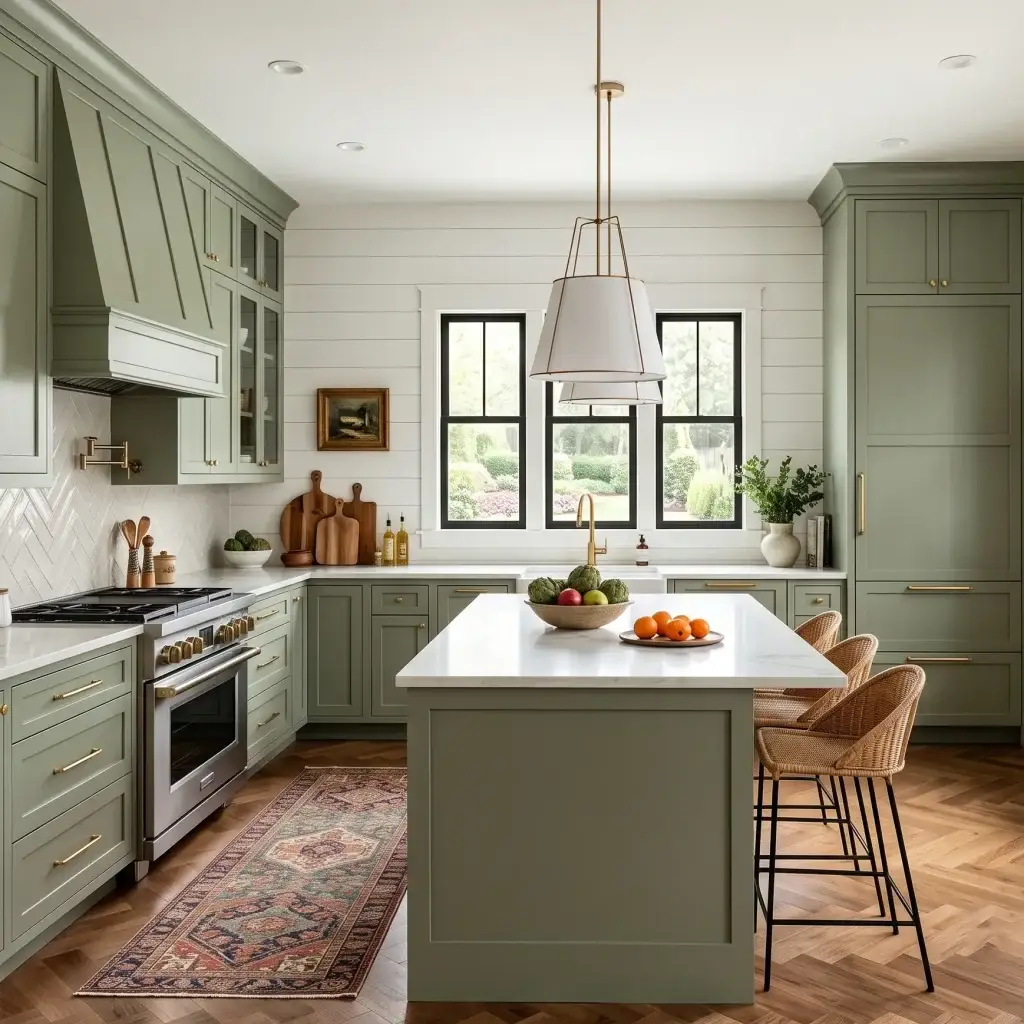
Within the bold color spectrum, the most notable trend for high-end residential projects is the rise of soft, botanical tones, specifically sage green shaker kitchen cabinets. This organic shade acts as a soft neutral color, bringing the calming aesthetic of biophilic design into the home. It pairs beautifully with natural rift-sawn white oak flooring, marble countertops, and unlacquered brass finishes.
However, achieving an authentic, designer-grade sage green requires precise pigment control. Cheap production lines often mix formulas with too much blue or bright yellow, resulting in a low-end look that can diminish the home’s market value. ALLAND’s design team works closely with experienced color technicians, utilizing computerized color spectrometers to blend muted, sophisticated sage greens. These curated palettes feature subtle earthy and grey undertones that maintain color integrity under different lighting conditions. This level of precise color execution delivers the high-end, tailored luxury look that premium custom developments demand to justify higher property pricing.
Sourcing Excellence: Receive a Factory-Direct Architectural Estimate Within 48 Hours
Sourcing custom cabinetry for multi-family developments or luxury estates requires a manufacturing partner that balances design with dependable production schedules. With 18 years of specialized custom cabinetry experience, three world-class manufacturing facilities, and over 11,500 successfully delivered international projects, ALLAND effectively bridges the gap between premium custom craftsmanship and high-volume manufacturing efficiency. Our engineering team translates your floor plans into detailed BIM/CAD shop drawings to ensure every dimension matches your site perfectly. To protect your financial margins, we ship all heavy hardware—including metal handles, hinges, and drawer slides—entirely unmounted and packed in separate, reinforced packaging, completely preventing transit scratches on your premium door profiles. Optimize your cabinetry supply chain, eliminate expensive installation delays, and elevate your next development project with premium Shaker millwork by contacting our B2B commercial project desk today to submit your architectural drawings, tender documents, or custom specifications for a comprehensive factory-direct wholesale estimate within 48 business hours.