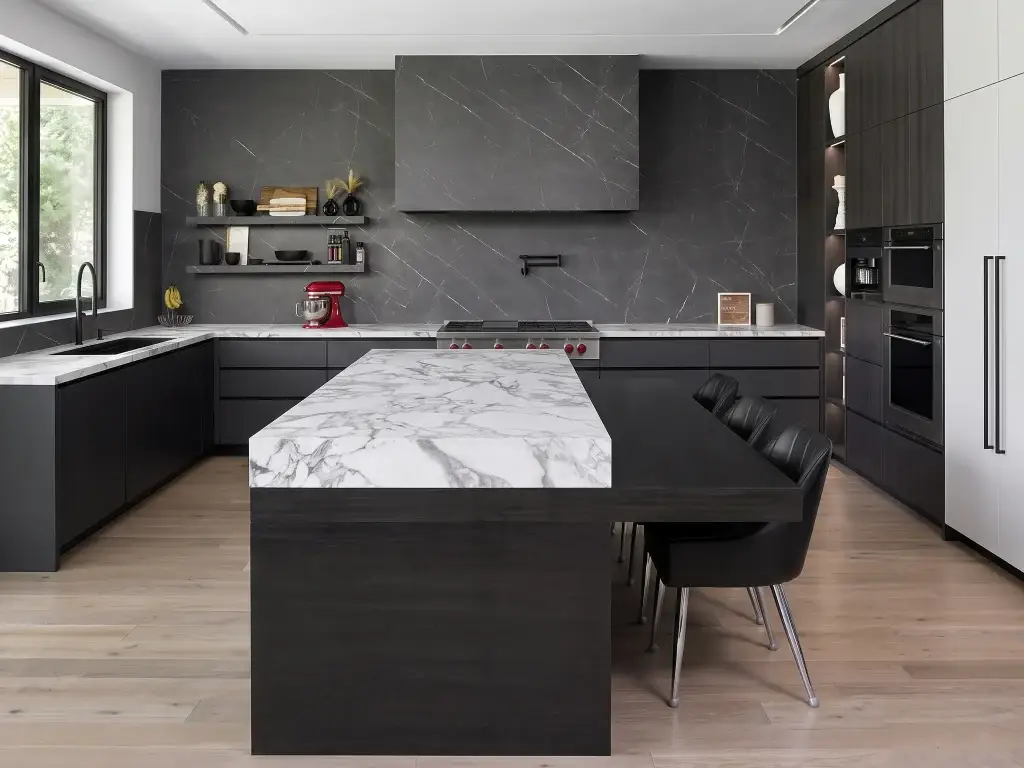
Modern architectural specifications for high-density residential portfolios, custom luxury estates, and high-end residential millwork in North America require strict engineering balances between programmatic design aesthetics and long-term structural durability. While traditional five-piece cabinet panel assemblies handle the naturally occurring expansion and contraction of organic wood fibers via floating center panel components inside a mortise-and-tenon or mitered frame construction, the execution of minimalist structural design using single-piece flat surfaces presents serious physical difficulties. A monolithic slab panel does not contain structural frame joints to absorb internal tension caused by changing room temperatures and atmospheric moisture levels. When these large, single-piece doors are placed in demanding environmental zones—such as multi-family projects with shared HVAC infrastructure or coastal environments with shifting humidity profiles—standard commercial-grade cabinetry door panels are highly susceptible to vertical warping, structural twisting, and localized delamination along the edges.
For custom home builders, general contractors, real estate developers, and discerning homeowners working within the CSI MasterFormat framework (specifically Section 12 32 00 for Manufactured Wood Casework and Section 06 41 00 for Architectural Woodwork), evaluating dynamic internal structural performance is more critical than analyzing initial surface designs. A minor structural failure of 1.5 millimeters across an integrated layout of flat-panel millwork completely breaks the linear shadows required by modern architecture, signals low building quality to prospective buyers, and triggers expensive structural retrofits that hurt project profitability. Preventing these post-installation structural issues requires a complete technical understanding of the raw materials inside composite substrates, the molecular performance profiles of modern engineered coatings, and the physical protection methods needed to preserve wood panels during maritime logistics. Working with an institutional millwork supplier that adheres to the highest Architectural Woodwork Standards (AWS) prevents product failures and ensures flat panel surfaces retain their shape through decades of heavy wear.
Sourcing Strategy Part I: The Substrate Matrix—Deconstructing Structural Cabinet Door Materials
The mechanical integrity of a flat slab cabinet perimeter relies entirely on the technical properties of the internal core panel substrate. Home builders and general contractors evaluating competitive production bids must look beyond initial material descriptions to verify specific density metrics, core composition consistency, internal bond strength parameters, and wood grain structural balancing. Choosing appropriate cabinet door materials is not just about raw component costs; it involves matching the mechanical characteristics of engineered wood cores with the specific weight-bearing and environmental stresses of the residential project layout. A poorly selected core will display structural movement along its cross-grain axes, causing misaligned doors and sagging hardware connections before project completion.
The Primary Structural Standard: Engineering Plywood Cabinet Doors for High-End Demands
Within high-end residential projects and custom architectural woodworking specifications, plywood cabinet doors serve as the premium option for projects requiring superior structural impact resistance and long-term hardware retention. The physical superiority of an engineered plywood core depends on its cross-laminated layering method. Plywood substrates are manufactured by peeling premium grade hardwood logs into separate thin plies, which are then aligned in a strict alternating perpendicular arrangement before being hot-pressed with specialized interior resins. This structural matrix creates a balanced internal distribution of forces that resists splitting, provides high pull-out screw resistance along the hinge side, and offers the structural quality expected in high-end luxury developments.
Managing Cross-Grain Tension: Sourcing Plywood Slab Cabinet Doors Flawlessly
Creating a large modern slab panel using a multi-ply structural core requires precise technical control over the internal balances of the plies. While a premium multi-layer birch core provides high structural strength, it remains vulnerable to internal cross-grain tension if the plies absorb environmental moisture unevenly. To build reliable plywood slab cabinet doors that exceed 30 inches in height without bowing, production lines must utilize a precise odd number of layers—typically 9 to 13 plies for a 3/4-inch panel profile. The balancing plies situated on opposite sides of the panel center line must feature exactly identical grain configurations, raw species density, and moisture content parameters. Any deviations during core pressing will create an uneven physical pull across the panel faces, causing the door to twist when indoor humidity changes seasonally. When applied to comprehensive wood slab kitchen cabinets projects, this strict cross-laminated configuration delivers a rigid carcass framework and structural panel performance that stands straight through decades of heavy use.
The Monolithic Precision Standard: Premium MDF Kitchen Cabinet Doors and Isotropic Material Physics
Throughout contemporary residential real estate developments and premium custom home projects in the United States, mdf kitchen cabinet doors have become the definitive industry benchmark for flawlessly flat, painted flat-panel interior millwork. Industrial-grade Medium-Density Fiberboard represents the absolute pinnacle of engineered core consistency for expansive flat surfaces. Manufactured by processing premium, clean softwood and hardwood residuals into ultra-fine, uniform wood fibers, the substrate is refined, mixed with advanced synthetic thermosetting resins, and pressed under intense hydraulic pressure and high thermal heat. This intensive process achieves a perfectly calculated, uniform density profile calibrated between 740 and 800 kg/m³, producing an isotropic interior matrix that remains completely stable over long lifecycles.
The Monoblock Advantage: Eradicating Core Telegraphing and Achieving Zero-Tolerance Profiles
The primary mechanical advantage of a premium MDF composite slab panel is its completely uniform, non-directional internal structure. Because an industrial MDF core possesses no natural wood grain pathways or growth rings, it exhibits zero grain directionality. This structural physics profile ensures that its coefficients of thermal expansion and moisture absorption remain practically identical across both its horizontal and vertical axes. When processed on automated computer-controlled CNC routing lines, MDF allows for incredibly clean edge profiles, perfect internal 90-degree corners, and seamless integration with hidden finger pulls (such as integrated J-pull channels) without any fiber tearing. Furthermore, this homogeneous structural matrix completely eliminates the industry flaw known as joint-line telegraphing, where underlying component seams expand at different rates and visibly crack the brittle exterior paint coating. Specifying mdf kitchen cabinet doors offers an exceptionally stable base that remains glass-smooth through heavy winter heating and summer cooling cycles.
Sourcing Verification: HDF Cabinet Doors and the Structural Realities of Ultra-Dense Substrates
In alternative architectural procurement schedules, buyers may encounter specifications calling for hdf cabinet doors. High-Density Fiberboard (HDF) is manufactured using a technical process similar to MDF but is compressed to a significantly higher density profile exceeding 850 kg/m³. While this ultra-dense internal matrix provides exceptional hardness and surface dent resistance, extensive real-world engineering evaluations demonstrate that HDF presents severe structural risks when deployed as wide, monolithic slab cabinet doors. The extremely high fiber concentration inside an HDF panel creates intense internal micro-stresses. When exposed to seasonal humidity variations in North American homes, these tightly packed wood fibers expand with significant linear force. Without an interlocking frame configuration to absorb this tension, a single-piece HDF slab door exhibits a high propensity for catastrophic vertical twisting and severe hinge-screw shear fatigue.
Engineering Realities: Guided Flow from HDF to Optimized MDF and Plywood Architecture
Because of these inherent structural tendencies, premier custom cabinetry manufacturers avoid utilizing HDF for large, unconstrained cabinet door panels. Instead, industry-leading automated production facilities guide project estimators and contractors away from HDF doors, recommending advanced industrial-grade MDF for painted lacquer flat profiles and multi-ply hardwood plywood for structural cabinet boxes. By utilizing optimized materials where their mechanical properties align with real-world stresses, residential projects achieve perfect structural reliability. This strategy eliminates post-installation hardware sagging and eliminates tenant or homeowner warranty callbacks entirely.
Substrate Selection Metrics: Sourcing MDF vs Plywood for Kitchen Cabinets
For general contractors, custom home builders, and project architects, making the definitive procurement selection between mdf vs plywood for kitchen cabinets requires a comprehensive mapping of each substrate’s specific mechanical parameters against the aesthetic goals and weight-bearing requirements of the space. This decision should not be driven by a simple analysis of raw material pricing; instead, it must involve an analytical mapping of technical specifications against real-world job-site conditions. Multi-ply engineered plywood exhibits excellent bending strength and superior resistance to mechanical creep under heavy loads, making it the ideal choice for constructing structural carcass boxes, deep drawer bottoms, and wide shelving configurations that must hold heavy kitchenware without sagging over time.
| SUBSTRATE SELECTION SCHEDULING BLUEPRINT | ||
| CORE COMPONENT | OPTIMIZED SUBSTRATE | ARCHITECTURAL REASONING |
| Monolithic Slab Doors | Industrial Grade MDF | Zero grain alignment movement; ensures mirror-paint flatness. |
| Rigid Carcass Boxes | Multi-Layer Plywood | Peak tensile screw retention; resists structural racking. |
| Multi-Family Projects | Premium Moisture MDF | Balanced structural density; dynamic impact resilience. |
However, when analyzing alternative substrates for manufacturing flush minimalist slab kitchen cabinet doors, high-performance industrial-grade MDF represents the superior technical selection. While multi-ply wood panels offer great structural strength, they retain minor organic memory within their wood layers, which can cause subtle bowing along long vertical axes over years of daily use. Industrial MDF eliminates this organic memory completely, ensuring wide flat panels stay aligned perfectly within strict tolerances over decades of heavy service. By specifying multi-ply hardwood plywood for the structural cabinet boxes and high-performance engineered MDF for the visible flat door panels, commercial projects can secure the unique technical advantages of both materials. This strategy optimizes overall manufacturing costs while eliminating post-installation door alignment issues.
Sourcing Strategy Part II: Surface Physics—Mastering the Flat-Panel Coating Spectrum
Once the internal structural core substrate has been optimized for flat panel stability, engineering specifications must focus on surface material performance and coating physics. On a modern flush slab kitchen layout, the way light interacts with the cabinet face defines the entire quality level of the space. Because minimalist flat doors lack decorative profile edges or trim moldings to hide surface imperfections, the outer layer is highly exposed to daily wear, localized scratching, cleaning solvents, and intense sunlight. Procuring premium flat cabinetry requires specifying advanced surface coatings that combine refined design aesthetics with long-term chemical and mechanical resistance. This balance protects the builder’s professional reputation and increases the property’s real estate value.
Natural Prestige Sourcing: Architectural Veneer Cabinet Doors
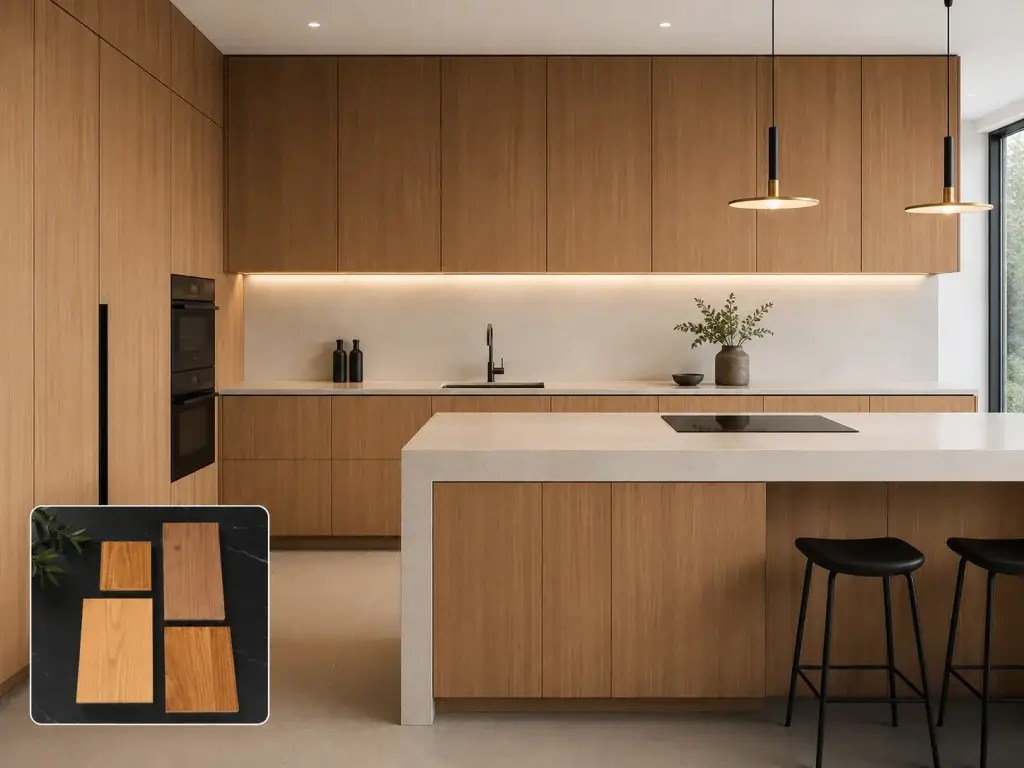
For high-net-worth real estate buyers and premium residential developers seeking to deliver authentic organic design, veneer cabinet doors represent the highest quality choice for contemporary flat-panel kitchen configurations. This premium architectural surface option is produced by slicing selected timber logs—such as FAS-grade North American black walnut, white maple, or straight-grain white oak—into micro-layers of real wood veneer. These fragile wood sheets are then vacuum-bonded to highly stable, balanced MDF core panels. This complex manufacturing process delivers the unique warmth and texture of solid wood while avoiding the severe structural bowing risks that solid hardwood planks naturally experience when exposed to changing indoor climates.
Achieving Seamless Harmony: Sourcing Veneer with Precision Book-Matching and Slip-Matching
Utilizing real wood veneers for large flat-panel kitchens requires strict quality control over wood grain matching methodologies during the manufacturing process. Because flat slab cabinet doors form a continuous, unbroken linear surface across a kitchen layout, any sudden breaks in the wood grain will immediately compromise the minimalist design. ALLAND’s custom millwork production lines incorporate advanced computerized matching systems to execute precise book-matching or slip-matching techniques. We ensure that adjacent veneer sheets sliced from the exact same log sequence are matched perfectly across the entire kitchen layout. This careful processing creates beautiful visual flow, turning a standard kitchen high-cabinet wall into a stunning custom-engineered millwork installation.
Urban Minimalist Sourcing: High Gloss Kitchen Cabinet Doors and Reflection Physics
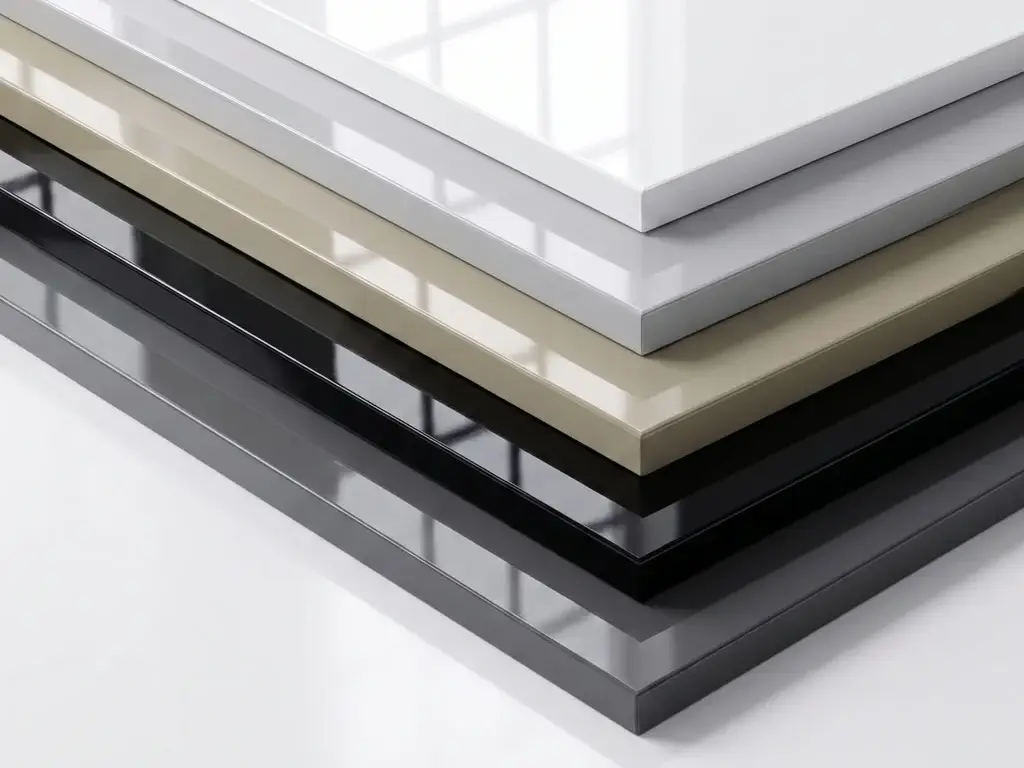
Throughout urban penthouse markets, luxury high-rise residential developments, and contemporary modern townhomes, project managers and home buyers frequently specify high gloss kitchen cabinet doors to deliver a bold, high-contrast contemporary feel. The visual impact of a premium high-gloss flat panel relies entirely on its mirror reflectance physics. The flawless, glass-like surface reflects natural sunlight and indoor ambient illumination, visually expanding the kitchen layout and creating a high-tech luxury environment that immediately impresses potential buyers during property walk-throughs.
Eradicating Orange Peel Defect: Advanced Co-Extruded PET Film Fusion
The primary quality failure when manufacturing high-gloss flat panel doors is a micro-surface defect commonly known as the orange peel effect. This problem occurs when light reflects unevenly across tiny ripples in the outer surface, resulting in a distorted, low-quality look. To prevent this issue, ALLAND completely rejects low-cost, manually sprayed glossy clear coats. Instead, our automated production facilities utilize premium, co-extruded high-molecular PET films and multi-layered UV-cured acrylic treatments fused inside positive-pressure dust-free manufacturing cleanrooms. This advanced digital processing achieves a flat finish with a gloss rating exceeding 90 gloss units. The resulting surface provides a completely sharp reflection that enhances the modern look of the home and supports a real estate premium.
Extreme Commercial Sourcing: Laminate Kitchen Cabinet Doors and Melamine Door Cabinet Systems
When high-volume real estate developers and commercial procurement teams plan large-scale multi-family housing projects or heavy-use urban living developments, the priority shifts toward structural durability and budget management. Sourcing high-maintenance real wood finishes or multi-stage painted lacquers for thousands of individual rental units introduces long-term operational cost risks due to rough tenant behavior. For these cost-sensitive, high-traffic institutional developments, engineering specifications focus on advanced surface materials, specifically laminate kitchen cabinet doors and premium melamine door cabinet systems.
Advanced Structural Lamination: Sourcing High-Pressure Thermo-Bonded Technology
Contemporary composite surface technology has advanced far beyond old-fashioned, artificial-looking plastic overlays. ALLAND’s commercial-grade laminate kitchen cabinet doors incorporate premium high-pressure laminates (HPL) bonded to carbon-neutral MDF cores using automated thermosetting adhesive systems. These advanced outer surfaces feature 3D molded physical textures that accurately replicate the tactile feel of open-pore wood timbers, raw stone slabs, or modern brushed metallic sheets. This durable design offers superior resistance to sharp impacts, surface scratches, and commercial chemical cleaning solvents. Similarly, our thermofused melamine door cabinet options offer general contractors an affordable B2B alternative that delivers clean minimalist flat styling, excellent water resistance near undermount sinks, and a reliable surface that requires zero maintenance throughout its entire structural lifecycle.
Chromatic Harmony and Environmental Synergy: Calibrating Substrates and Finishes to Geographic Zones
Procuring a premium modern slab cabinet perimeter involves more than selecting a single core material or coating film; success requires organizing a coordinated pairing of structural core materials and exterior finishes engineered for the specific regional climate of the project location. In North American luxury custom real estate developments, architects and contractors must recognize that localized atmospheric environments—including regional humidity variations and the directional angle of ultraviolet sun exposure—will directly interact with the cabinetry surfaces over time. A material configuration that functions perfectly in a dry, sun-drenched environment can face severe performance risks when exposed to the extreme seasonal temperature swings of northern inland states.
| GEOGRAPHIC MATERIAL SYNERGY ARCHITECTURE | ||
| CLIMATIC ZONE | MATERIAL PAIRING | ENVIRONMENTAL SYNERGY RATIONALE |
| Coastal High-Humidity | Premium Moisture MDF+ Ultra-Matte PU | Polyurethane coatings seal core; 100% immune to salt-air and dynamic humidity swelling. |
| Cold Northern Inland | Multi-Layer Plywood + Architectural Oak Veneer (Balanced) | Layered cross-lamination flags organic memory; balanced veneer counteracts furnace dryness. |
| High-Density Urban | Industrial MDF Core + Co-Extruded PET High-Gloss Laminate | PET mirror film ensures zero fading under UV rays; mirror reflection scales visual room. |
To successfully manage these environmental demands, ALLAND’s technical engineering team assists home builders, general contractors, developers, and homeowners in matching material substrates and surface coatings with local site environments. In coastal development regions exposed to sustained humidity and salty sea air, we specify our premium moisture-resistant MDF core combined with a premium multi-stage hard-polyurethane coating system featuring an ultra-matte finish. This advanced polyurethane formulation forms a highly dense, cross-linked protective seal that blocks out ambient moisture, completely eliminating the fiber swelling and edge delamination common in low-cost imports. Conversely, for northern developments experiencing freezing winters and dry indoor heating, we specify our multi-layer birch plywood cabinet doors paired with a tension-balanced natural wood veneer layer on both sides. The layered cross-laminated plywood base resists severe dryness exceptionally well, while the matching backing veneer balances the physical pull, preventing the door panel from bowing under seasonal changes. This careful engineering balance ensures your flat slab profiles stay perfectly straight, stable, and visually flawless, protecting your professional reputation and maximizing long-term property valuation.