
Slim Shaker vs Shaker Cabinets Specification and Selection Guide
For general contractors, luxury estate architects, and residential developers, choosing between slim shaker vs shaker doors is no longer a simple styling decision. For nearly three decades, the traditional five-piece shaker style kitchen cabinet with its 2.5-inch to 3-inch framing anchored North American transitional homes. However, today’s high-net-worth buyers push back against heavy traditional profiles as visually dated, while viewing completely flat European slab doors as overly sterile or reminiscent of commercial rentals.
The architectural micro-shaker (often called a thin shaker kitchen profile) emerged to solve this exact crossroads. By trimming the perimeter frame down to an ultra-refined 1/2-inch (12mm) or 3/4-inch boundary, it preserves the warm shadowlines of traditional casework while delivering clean, linear minimalism.
Yet behind the rendering, detailing this slender profile triggers severe jobsite anxieties:
The Frame Shearing Failure: Micro-thin 1/2″ solid wood stiles snapping at the mortise under the torque of commercial soft-close hinges, or thin multi-piece frames separating when field humidity swings.
The “Commercial Plastic” Trap: Sourcing cheap vinyl-wrapped thermofoil doors with rounded, blurred internal corners that immediately telegraph low-end modular construction under 3000K recessed lighting.
The Inset Binding Nightmare: Squeezing delicate micro-profiles into inset slim shaker cabinets, only to watch doors bind against the face frame once stone countertops compress the base carcasses.
As an export-driven custom cabinetry factory, ALLAND breaks down the precise dimensional ratios, substrate joinery physics, and finish engineering required to deliver flawless casework packages with zero jobsite callbacks.
Visual Mass & Proportions: Traditional Shaker vs. Slim Micro-Profiles
The fundamental difference between these two profiles lies in how they manipulate visual shadowlines and directional light within the room.
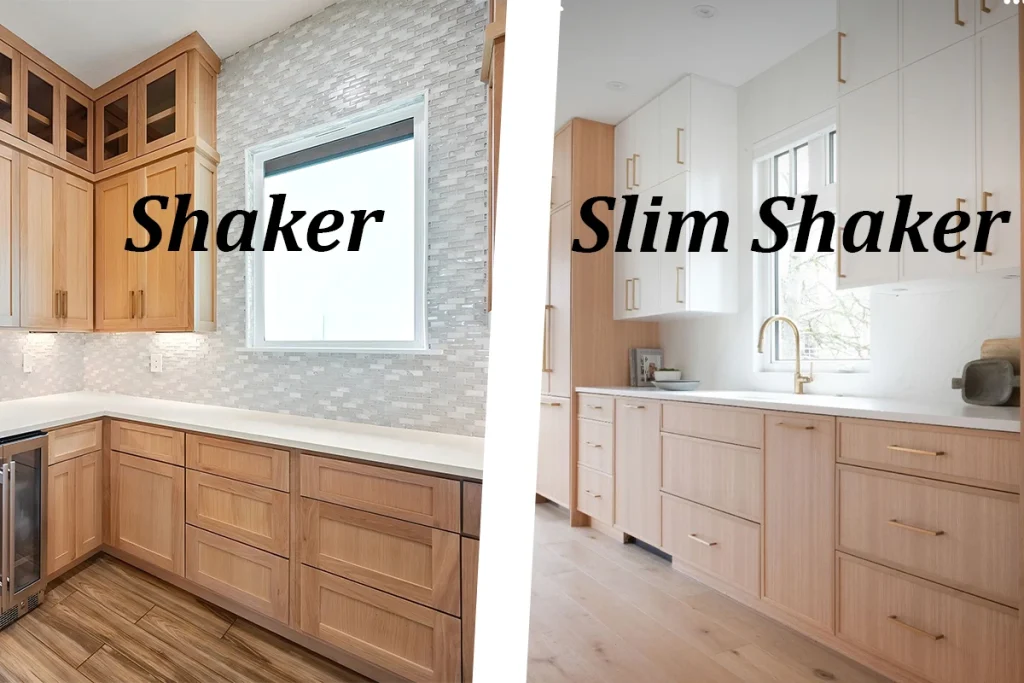
Proportional Dimensional Benchmarks
Traditional Shaker Profile (2.5″ to 3.0″ Stiles & Rails): Characterized by deep, dramatic shadow recesses. It introduces substantial visual mass, making it the natural counterpart for expansive ceiling heights (10+ feet), heavy coffered ceilings, and substantial decorative crown moldings in classic Craftsman or Colonial estates.
Modern Slim Shaker Profile (1/2″ to 3/4″ Micro-Borders): Slashes the perimeter frame width by more than 70%. By flattening the visual field, the micro-frame acts as an elegant picture frame around the central panel. It lets the organic flow of wood grain or the smooth perfection of ultra-matte mineral lacquer become the primary design feature.
Spatial Ceiling Optimization: In urban penthouses or homes with 8-to-9-foot ceilings, heavy traditional 3-inch shaker profiles compress vertical room volume. Specifying a thin shaker kitchen elevation draws the eye vertically upward through pencil-slim reveals, significantly expanding the perceived spatial envelope.
Structural Joinery Physics: One-Piece Routered vs. Five-Piece Assembled
Contractors must never treat a slim shaker door as merely a narrower traditional door. Manufacturing a 1/2-inch border using conventional 5-piece solid wood joinery is an engineering hazard waiting to fail under daily kitchen use.
The Five-Piece Joint Vulnerability
Traditional shaker doors rely on two vertical stiles, two horizontal rails, and a floating center panel joined via mortise-and-tenon joints:
Severe Tenon Reduction: When stiles are reduced to 1/2-inch (12mm) in solid lumber, the glue surface area within the tenon drops by over 60%.
Rotational Hinge Torque: When pulling open an integrated heavy dishwasher panel or a tall pantry door with concealed soft-close hinges, the rotational hinge leverage concentrates directly on this reduced joint, leading to cracked corners and loose tenons within 12 months.
Precision Architecture: Engineering the Monolithic Thin Shaker
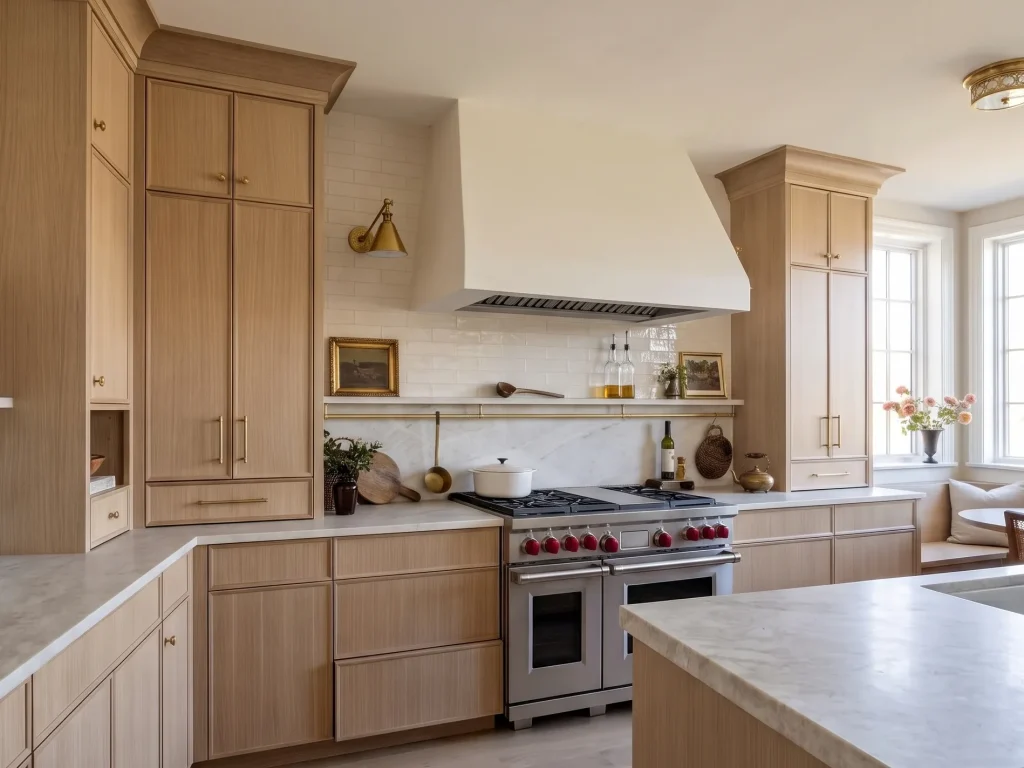
To solve this structural limitation and deliver an authentic, high-end architectural finish, ALLAND utilizes monolithic 1-piece CNC precision routing for all painted thin shaker casework:
Razor-Sharp 90-Degree Internal Corners: Unlike mass-produced modular cabinets that use cheap rounded router bits—or vacuum-formed vinyl wraps that look soft and commercial—we deploy specialized micro-diameter diamond router tooling. This cuts crisp, absolute 90-degree internal profile intersections that cast sharp, tailored shadowlines.
Homogeneous Structural Stability: By precision-routing the recessed center pocket directly out of a single sheet of CARB-2 certified moisture-resistant industrial MDF, the frame and center panel remain one solid entity. There are zero joints to shear, zero glue seams to fail, and zero seasonal expansion lines to crack the finish.
Advanced Framing Execution: Inset Slim Shaker Cabinets and In-Frame Systems
While standard full-overlay frameless cabinetry dominates contemporary apartments, the undisputed pinnacle of luxury residential casework is inset slim shaker cabinets built within an in frame shaker kitchen chassis.
In this layout, the cabinet door does not lay on top of the cabinet box; it sits completely flush inside a structural 3/4-inch solid wood face frame, transforming the installation into high-end architectural furniture.
Eliminating the 3/32" Door-to-Frame Binding Catastrophe
Executing an inset configuration leaves zero margin for manufacturing error. The perimeter reveal between the door edge and the inner face-frame margin must remain a uniform 3/32-inch (2.4mm) across the entire kitchen elevation:
Hydraulic Carcass Deflection: When heavy 3cm stone countertops are dropped onto lower cabinetry, flimsy cabinet boxes deflect diagonally. In an inset layout, even a 1mm box shift causes the door to bind against the hardwood face frame, rubbing away multi-stage lacquer finishes.
Cross-Laminated Birch Carcass Engineering: ALLAND constructs all inset casework utilizing 3/4″ (18mm) exterior-grade multi-ply birch chassis interlocked into the solid hardwood face frame using deep mechanical dado grooves and pocket-screw joinery. This resists torsional diagonal warping under heavy stone loads.
Integrated 3D Micro-Adjustment Hardware: We pair our inset systems exclusively with premium concealed Blum hinges featuring 3-way spiral cam adjustments. Field installers fine-tune lateral, vertical, and depth clearances in millimeter increments, locking in consistent 3/32″ reveals.
Modern Material Combinations for a Kitchen with Shaker Cabinets
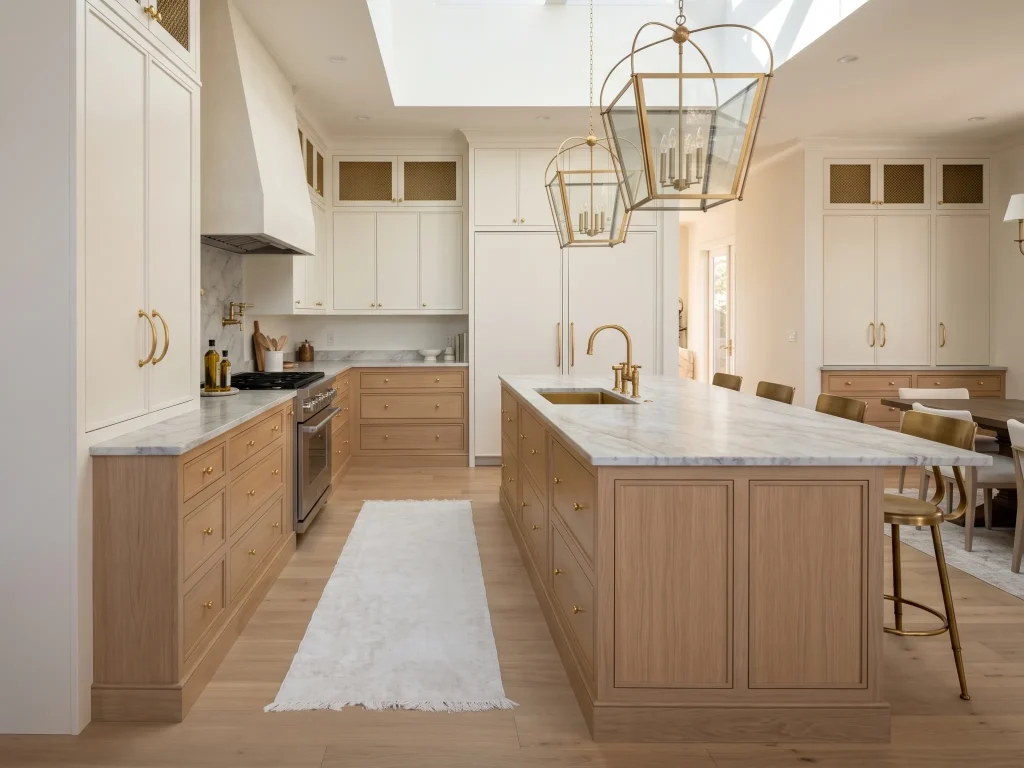
Achieving modern character in a kitchen with shaker cabinets depends on curating contrasting textures rather than relying on uniform, clinical white paint. The most compelling architectural portfolios combine ultra-matte painted cabinetry with the linear organic warmth of natural hardwoods.
Organic Texture Pairing Protocols
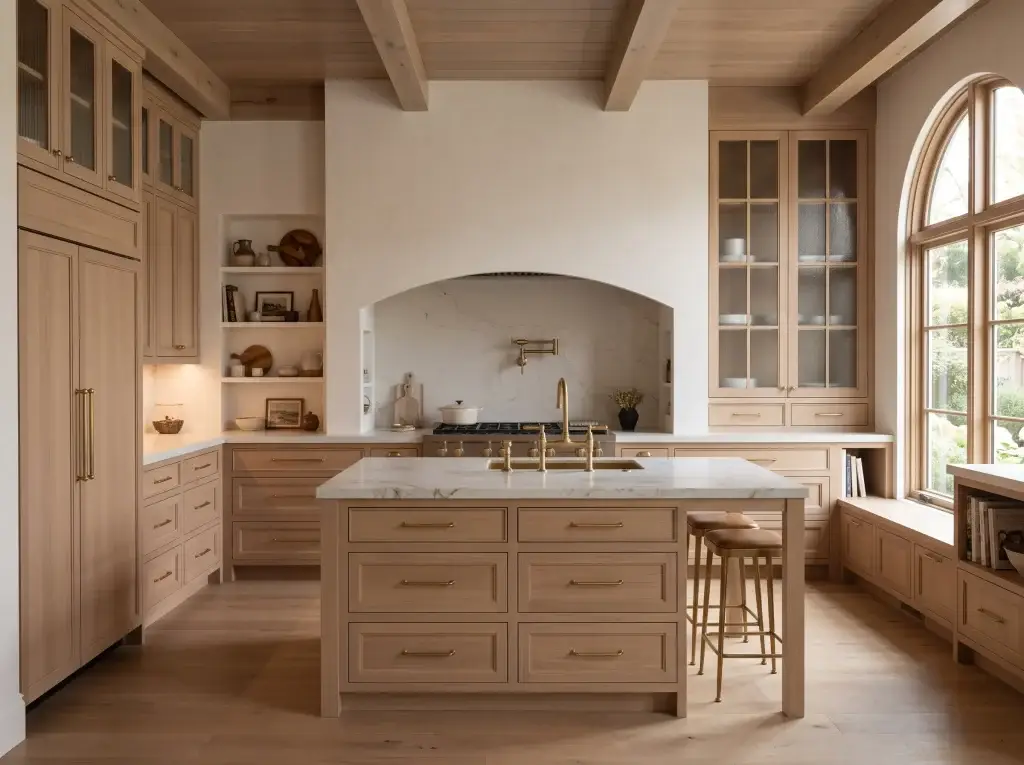
Perimeter vs. Island Harmony: A proven luxury layout pairs perimeter full-height towers finished in soft, muted mineral lacquers (such as sage mist, warm cashmere, or deep slate navy) with a central architectural island executed in natural Rift Sawn White Oak. The vertical pinstripe oak grain anchors the space, while the perimeter micro-shaker profiles soften room acoustic reflections.
5° Dead-Matte Non-Reflective Finishing: High-gloss lacquers create harsh light glares along narrow shaker recess lines, emphasizing minor dust specs. We spray multi-pass Italian 2K polyurethane finishes calibrated to a true 5-degree sheen, producing a velvety, non-reflective surface that naturally repels skin oils.
Minimalist Hardware Transitions: To honor the crisp lines of a thin shaker kitchen, avoid bulky decorative pulls. Pair the 1/2″ profile with precision edge-pull tabs mounted over the top frame reveal, or specify concealed touch-latch systems to let the geometric casework lines remain pure.
Frequently Asked Questions: The Shaker Casework Engineering Q&A
Q: Are slim shaker cabinet doors more prone to warping or cracking than traditional shaker doors?
A: Not when engineered with a monolithic 1-piece moisture-resistant core. While 5-piece solid wood doors with 1/2-inch stiles have fragile tenon joints that can shear, ALLAND CNC-routes thin shaker doors from solid sheets of high-density CARB-2 MR-MDF. This eliminates internal expansion joints, keeping doors dead-flat through seasonal HVAC swings.
Q: What is the exact frame width difference between a standard shaker and a slim shaker?
A: A traditional North American shaker features stiles and rails measuring between 2-1/4″ to 3″ wide (57mm to 76mm). A modern slim shaker reduces that perimeter border to between 1/2″ to 3/4″ wide (12mm to 20mm), cutting the visual frame width by roughly 70%.
Q: Can slim shaker doors be installed as inset cabinets within a face frame?
A: Yes, but it requires rigid 3/4″ multi-ply birch box construction and 3D micro-adjustable hinges. Because inset doors sit flush with only a 3/32″ (2.4mm) perimeter margin, the cabinet carcass must be engineered to resist diagonal deflection from heavy quartz countertops, preventing doors from binding against the frame.
Bring Architectural Shaker Casework to Your Next Project
Eliminate broken joint tenons, blurred profile corners, and jobsite inset binding. Whether specifying a custom private estate or procuring an expansive multi-family casework package, send us your architectural plans (.pdf / .dwg) or door schedules. ALLAND’s engineering desk delivers a comprehensive CAD clearance review, precision finish sample matching, and a factory-direct quotation within 48 hours.
📐 Ready to specify your custom shaker or slim shaker kitchen?