
This technical gallery covers the foundational structural principles, material sciences, and joint-load equations required to manufacture rigid slim shaker cabinet arrays for high-end North American residential installations. Traditional shaker millwork with thick 2-3/4″ stiles often profile-crams restricted urban spaces or modern minimalist kitchen layouts. However, shrinking the face frame down to a 1/2″ profile introduces severe structural risks, including rail-to-stile hairline cracking, center panel cupping, and hardware attachment shear failure. By transitioning to a stabilized multi-ply engineered core clad in select rift-sawn timber, this architectural layout preserves tight 3/32″ linear reveal tolerances across all slim shaker cabinet doors while completely eliminating the cross-grain cell distortion common in low-end solid wood components.
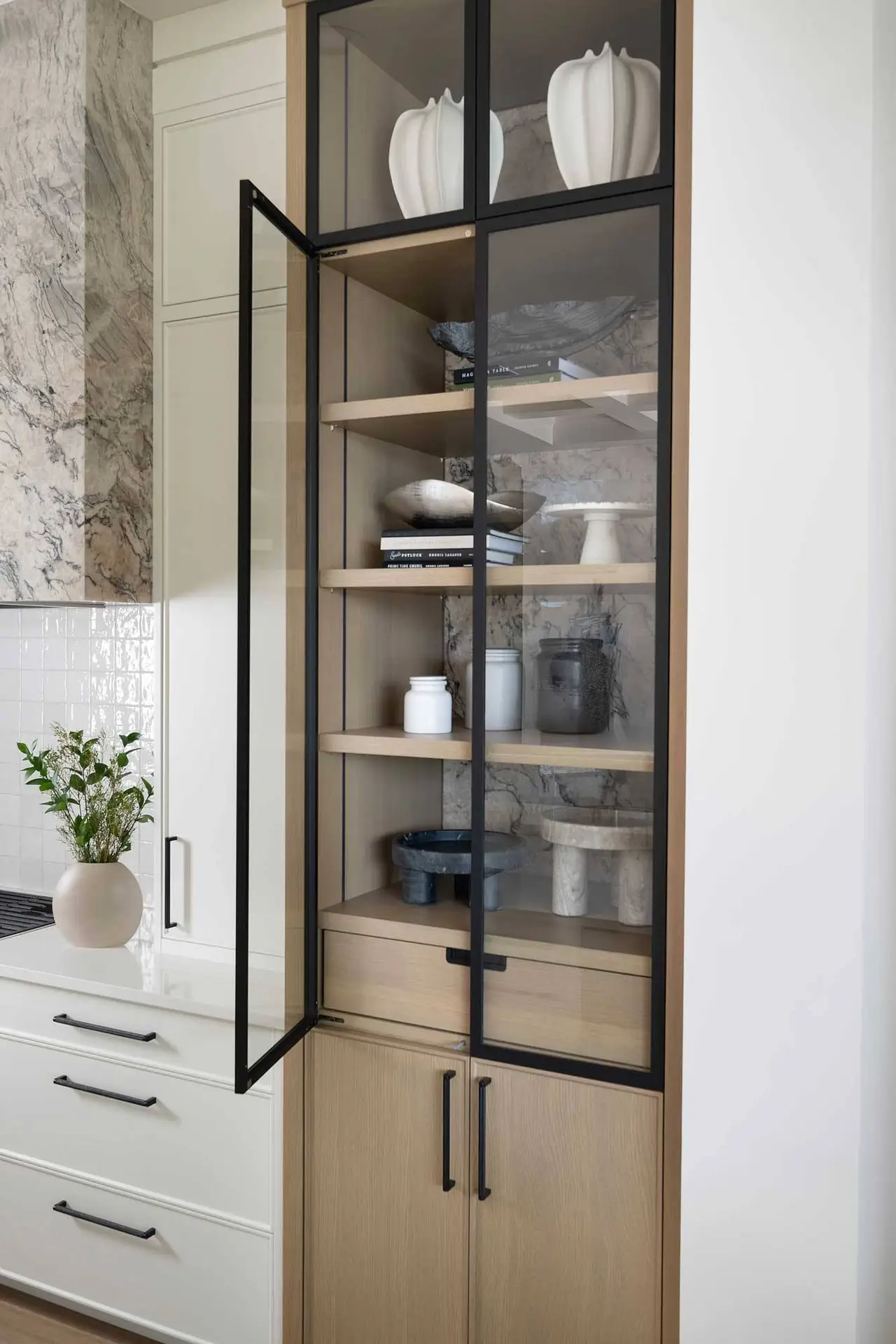
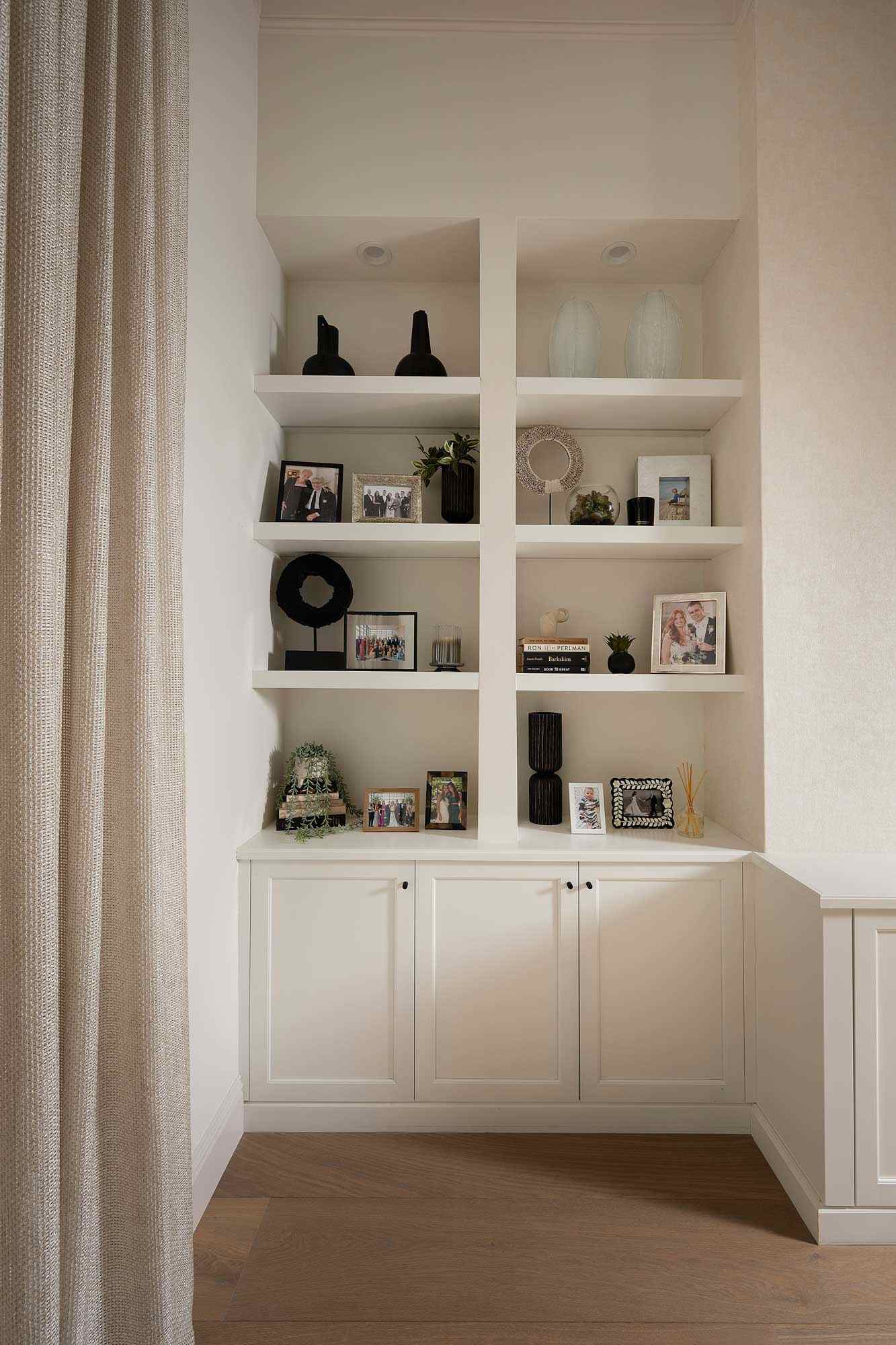
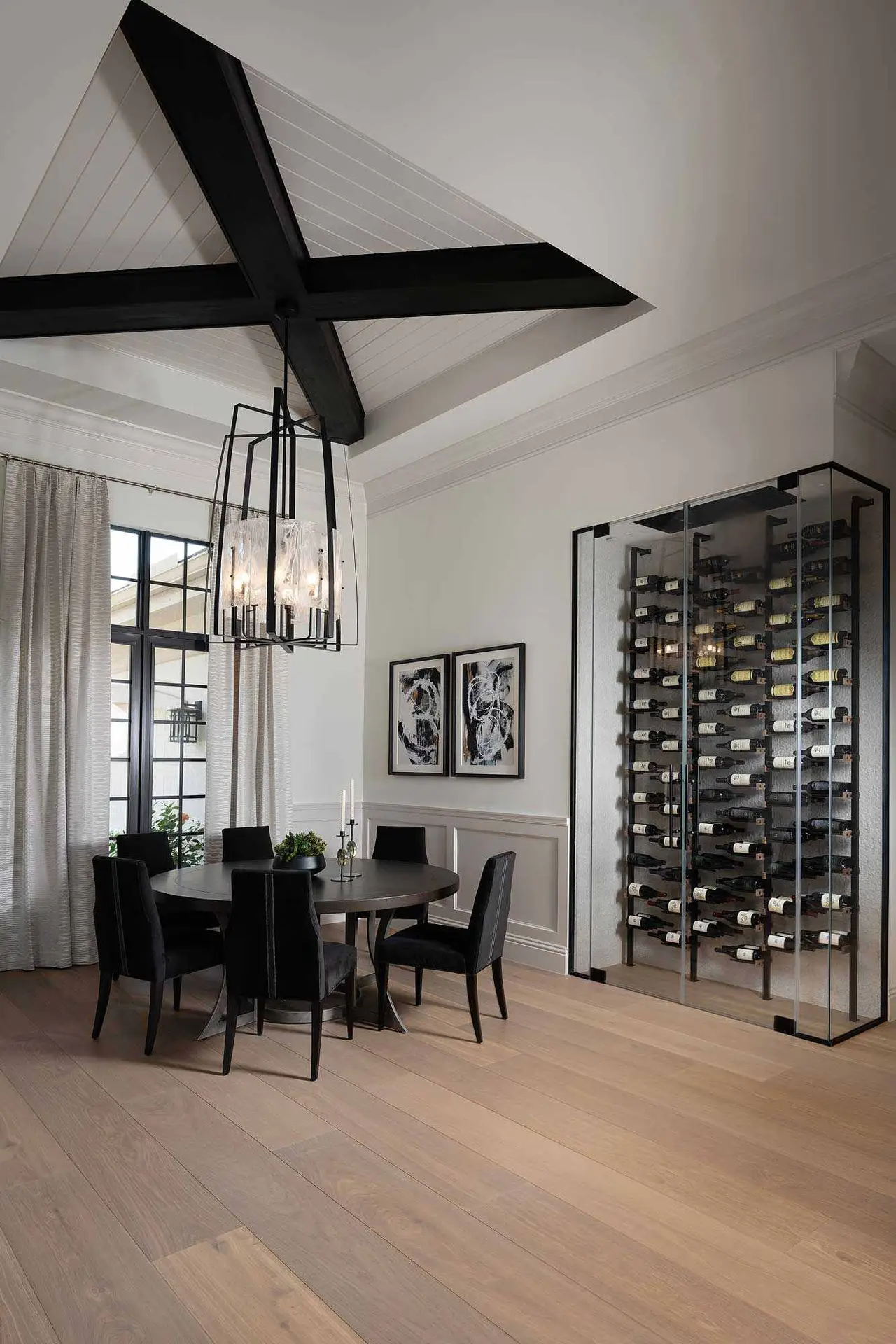
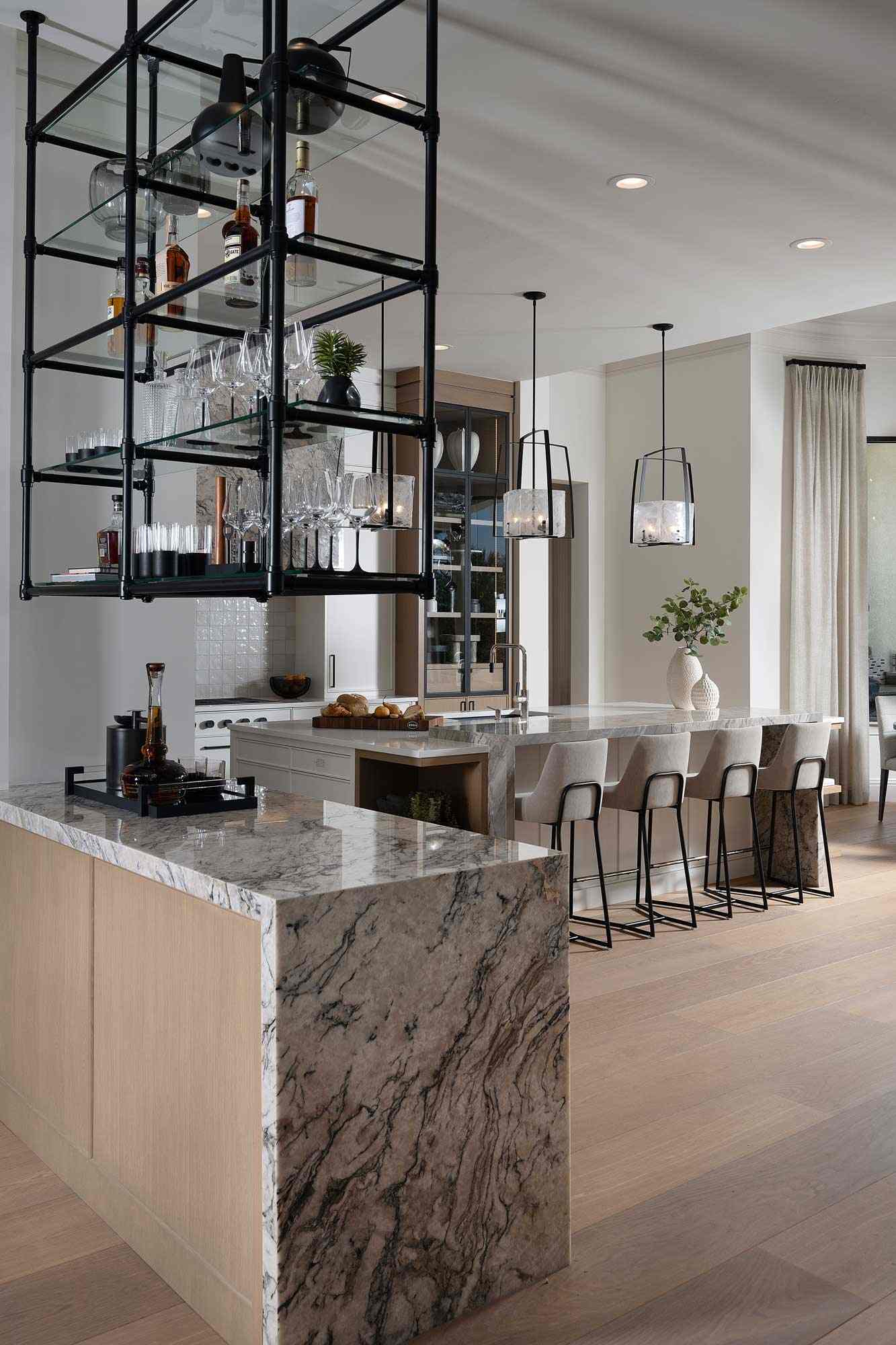
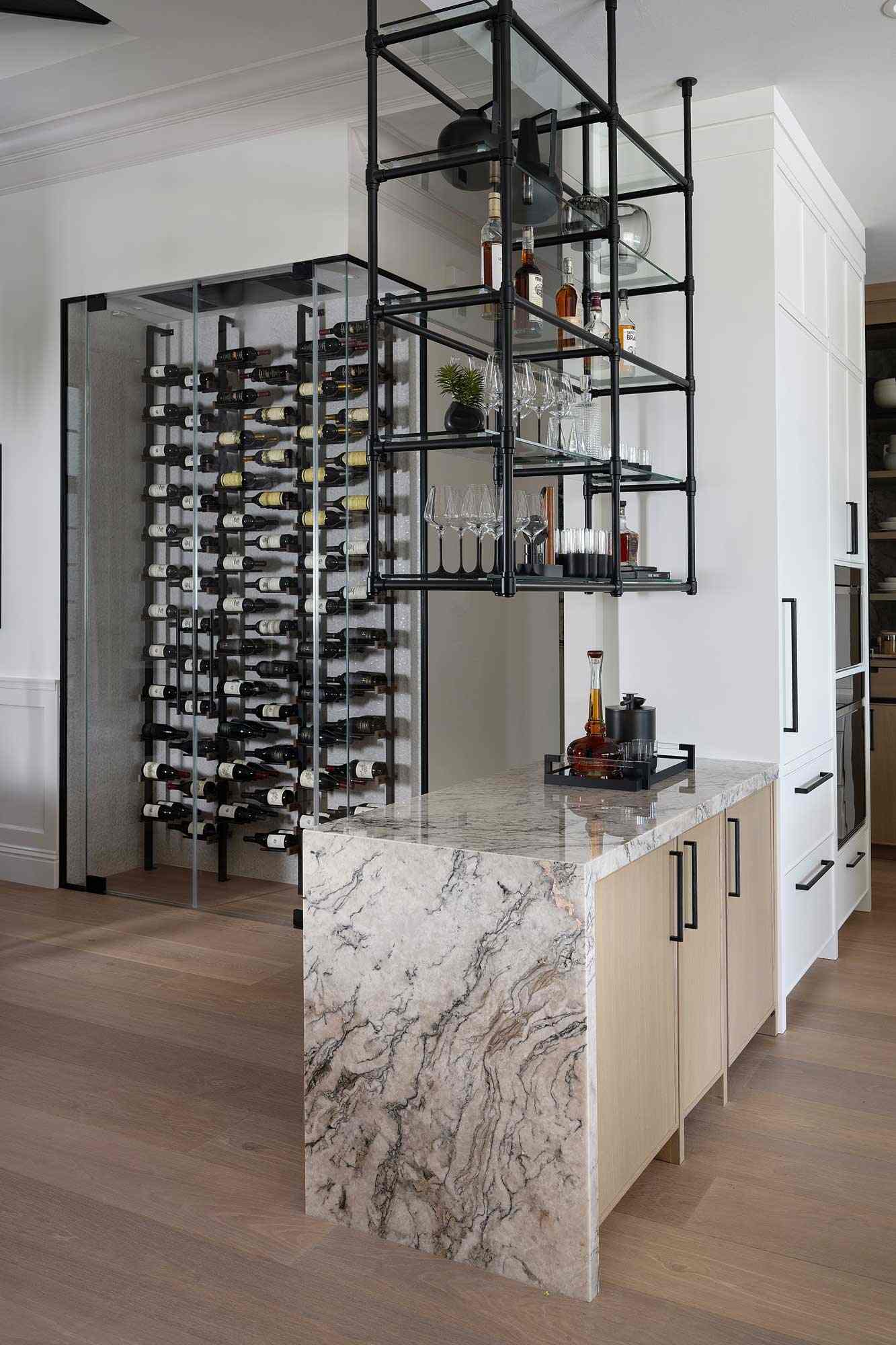
Material Selection & Micro-Stile Structural Matrix
Standard 5-piece doors milled from raw lumber inherently suffer from dimensional shifting due to continuous atmospheric humidity variations. When executing a slim kitchen cabinet program with ultra-narrow boundaries, any minor wood cell expansion or contraction immediately results in door binding or visible finish joint tracking. To address this physical vulnerability, our manufacturing facilities utilize an engineered baseline matrix that isolates wood fiber tensile strain.
Rift-Sawn Timber Architecture in White Oak Slim Shaker Cabinets
To achieve high aesthetic continuity and geometric squareness in white oak slim shaker cabinets, the face layers are sliced exclusively from straight-grain, rift-sawn timber flitches. Rift-cutting slices the log at a precise 60-to-90 degree angle relative to the annual growth rings, which yields an exceptionally low tangential expansion coefficient. This straight-grain pattern eliminates the wavy “cathedral” arches found in plain-sawn boards, ensuring that slim shaker white oak cabinets keep their vertical lines sharp and uniform even under heavy, continuous loading.
Solid Timber Matrix for Slim Oak Shaker Cabinets Base Units
While upper displays leverage engineered multi-ply configurations, localized low-tier sectors utilizing slim oak shaker cabinets incorporate a solid wood framing method. The lumber undergoes strict multi-stage kiln drying to drop internal moisture saturation to a precise 6% to 8% range. This thermodynamic balancing prevents the wood from drying out too quickly or absorbing excess room moisture, stopping centerline warping before the parts move onto the automated CNC machining cells.
CNC Machining, Joinery, and Finish Engineering Specs
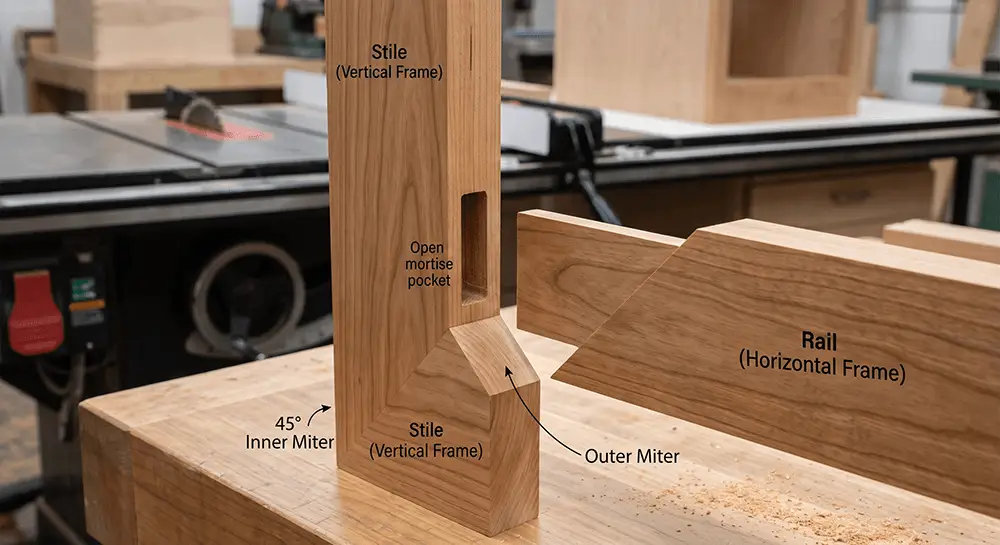
Precision Micro-Jointing for the Slim Shaker Cabinet Door Face
The classic 90-degree butt joint creates a structural weak point when scaled down to narrow dimensions because there is not enough surface area for regular dowel or pocket-screw fasteners. To overcome this limitation, every slim shaker cabinet door is produced using a precision 45-degree mitered mortise-and-tenon design. This configuration triples the adhesive bonding surface area along the corner junction. The joint is then reinforced with a cross-linked polyurethane structural adhesive, creating a permanent corner bond that prevents the rail from sagging over long periods of operation.
Multi-Layer Finishes on Slim Shaker Wood Cabinets
Opaque painted finishes or transparent clear coats applied to a slim kitchen cupboard setup require complete seal coverage to stop atmospheric moisture intake. Our automated finish loop coats all slim shaker wood cabinets using a premium post-catalyzed conversion varnish system. This multi-coat application includes an anti-yellowing chemical shield and a cross-linked polyurethane clear coat, earning an AWI Category 5 industrial performance rating against dynamic impacts, high-temperature steam exposure, and chemical kitchen cleaners.
Mechanical Anchorage and Slim Shaker Cabinet Hardware Load Testing
Fixing structural pulls onto slim shaker cabinet hardware tracks requires anchors that bypass the narrow 1/2″ stiles. Standard wood screws put too much concentrated stress on thin wood grain, leading to eventual splits under daily pulling force. To ensure lifetime reliability, our handles are anchored with back-bored steel machine thread inserts. These components embed deep into the engineered core block, distributing pulling forces evenly and preventing hardware looseness.
Spatial Optimization Layouts in Slim Shaker Kitchens
Storage Solutions for a Narrow Slim Cabinet Kitchen Space
For space-constrained custom layouts, implementing a slim cabinet kitchen configuration unlocks high cubic storage capacity without encroaching on clear foot-traffic walkways. Incorporating vertical pull-out pantry towers and ultra-narrow slide-out spice decks utilizing a single slim shaker style cabinets aesthetic allows designers to capture otherwise wasted wall volume. This specialized framing system is anchored by 3/4″ thick plywood boxes, ensuring the narrow vertical carcass maintains rigid squareness and resists horizontal flexing when loaded to maximum capacity.
Structural Integrity of Slim Shaker Cabinets Kitchen Modules
To secure multi-unit appliance walls within a busy slim shaker cabinets kitchen workflow, the cabinet boxes are linked together using flush-to-frame alignment bolts. This row configuration merges the individual cabinet shells into a unified architectural wall system. This structural design ensures that tall columns and side panels handle heavy, uneven cooking loads without sagging or throwing off adjacent door gaps.
Visual Integration of Slim Shaker Style Cabinets in Multi-Zone Environments
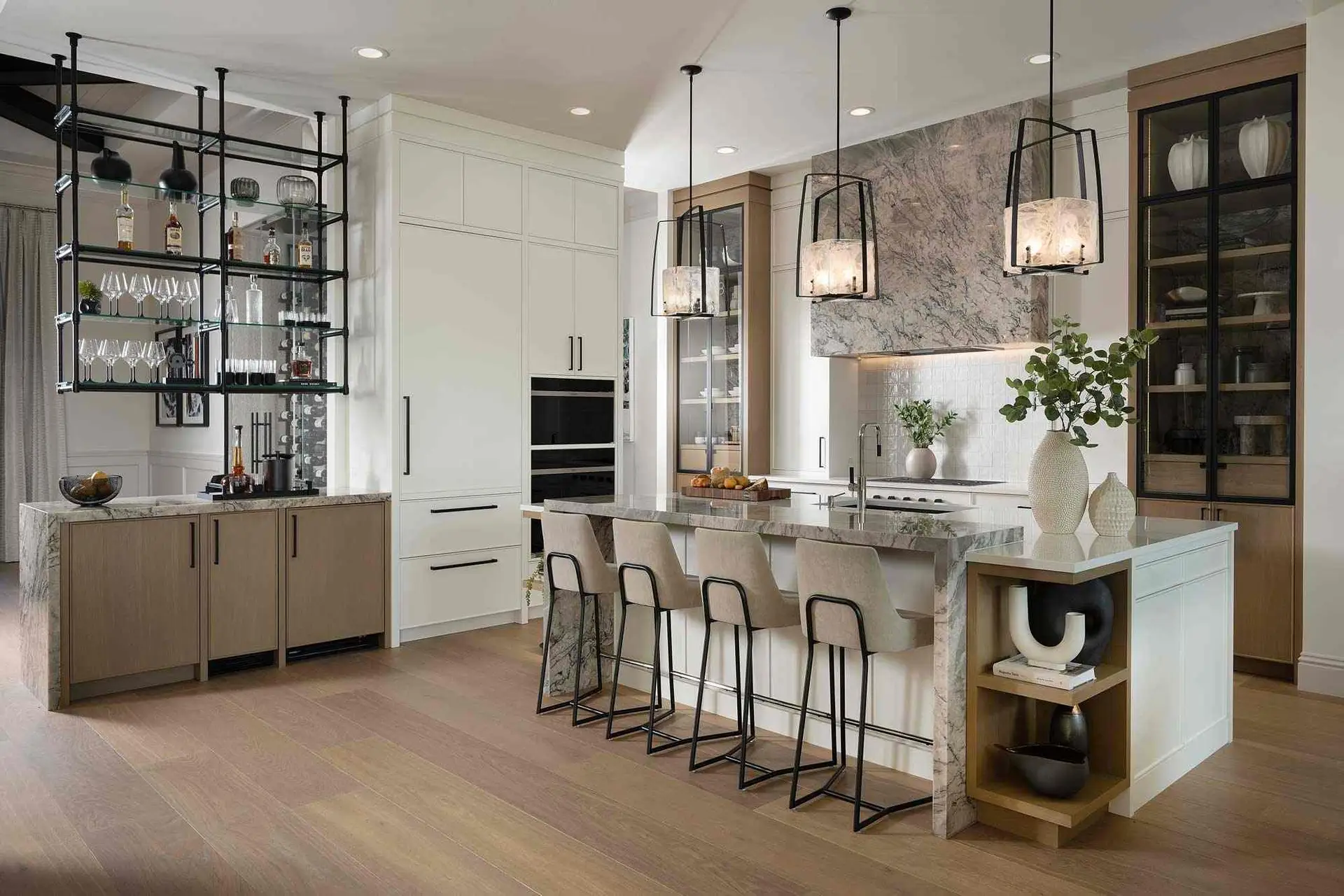
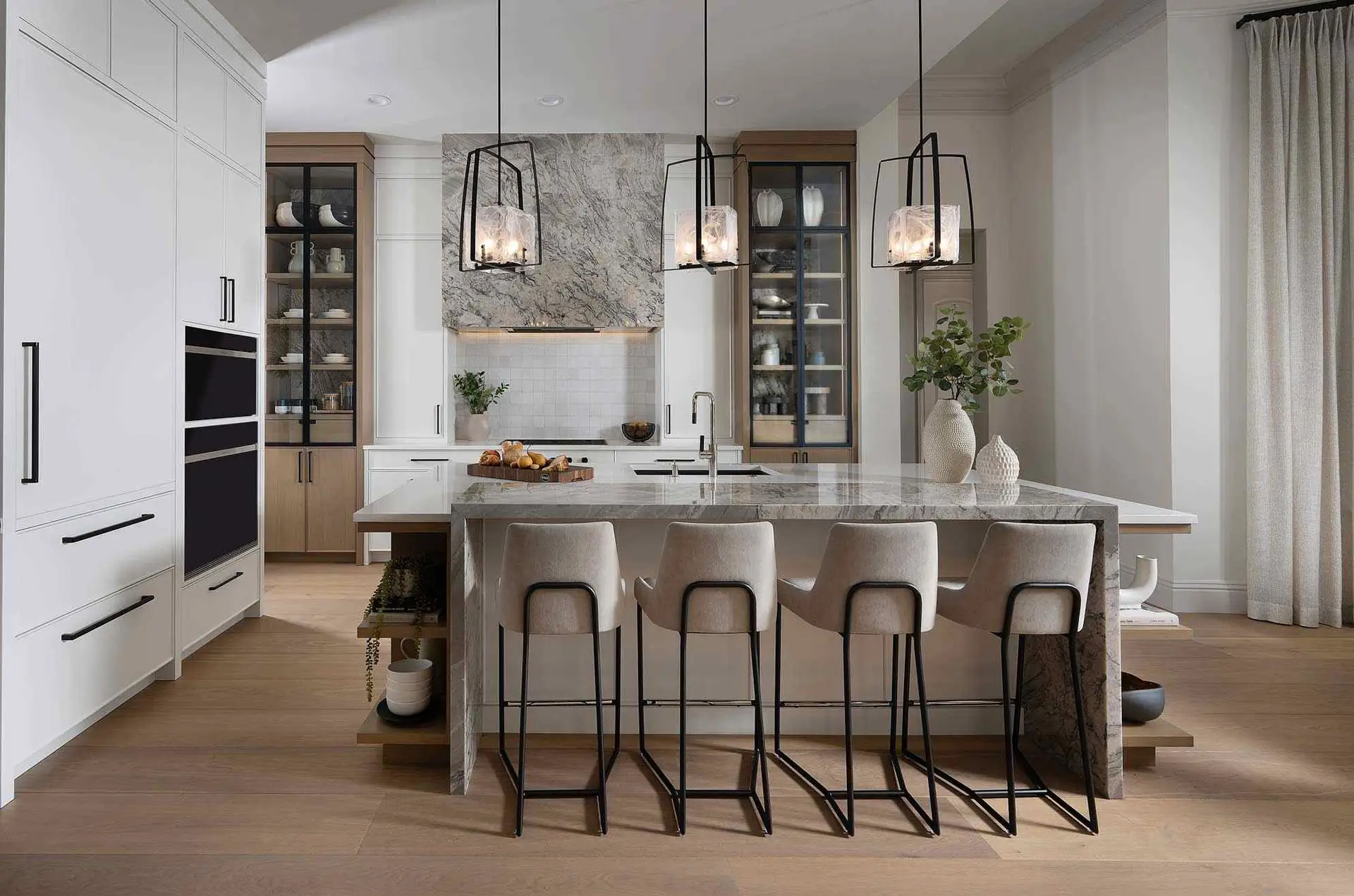
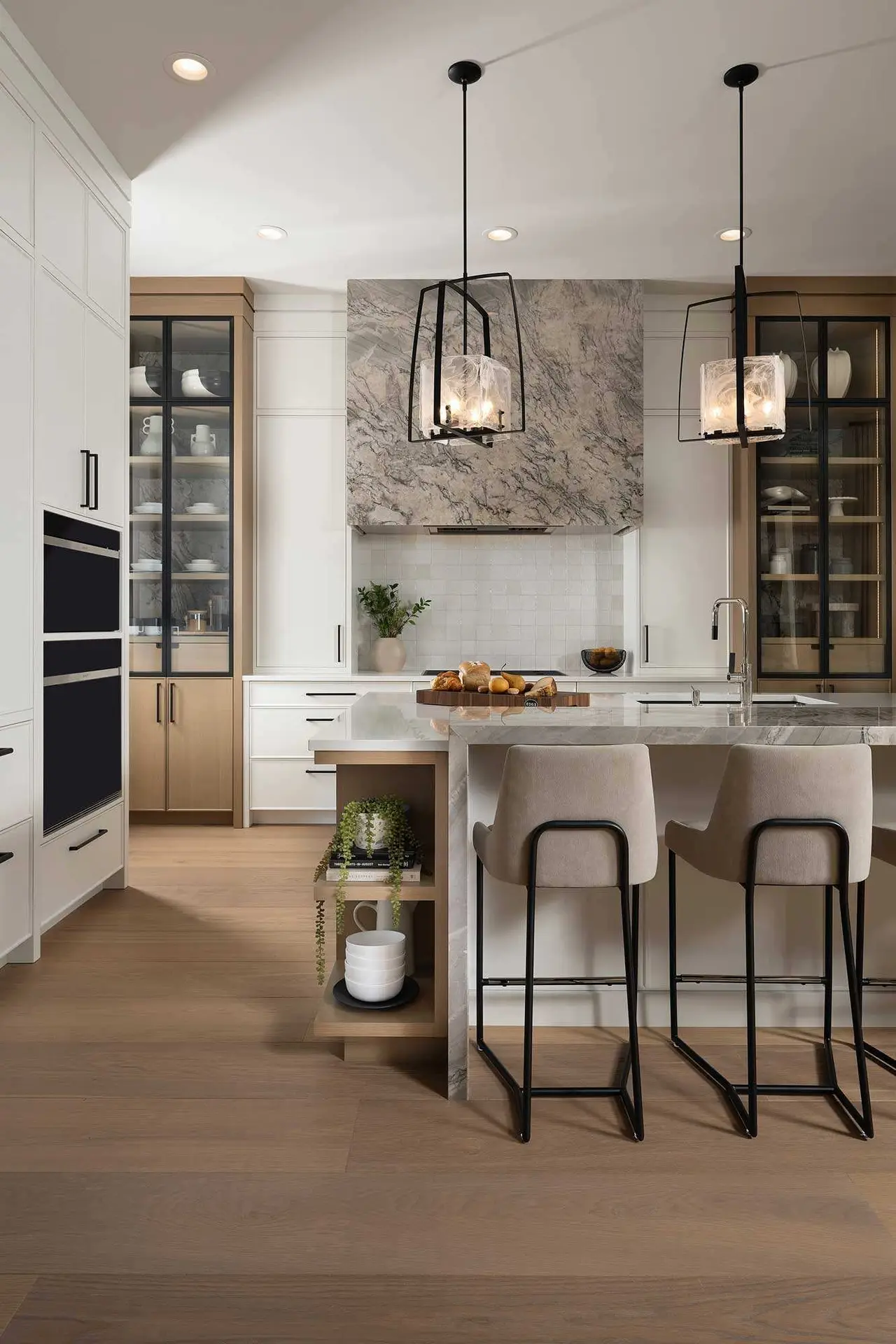
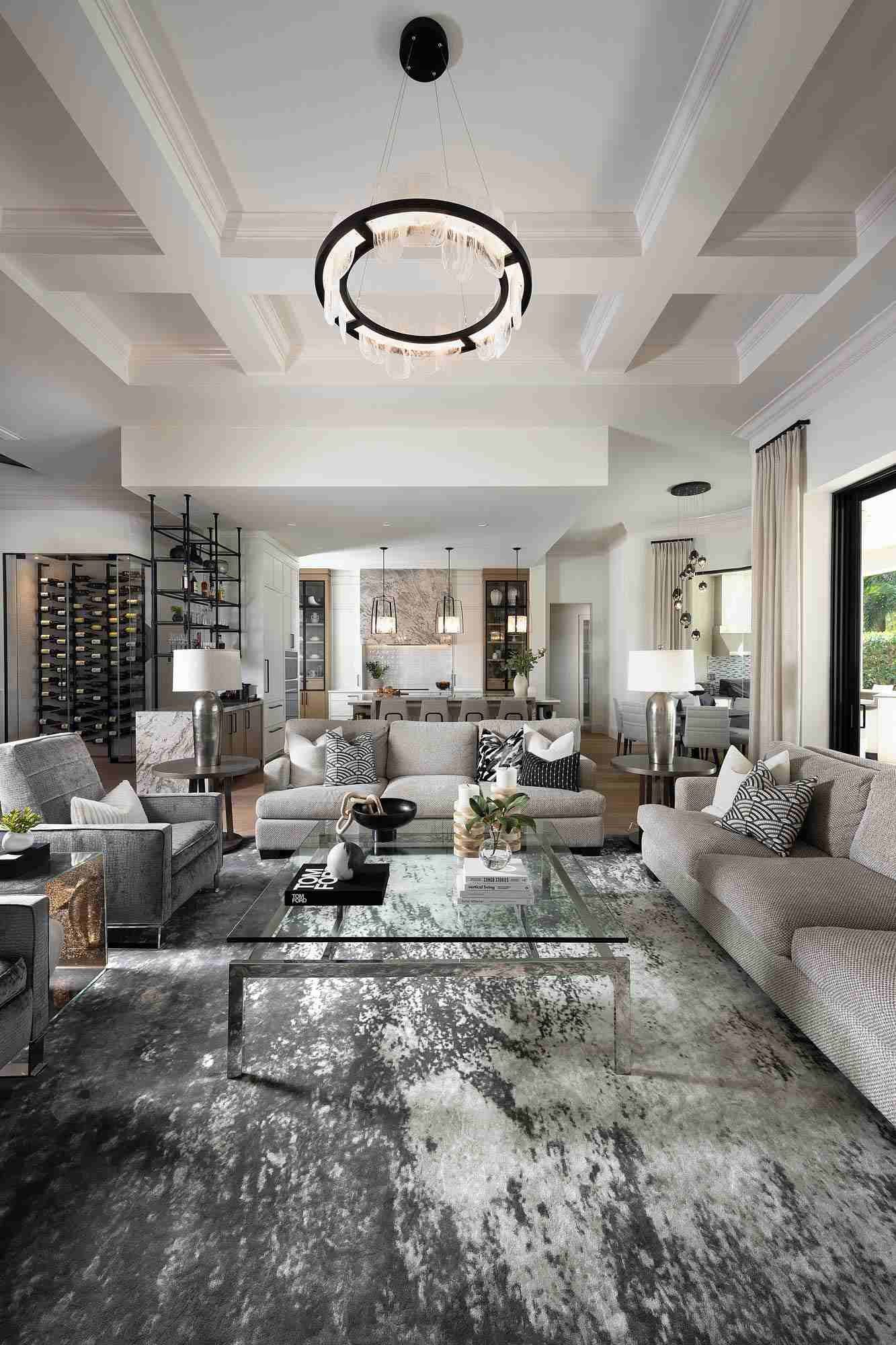
When installing slim shaker style cabinets across open floor plans, maintaining a balanced design flow between zones is essential. The reduced profile of the stiles minimizes deep shadows, allowing the wood grain to flow across multi-unit appliance walls and island framing panels. This clean look helps integrate the cabinetry into contemporary settings while providing the rich texture expected of high-end wood installations.
Whole-House Custom Project
For certified general contractors, multi-family construction firms, and commercial design studios managing complex custom wood specs, our technical design department provides full architectural submittal support. We deliver complete submittal packages containing high-resolution 3D CAD layouts, native Revit BIM files for clash-detection modeling, and verified structural shop drawings detailing all hardware weight capacities and clearance dimensions.