
This extensive technical specifications portfolio provides an exhaustive analysis of the structural mechanics, thermodynamic properties, and material integration protocols required to manufacture and deploy a high-performance, multi-zone network of custom oak and white kitchen cabinets within sprawling residential open-concept architecture. Integrating open-grain natural timber flitches alongside ultra-opaque white enamel lacquer coats introduces an array of mechanical challenges on the factory floor and the construction site. Because natural solid hardwood elements and high-density composite face plates possess highly divergent volumetric expansion coefficients, localized atmospheric shifts generate differential internal stresses along joint paths.
Without proactive engineering intervention, these cross-grain tension loads manifest as telegraphing lines, micro-fissures at mitered seams, surface lacquer shear failure, and structural box warping. Our manufacturing infrastructure directly resolves these structural liabilities through the application of isotropic core matrices, precision blind-dado interlocking joinery, and cross-linked chemistry polymer coats. This industrial approach guarantees flat plane uniformity and permanent alignment metrics across all vertical planes, satisfying the zero-tolerance reveal expectations established by high-volume custom home builders, structural general contractors, and luxury interior design practices across North America.
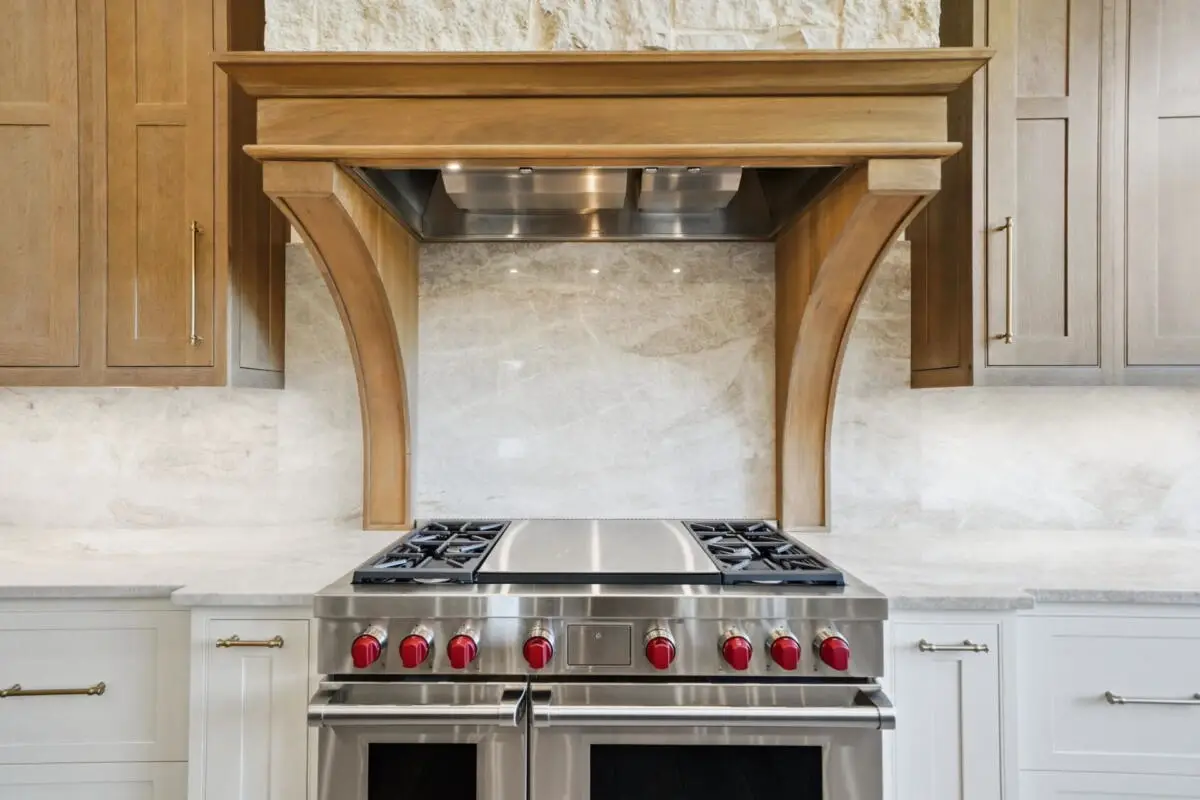
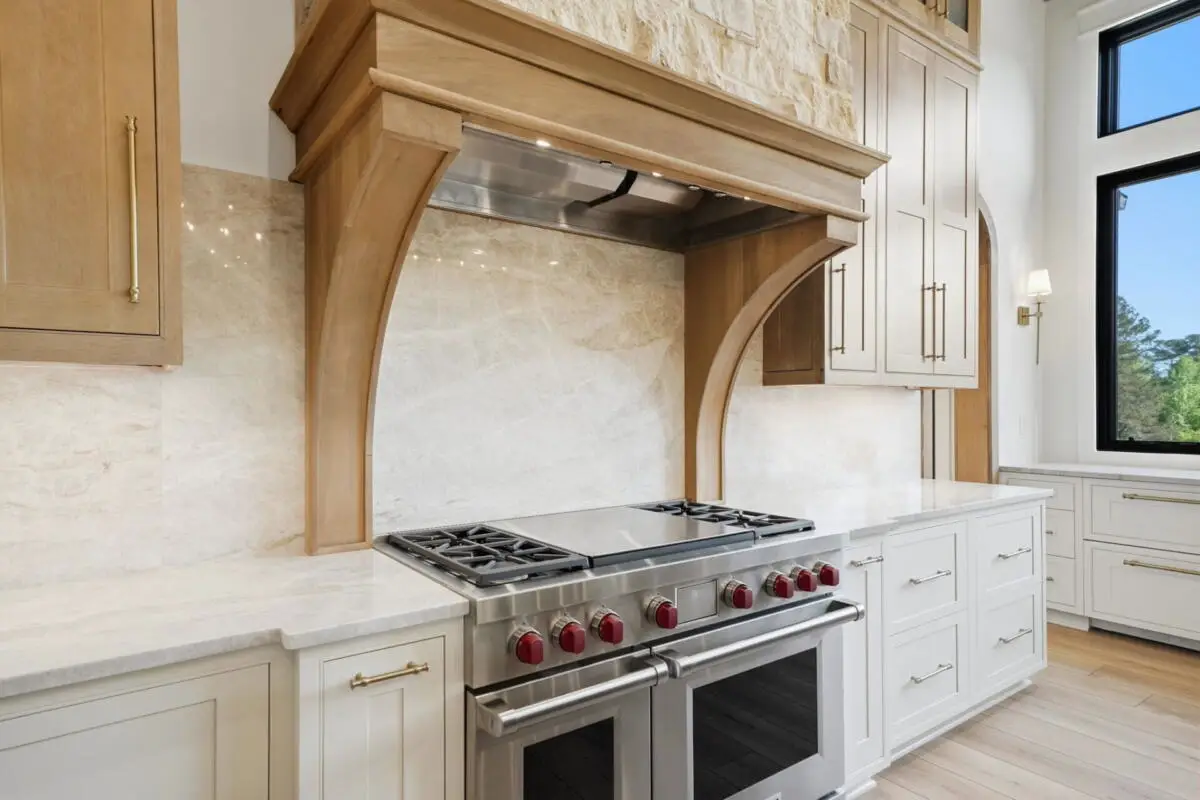
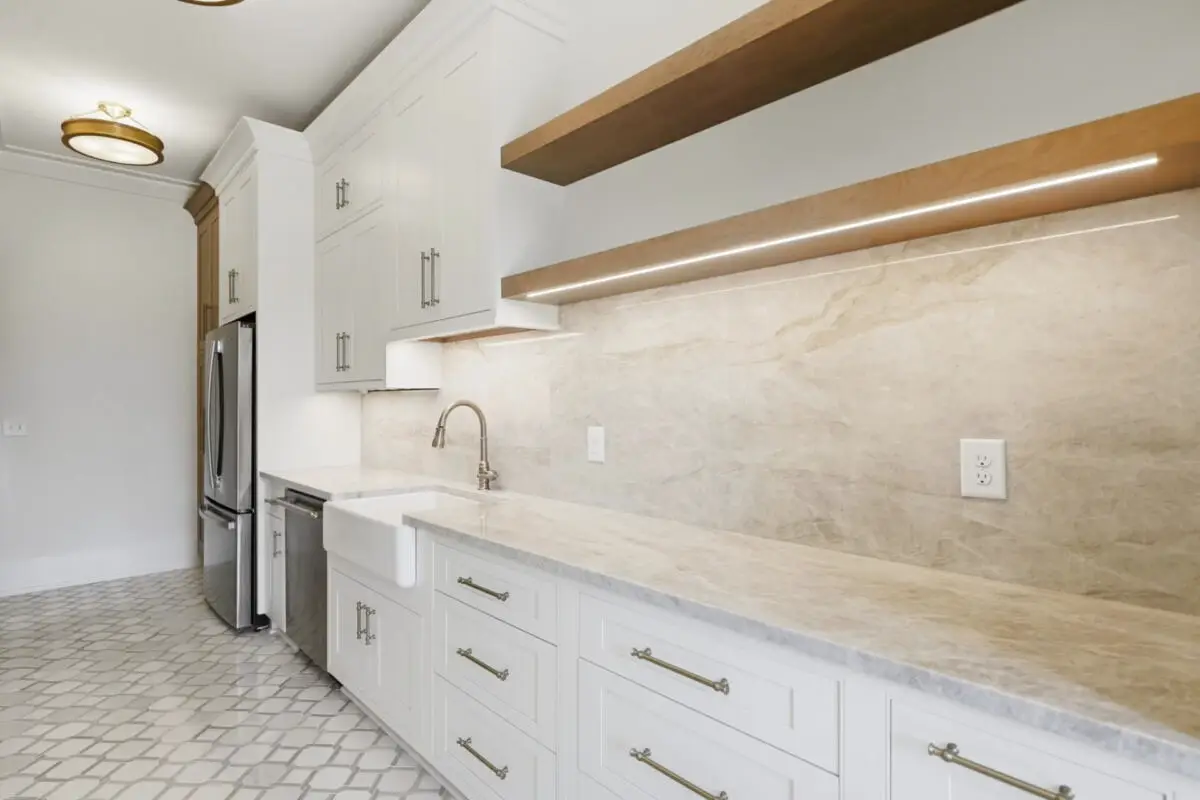
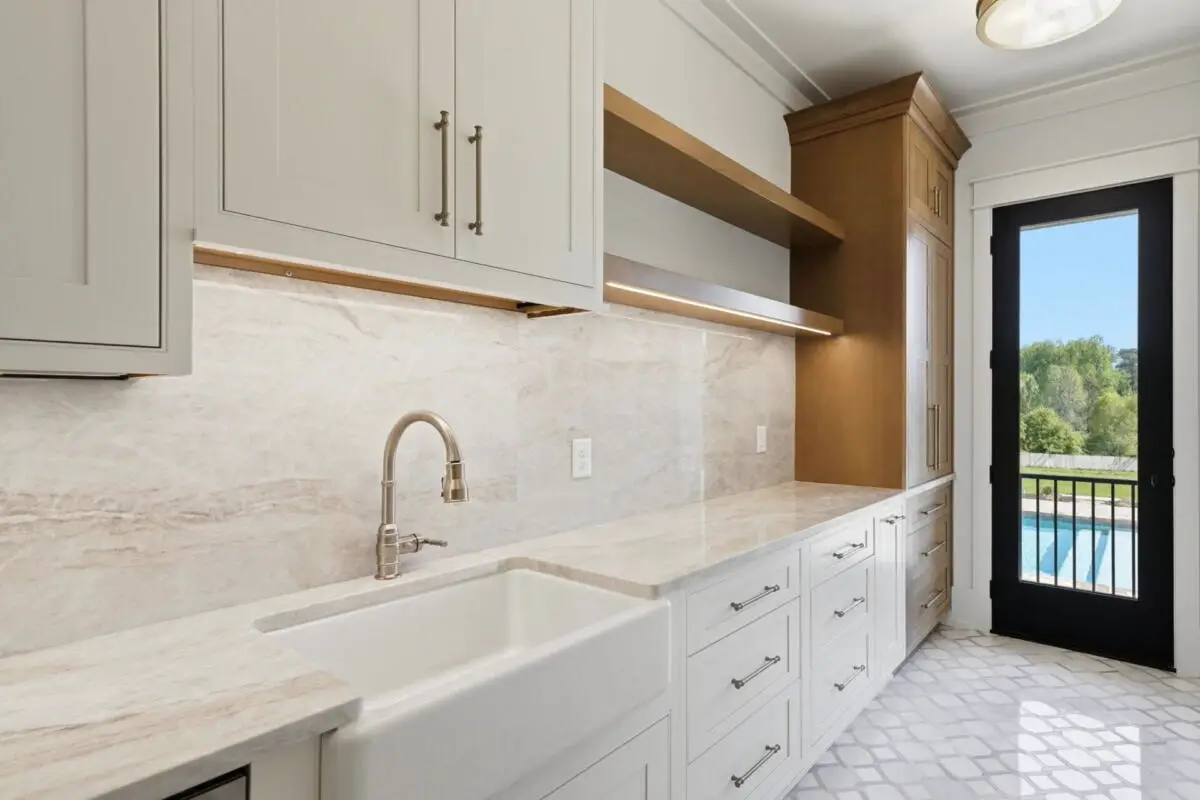
Substrate Science and Hygroscopic Control in Two-Tone Cabinetry
To mitigate cross-grain fiber distortion inside our white oak and white kitchen cabinets product runs, face frame timber blanks are sourced from select logs cut exclusively at a strict 60-to-90 degree radial angle relative to the log’s annual growth rings. This dedication to rift-sawing yields a tight, uniform linear grain structure across every exposed surface. More importantly, this processing orientation results in a radial shrinkage coefficient that is nearly equivalent to the volumetric movement of the core substrate itself.
By eliminating the wavy cathedral patterns inherent to lower-grade plain-sawn wood packages, our custom white oak and white kitchen installations maintain straight lines. Doors and drawers experience no binding, lateral shifting, or cupping, providing general contractors with an elite structural product that installs without field correction.
Density Calibration within Oak and White Cabinet Configurations
Opaque white painted elements inside an oak and white cabinet layout require a substrate that stops moisture movement along joint borders. While solid maple or oak frames are ideal for stained wood displays, applying paint over raw solid wood joints presents a major quality risk due to continuous cell movement along the wood’s growth rings. To solve this, our factory utilizes an isotropic, ultra-dense engineered core block for all painted door and drawer panels.
This core provides an exceptionally stable face for painting, totally eliminating joint checking where the vertical rails meet horizontal stiles. By managing material distribution at the factory level, our oak and white kitchen systems prevent humidity from creeping into the structural seams, maintaining pristine paint profiles even under heavy daily use.
Spatial Architecture and Volumetric Balance Across Open Floor Plans
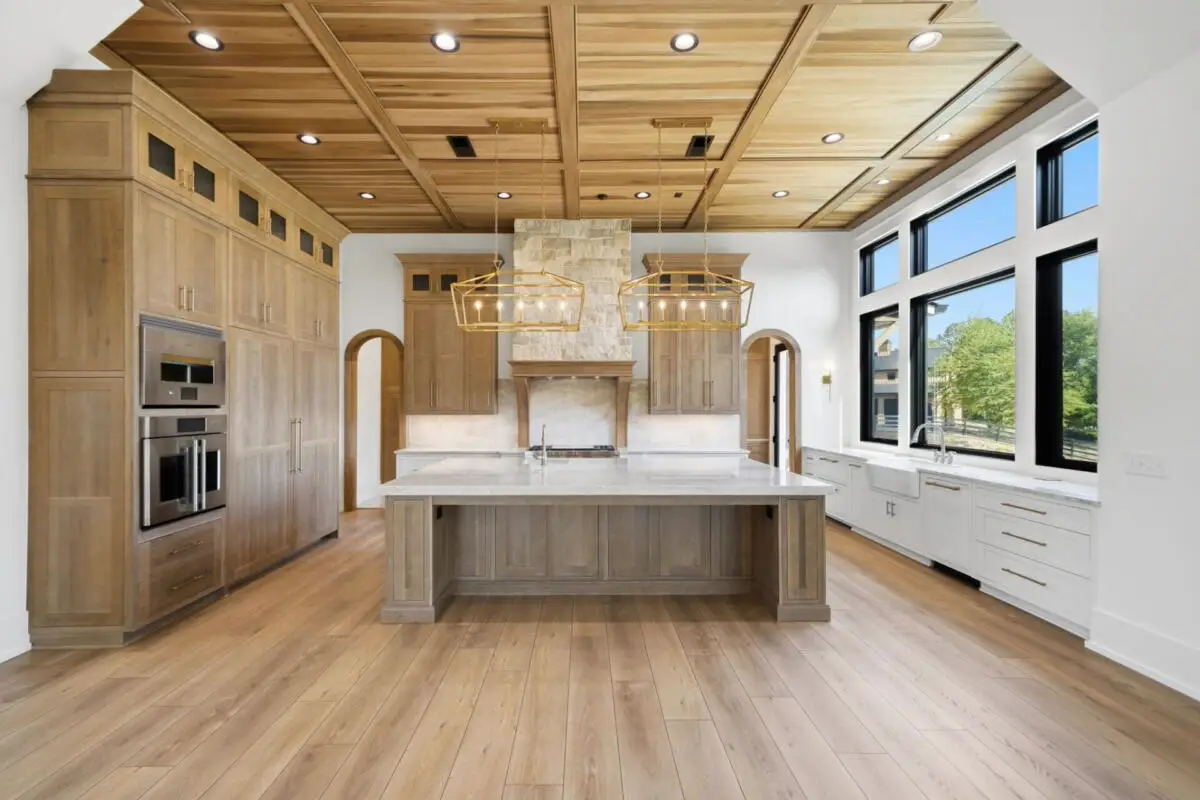
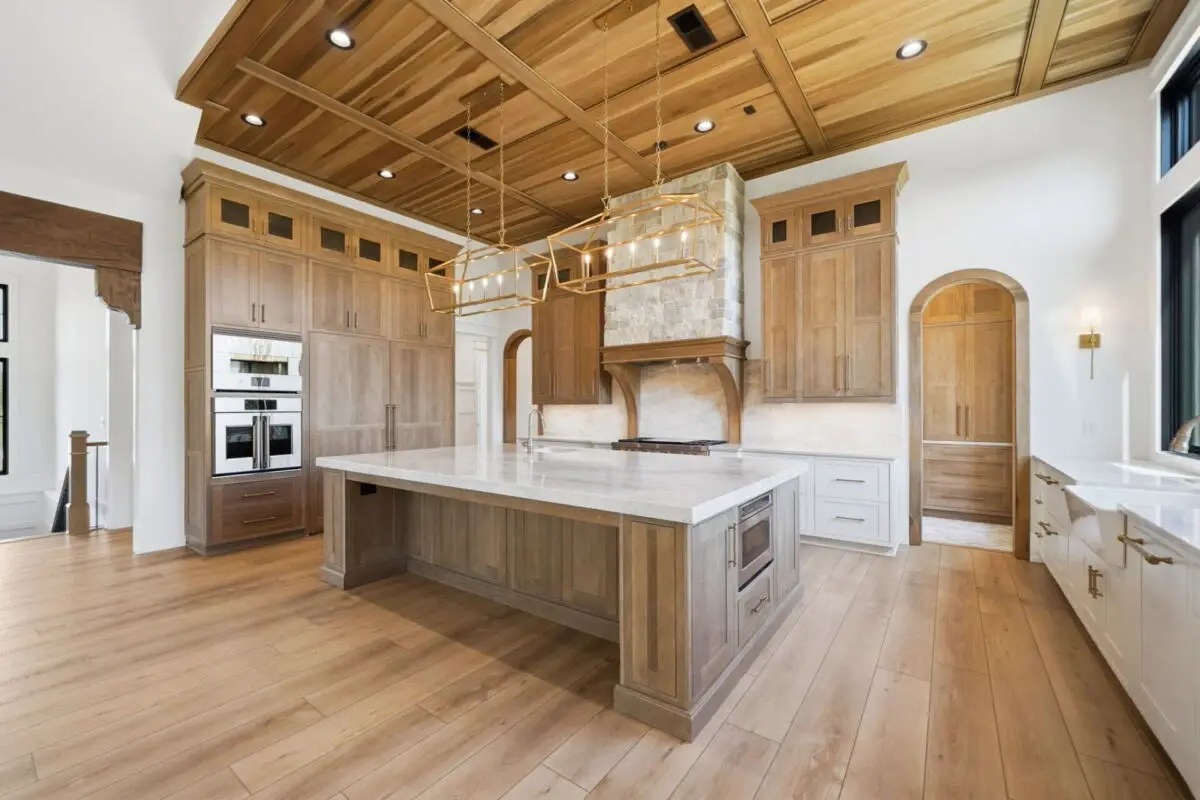
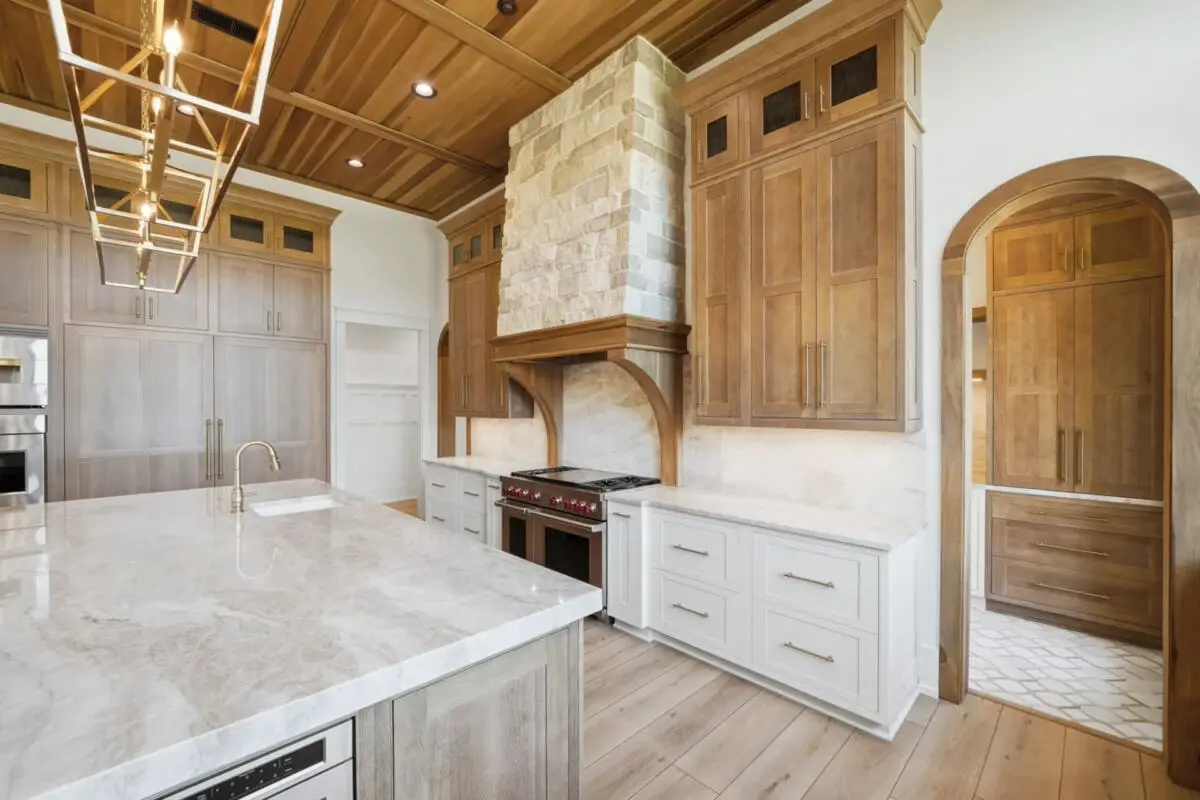
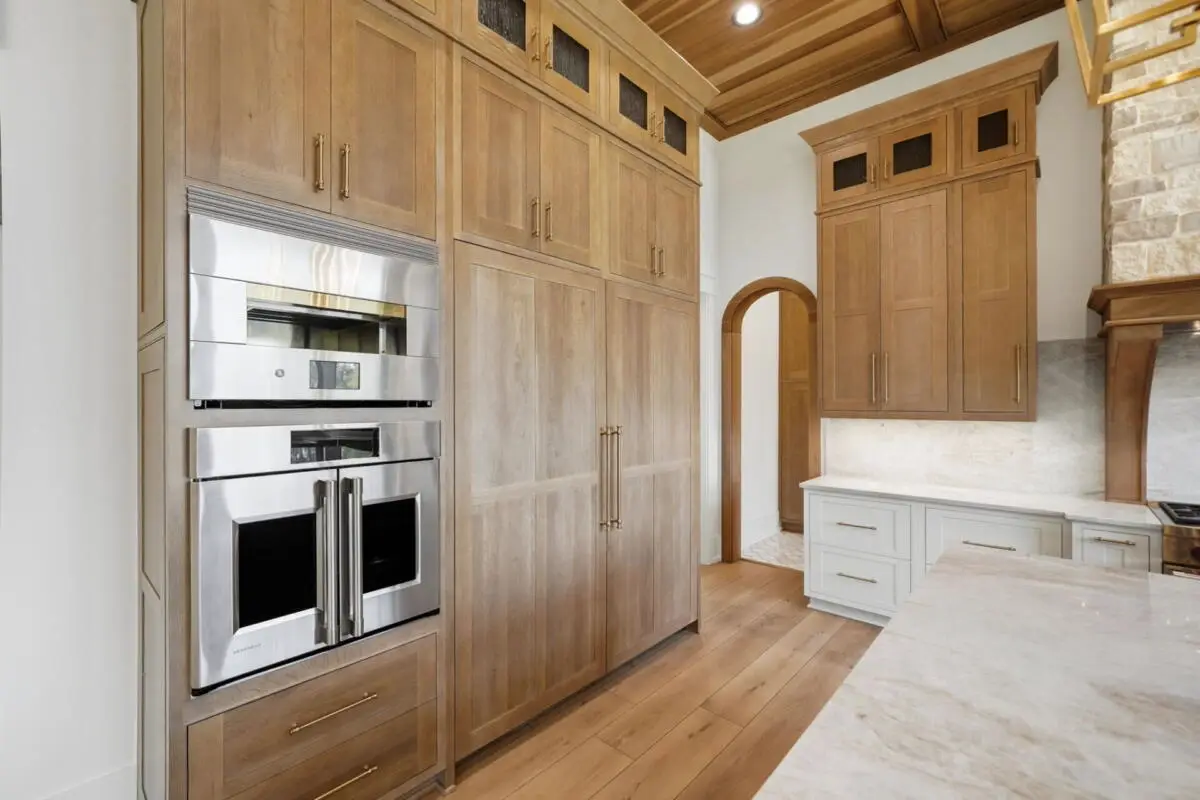
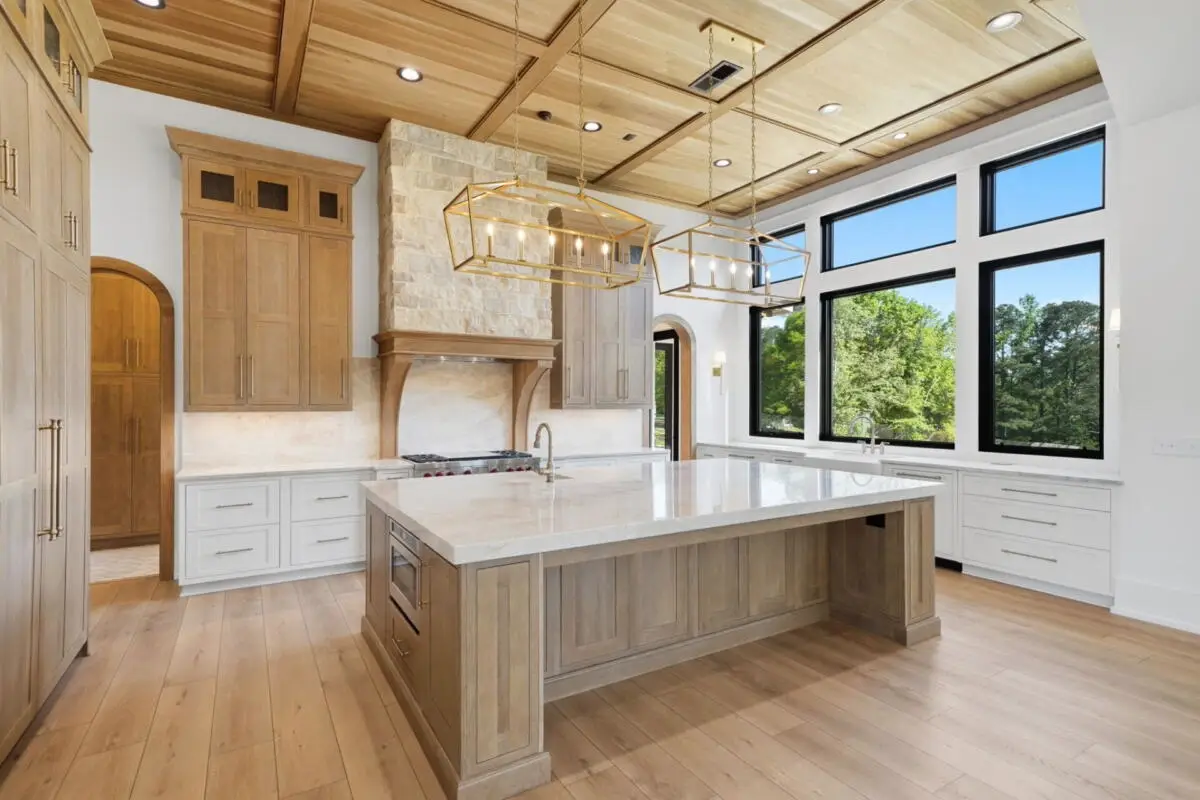
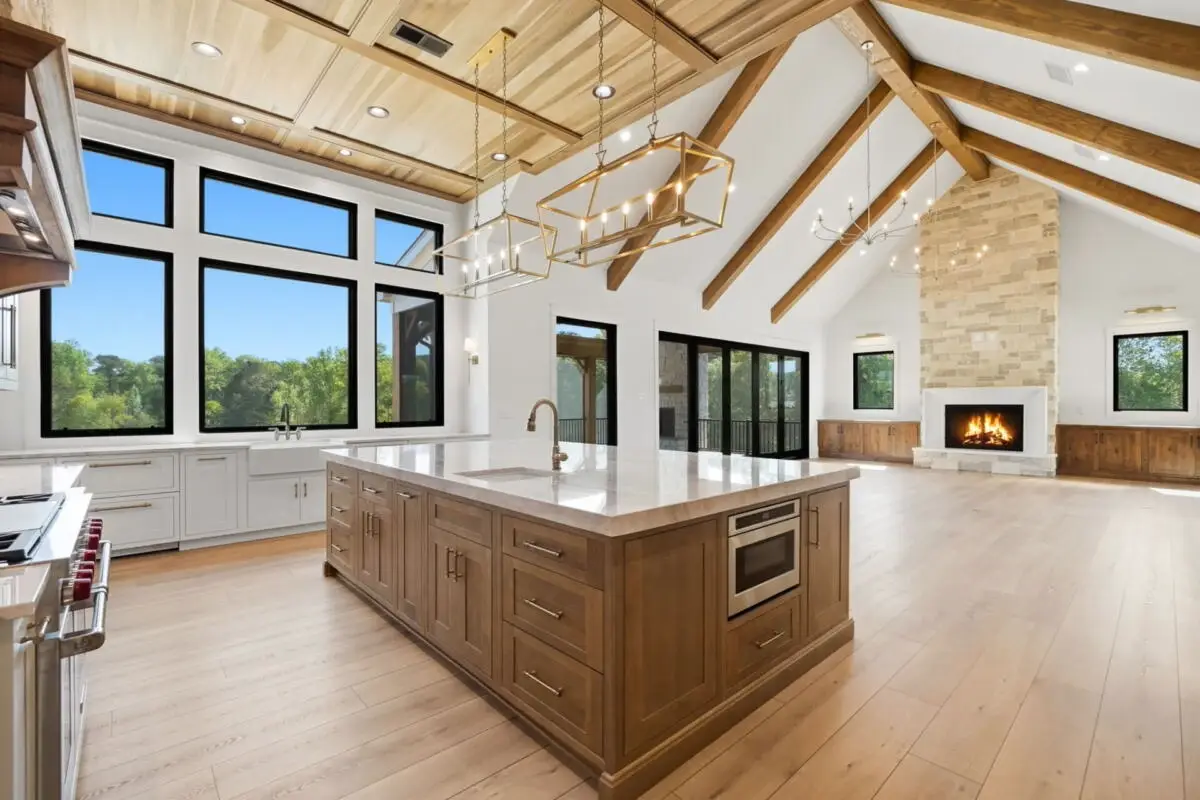
Executing a high-end white and white oak kitchen layout requires balancing large painted surfaces with rich, organic natural wood tones. As modern residential architecture emphasizes massive open great rooms that blend main food preparation zones with formal dining areas and media suites, the cabinetry must function as an integrated architectural element. It must direct room light effectively while providing a solid structural foundation that grounds the entire open floor plan.
Tonal Contrast and Proportional Balancing
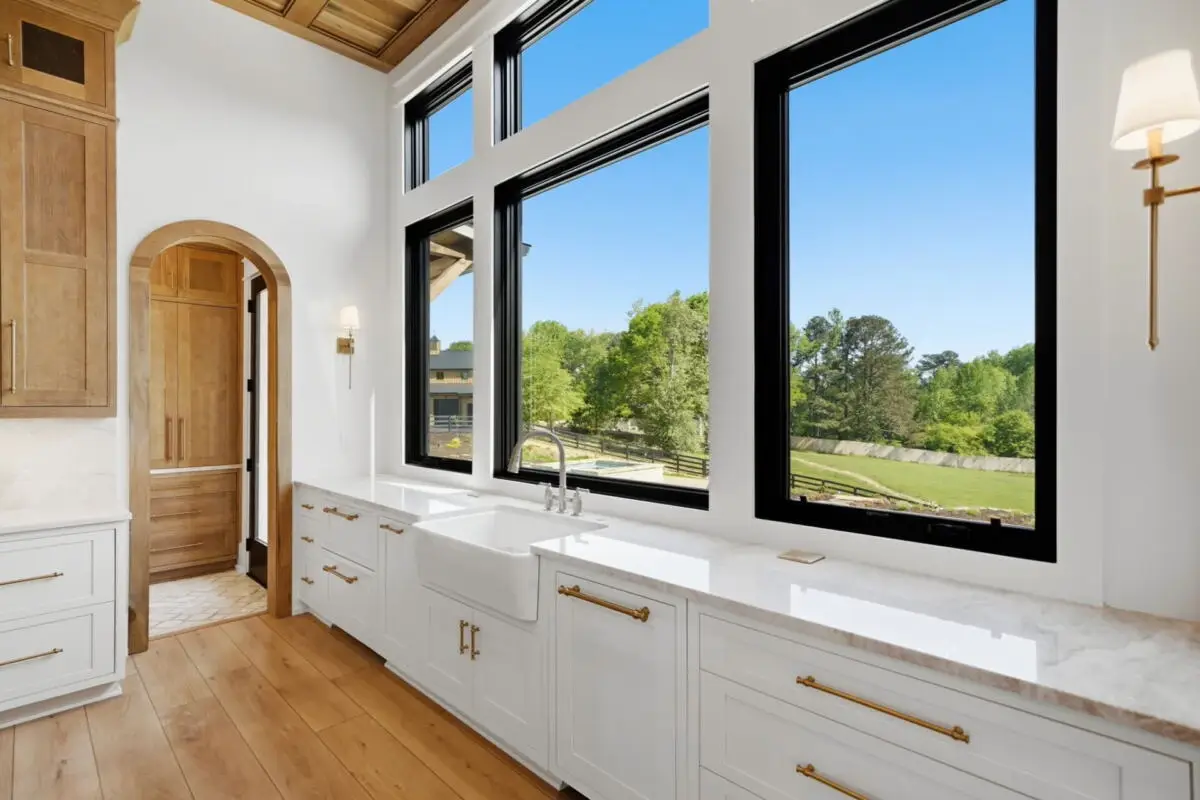
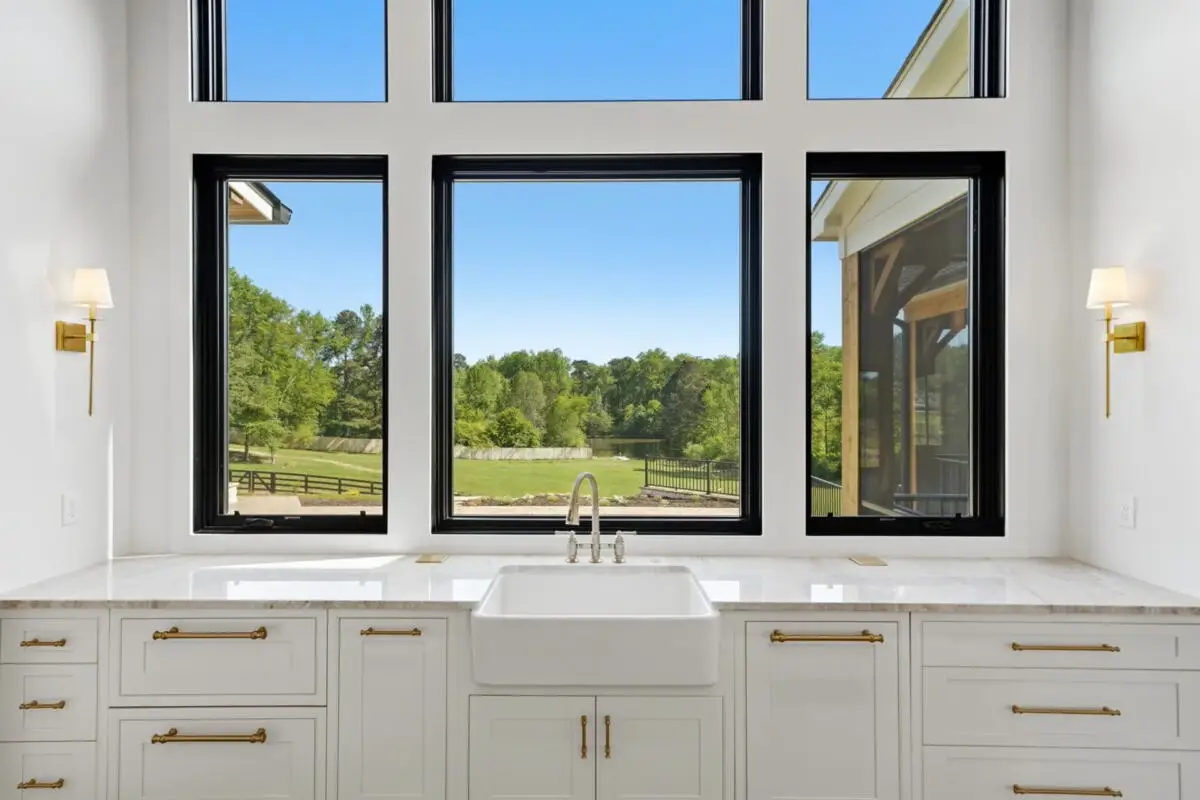
The smart distribution of materials within a customized white oak and black kitchen or twin-palette wood environment relies on controlling visual mass. Our design paths utilize bright, highly reflective painted cabinet surfaces along the high-clearance upper walls to bounce ambient natural light deep into the room. This expansive field is then anchored by placing natural oak cabinet runs along low-tier rows and central preparation islands.
This layout strategy provides a natural texture contrast without making the kitchen footprint look cluttered or closed-in. Designers can vary this setup by integrating dark bronze or black architectural accents along window casings and light fixtures, creating clean horizontal lines that emphasize the home’s wide spatial boundaries.
Load-Bearing Engineering for Wide-Span Islands
Oversized center islands require a rugged under-counter box construction to handle heavy natural stone tops without losing squareness. Our cabinetry boxes feature a reinforced framework built with 3/4-inch multi-ply plywood shells linked by blind-dado joints and heavy-duty corner tie blocks. This internal structural support grid safely handles extra-thick stone countertop extensions without the need for thick legs or bulky columns. This engineering approach delivers a completely unobstructed space for casual seating, ensuring long-term structural leveling and reliable operation along active cleanup and cooking pathways.
Advanced Manufacturing Calibration and Tolerances
Precision Sizing and Squaring Control
Every individual wood blank destined for a custom face frame or door panel undergoes computerized moisture testing before entering the automated sizing line. Our multi-axis computerized sizing cells cut panel substrates with an accuracy margin within 0.1mm, ensuring that every cabinet box is perfectly square. This strict control over sizing tolerances prevents cumulative errors across long cabinetry runs. It guarantees that when multiple custom modules are tied together on the job site, the top leveling lines and vertical vertical tracks align perfectly without requiring on-site cutting or shimming by your installation crews.