
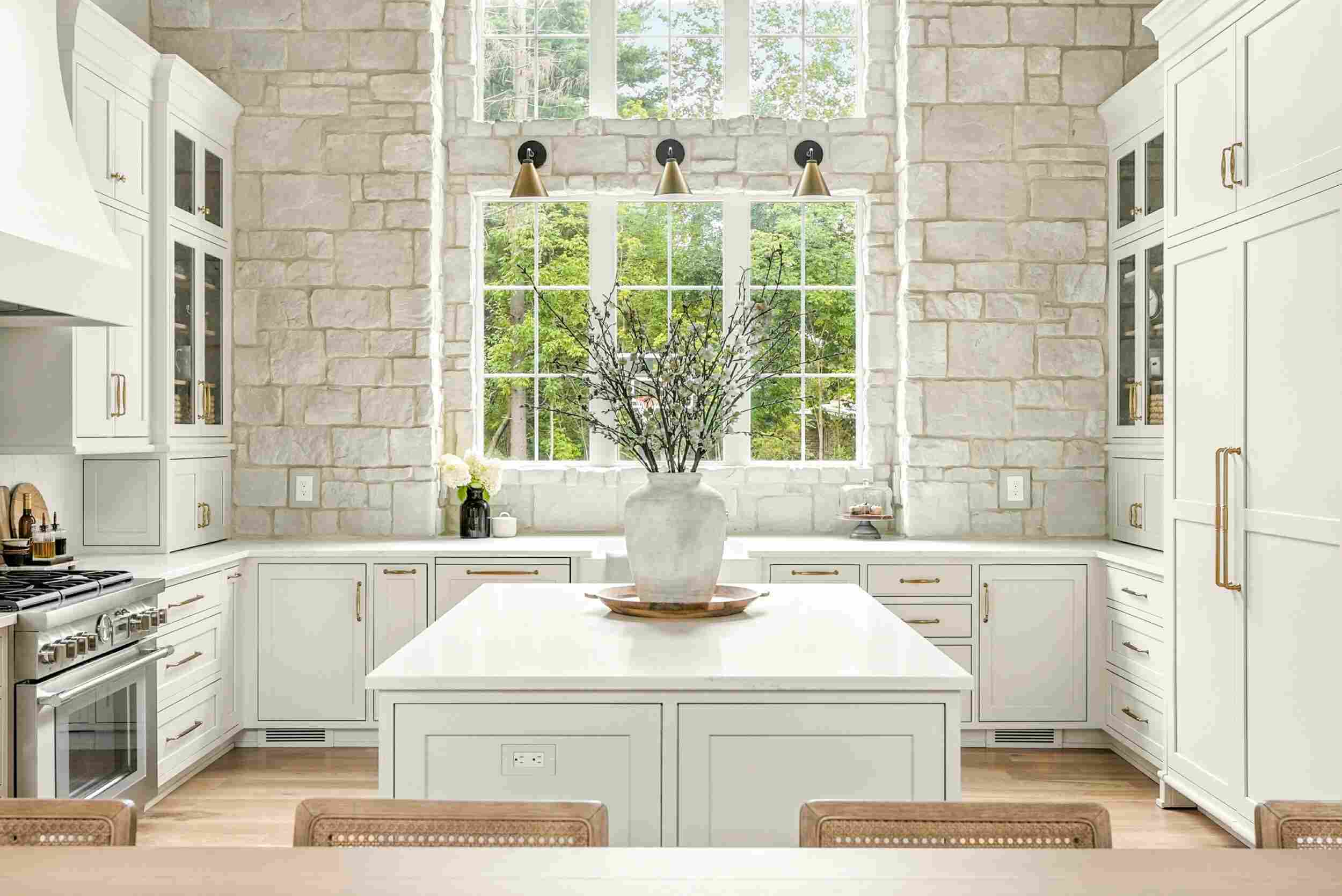
This architectural millwork deployment addresses the structural vulnerabilities caused by localized hydrostatic pressure, vapor emissions, and stone load distribution in high-volume white kitchen designs. By integrating a reinforced, mortise-and-tenon kitchen sink base cabinet under heavy apron-front configurations, the chassis prevents frame racking and sub-floor settlement under dead loads exceeding 300 lbs. This technical blueprint stabilizes continuous perimeter lines within an open concept kitchen with island and living room layout, executing crisp, non-binding reveal gaps across all painted kitchen cabinets.
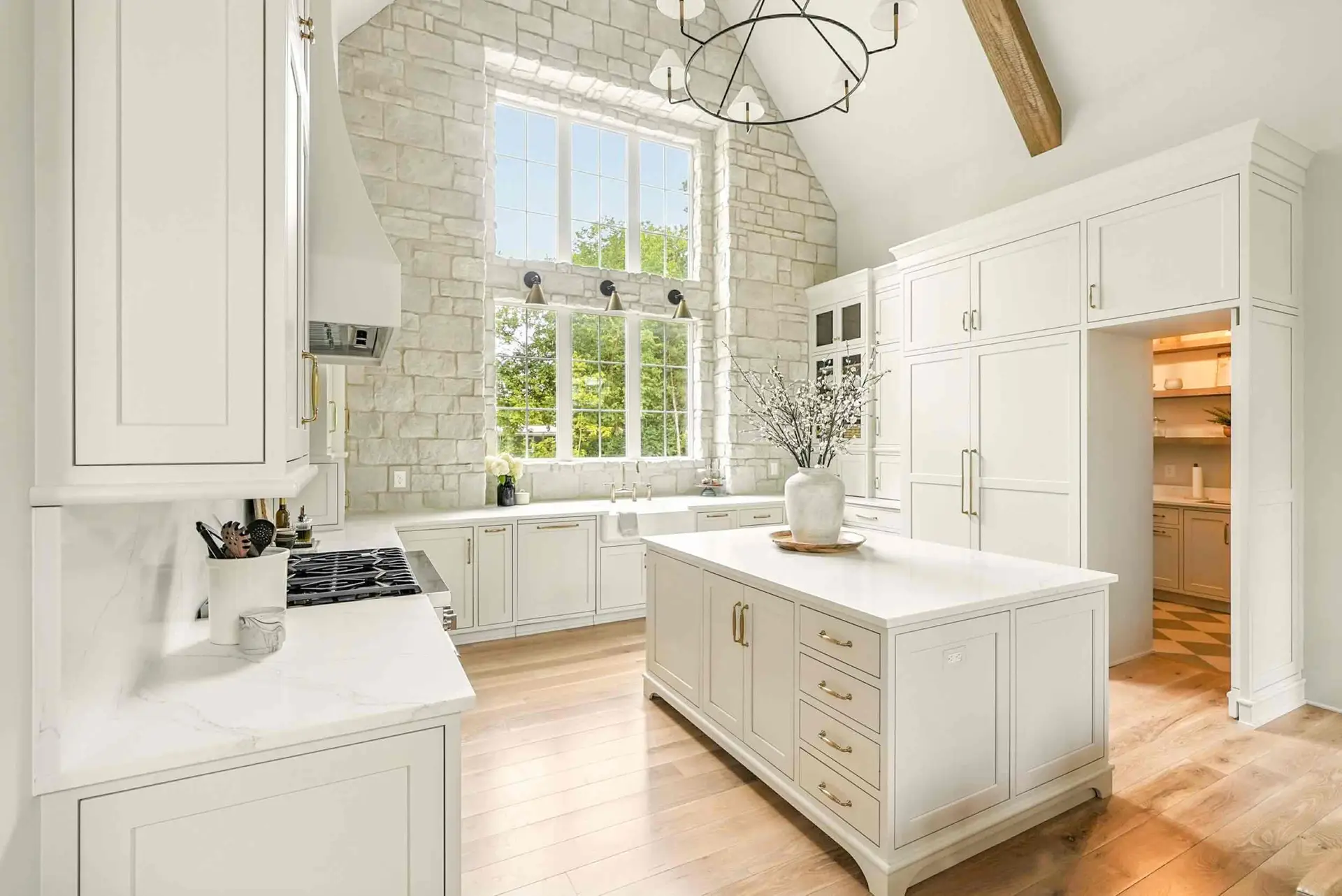
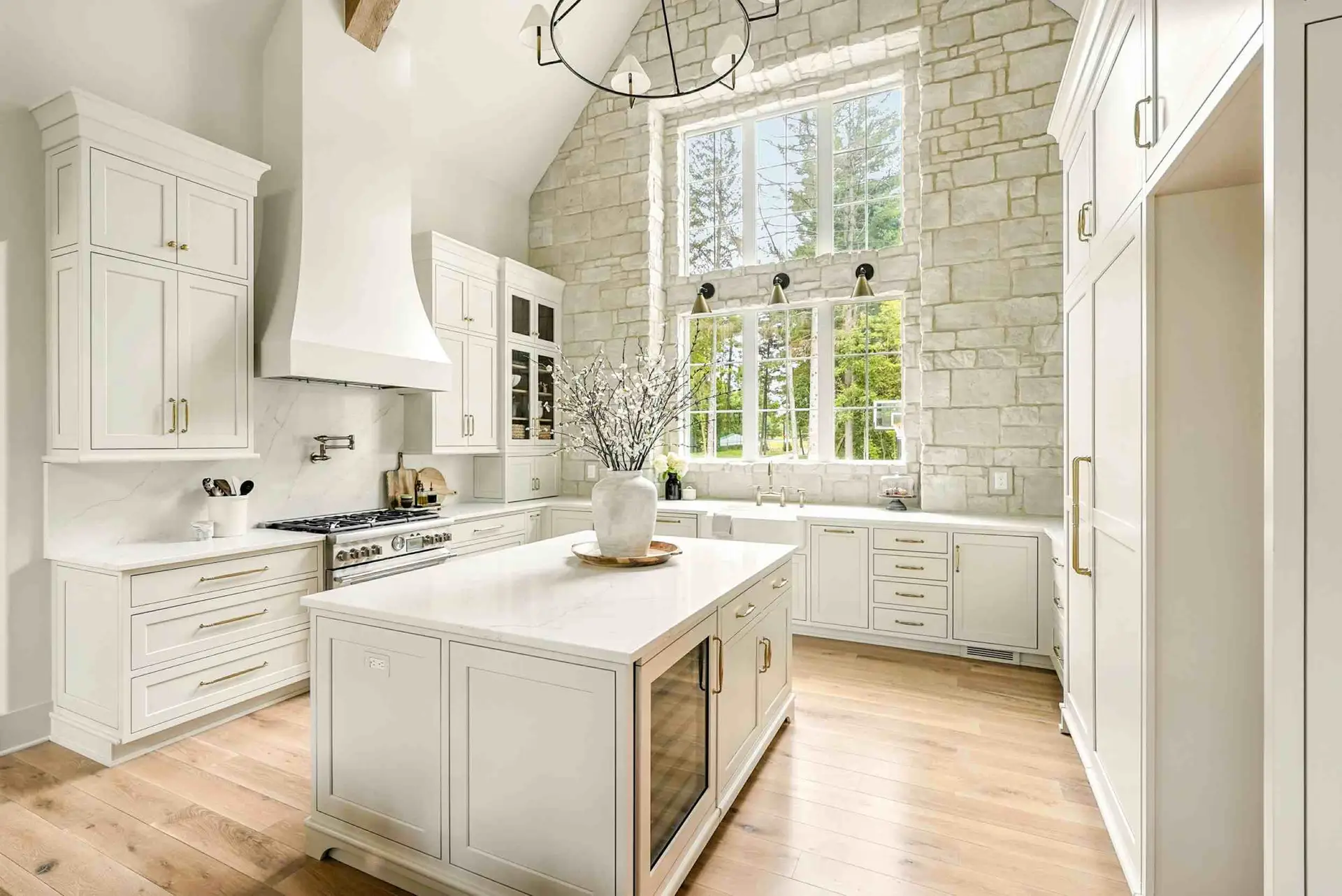
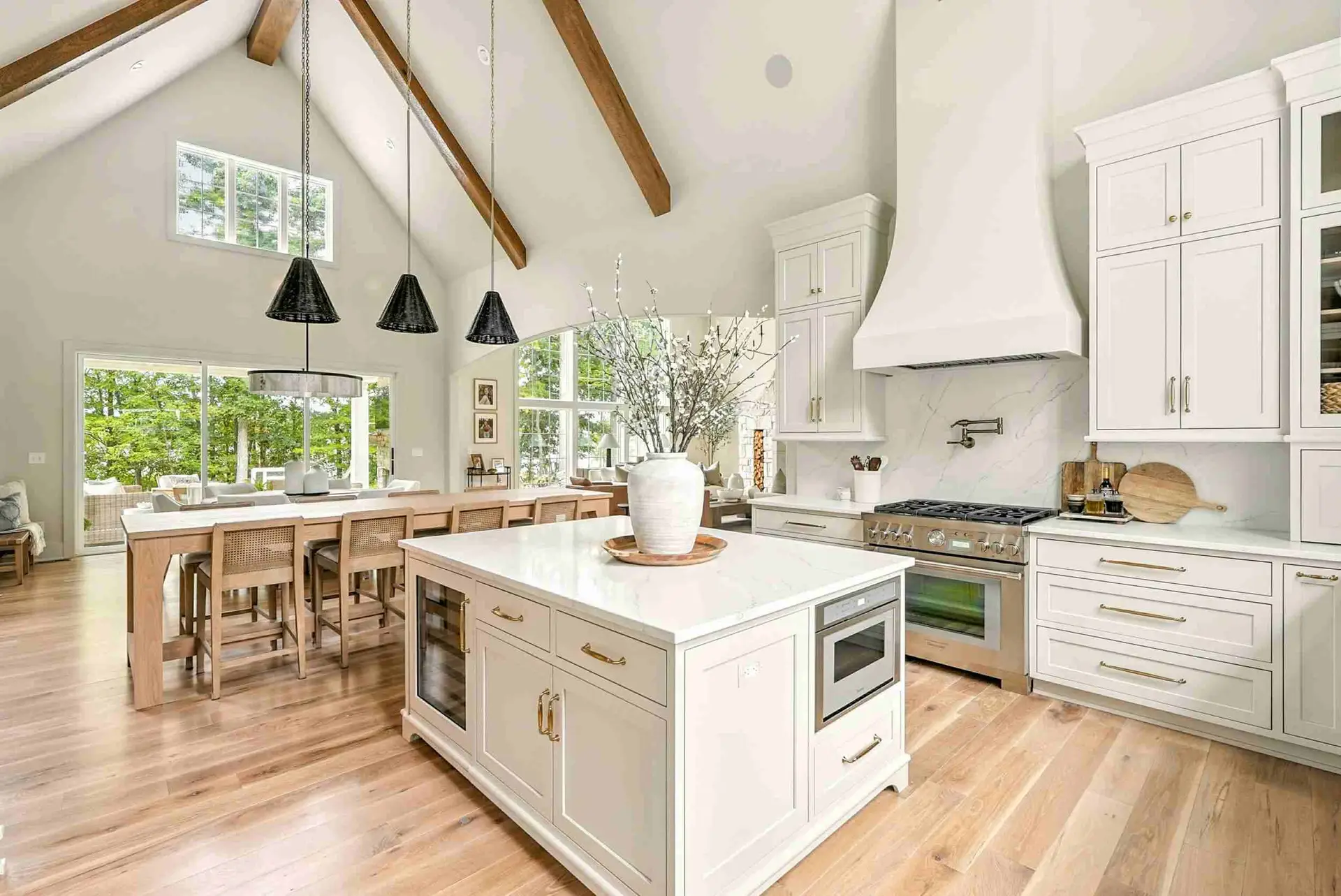
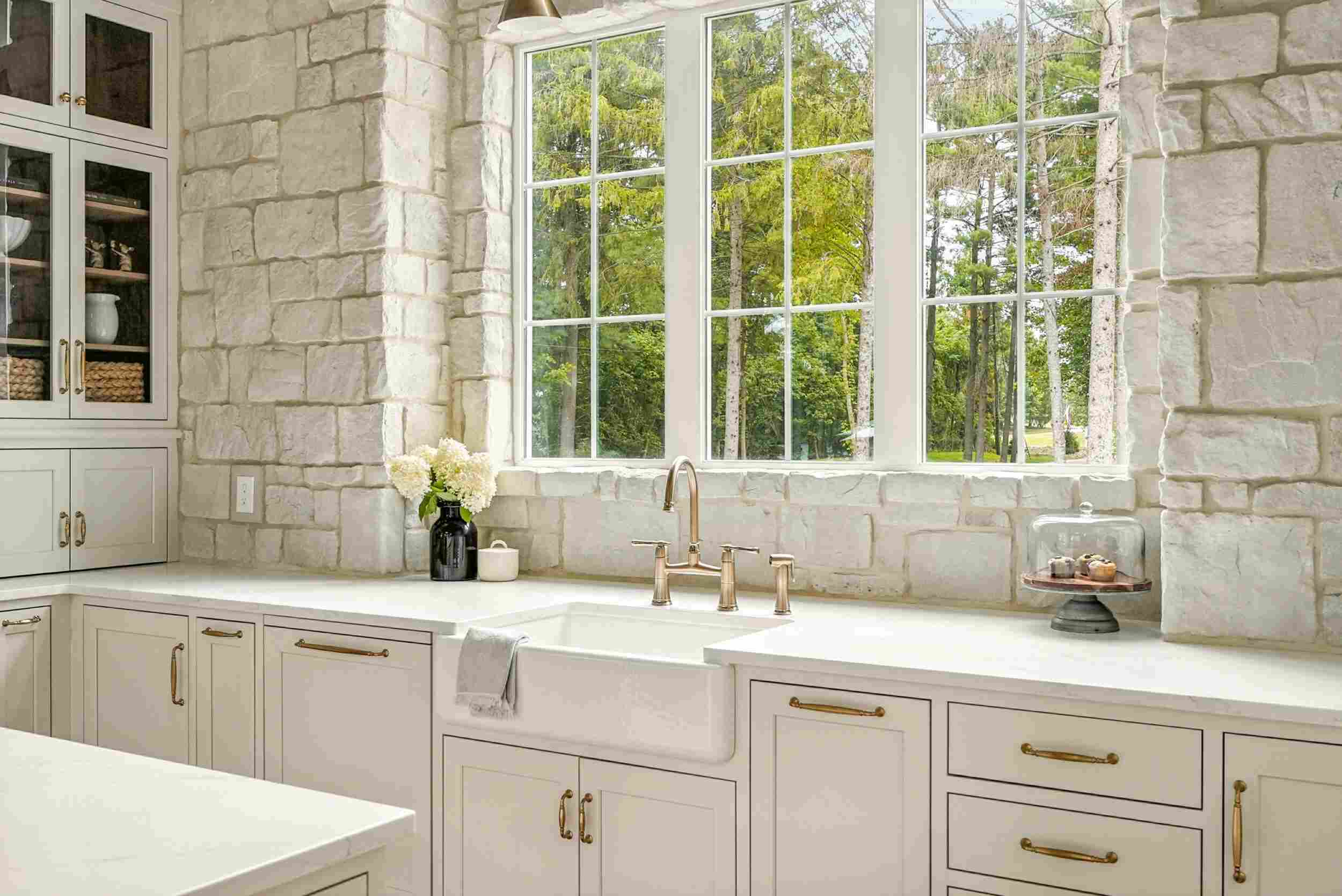
Face-Frame & Inset Structural Mechanical Specifications
| Component | Engineering Specification | Trade Advantage & Utility |
| Frame Architecture | Face frame kitchen cabinets (1-1/2″ wide solid maple stiles) | Prevents diagonal box flexing; forms a rigid structural perimeter. |
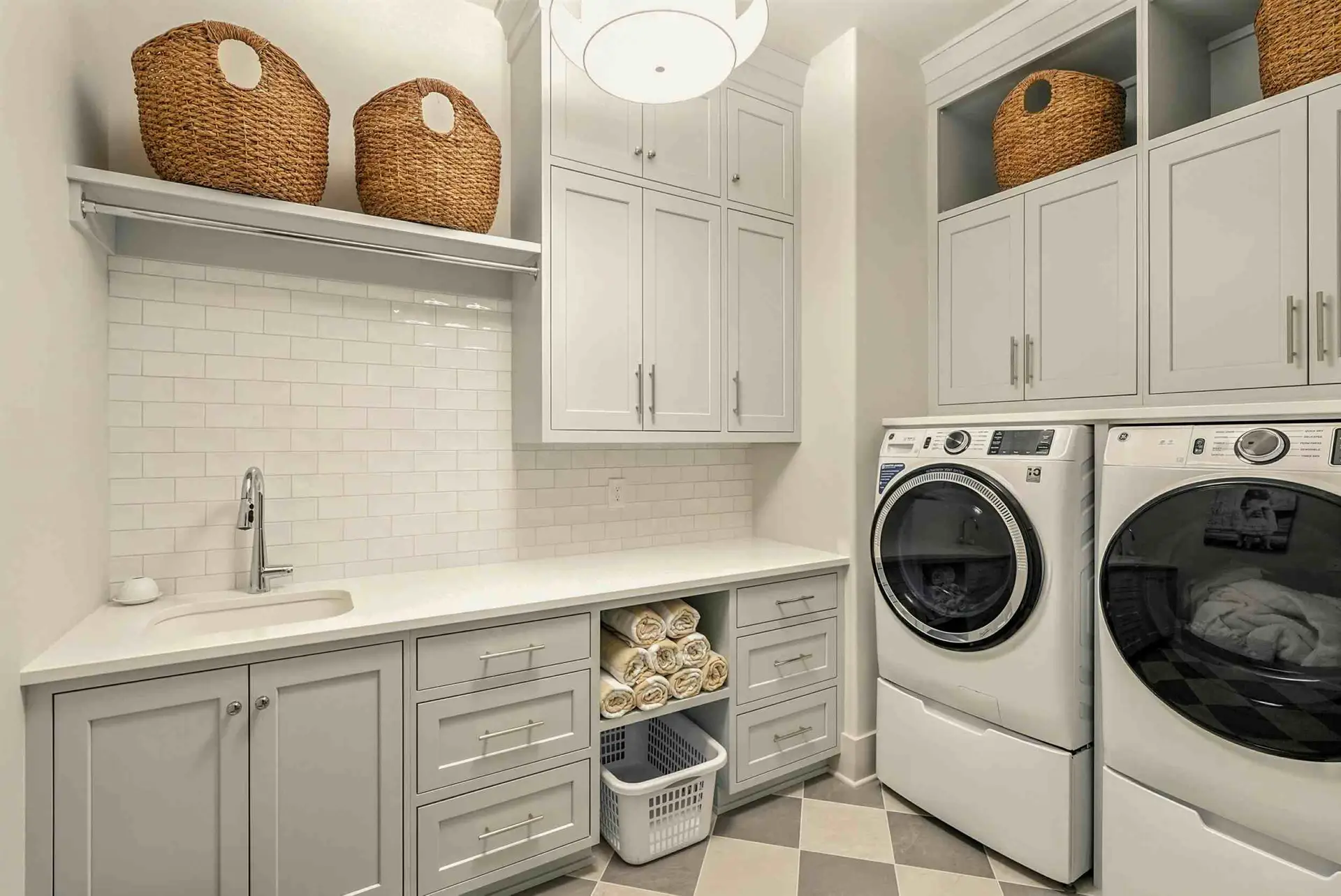
| Door Fitting | Flush inset cabinets with 3/32″ uniform geometric reveals | Delivers a traditional, flat-plane architectural profile with zero overlap. |
| Substrate Matrix | High-density mdf kitchen cabinets door panels over multi-ply plywood boxes | Eliminates atmospheric wood cell movement, warping, and finish joint checking. |
| Finish Chemistry | Multi-layer post-catalyzed conversion varnish (Opaque Off-White) | Category 5 AWI certified barrier against water pooling and chemical cleaners. |
| Hardware System | Soft close kitchen cabinets hidden hinges & under-mount slides | Hydraulic deceleration cylinders absorb dynamic closing forces on inset frames. |
Hydro-Structural Stability & Load Management Analysis
- Load Distribution in the Kitchen Sink Base Cabinet: To sustain a heavy cast-iron farmhouse basin filled to capacity, the kitchen sink base cabinet drops traditional hanging brackets for a solid 3/4″ plywood support grid. This framework transfers downward gravity vectors directly to the leveling feet and floor plates, preventing rail deflection and protecting the stone grout seals from shearing.
- Vapor Deflection on Painted Kitchen Cabinets: Opaque painted kitchen cabinets situated near water zones use high-density engineered fiberboard cores for their center panels. This material prevents the grain checking common in solid wood panels under humidity cycling, preserving the conversion varnish shell around wet clean-up stations.
- Frame Alignment in Open Concept Layouts: Maintaining straight alignment over a long wall in an open concept kitchen with island and living room floor plan requires a face-frame setup. The linked frame setup increases structural stiffness, resisting structural settling and keeping door margins consistent across large wall configurations.
Commercial Project Procurement Inquiries
Architectural Specification & B2B Submittal Estimating Protocols: For custom single-family custom estates, high-volume residential developments, or commercial millwork packages requiring strict compliance with AWI/AWS Premium Quality Standards, our manufacturing facility provides direct technical engineering support. We deliver complete architectural submittal packages, including detailed 3D CAD/BIM shop drawings, verified material certification documents (CARB Phase 2 compliant), and physical finish control blocks to lock down consistency across full product schedules.