
The "Floating" Island Crisis: Why Open Concept Layouts Often Feel Unanchored
[The Problem]: Visual and Structural Vacuum
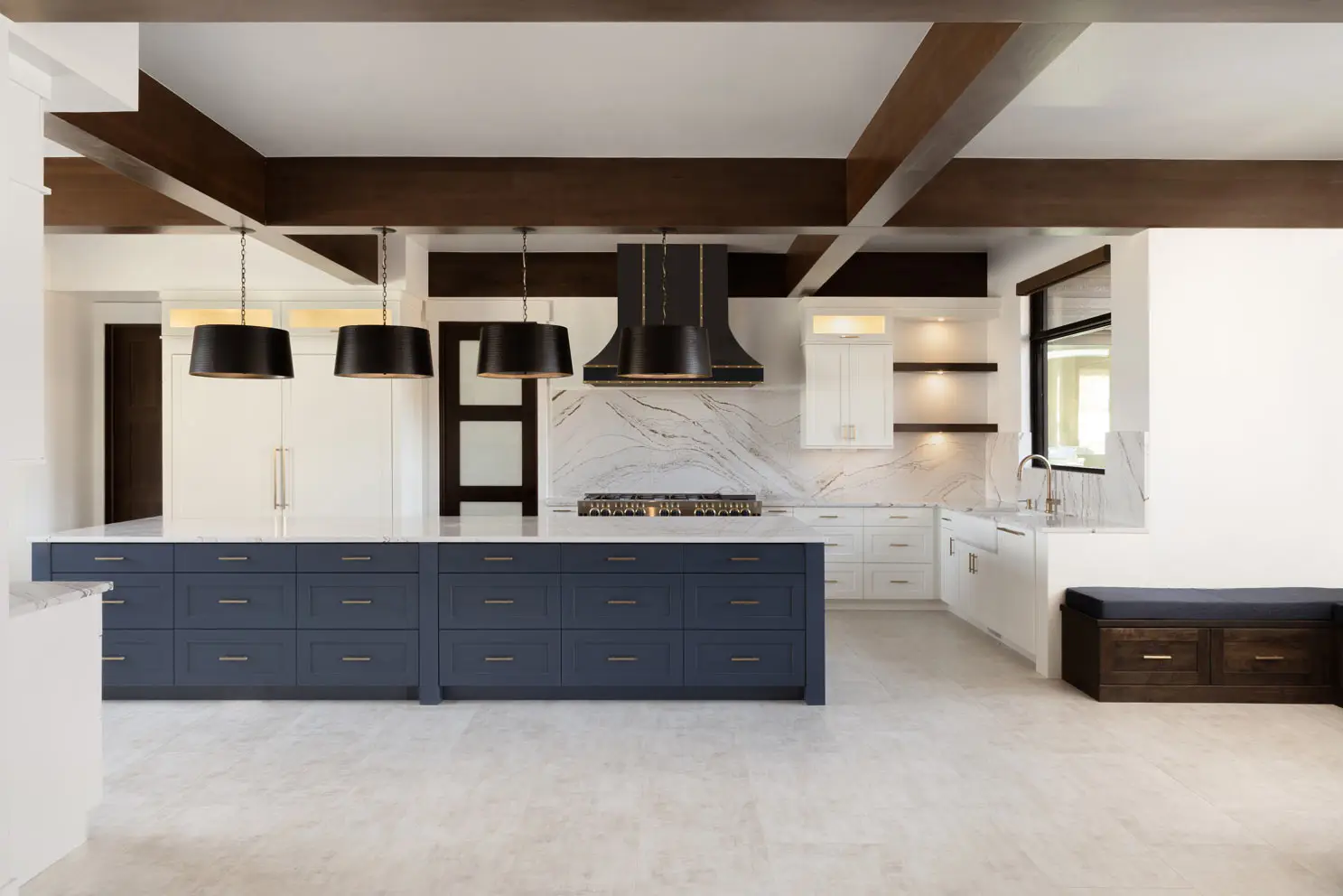
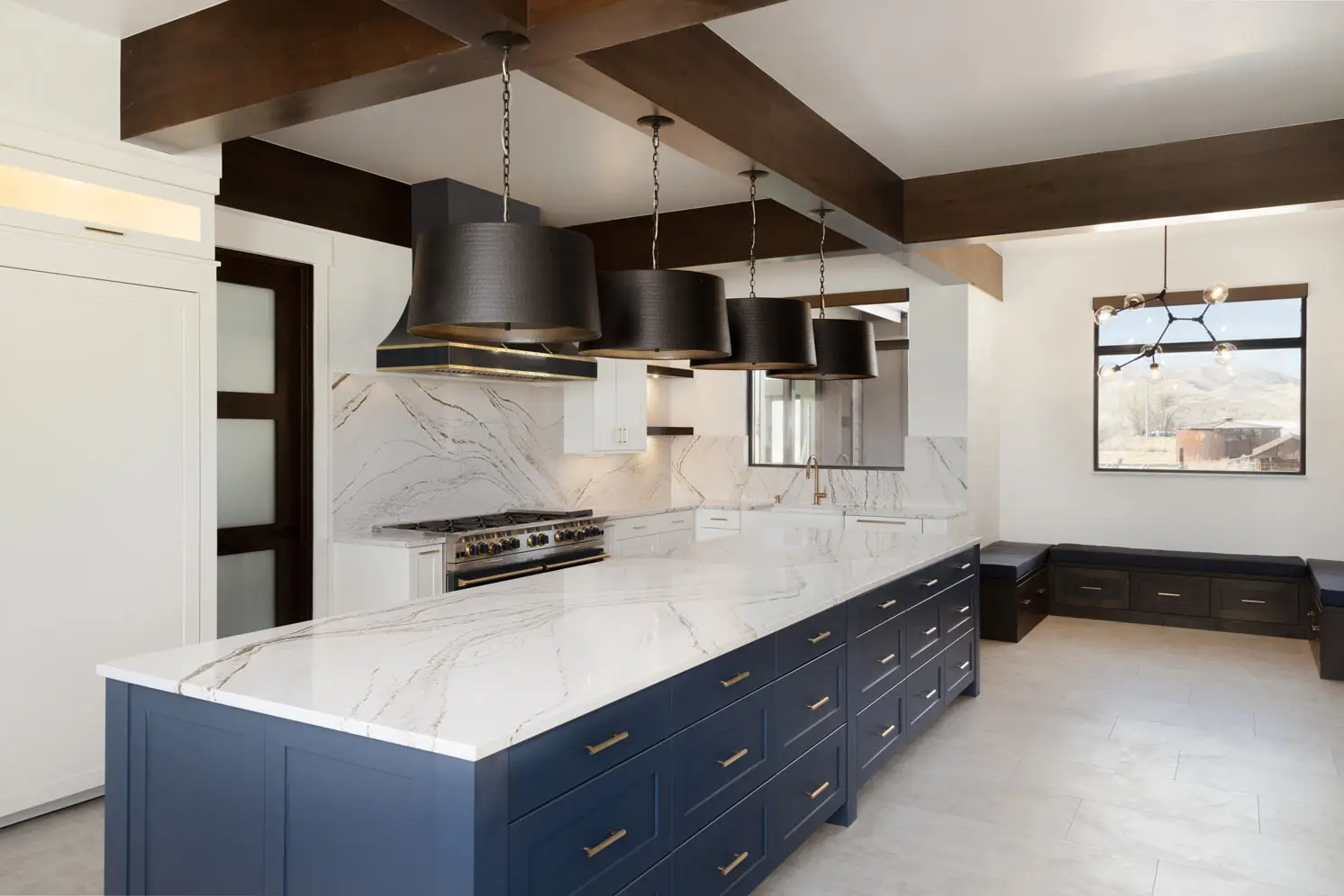
In a sprawling open concept kitchen, the island often looks like it is “drifting” in a sea of flooring. When cabinets are entirely white, the lack of contrast fails to define the kitchen’s boundaries within the larger living space. Furthermore, B2B builders often struggle with the structural integrity required for an oversized kitchen island that must support massive 3cm quartz or marble slabs without sagging over time.
[The Deep Analysis]: Design Psychology and Physical Scale
From a design psychology perspective, the human eye craves a “visual anchor.” A deep navy or midnight blue island provides a “grounding” effect.
The Scale Challenge: An island exceeding 9 feet requires more than standard cabinetry. Standard carcasses often buckle under the weight of luxury stone.
The Expert Solution: We utilize structural 3/4″ plywood carcasses reinforced with solid wood I-beams. This ensures that the oversized kitchen island remains perfectly level, preventing hairline cracks in the stone countertops—a common failure in lower-end modular installations.
Material Science: The Superiority of Factory-Applied Lacquered Kitchen Cabinets
[The Problem]: The “Orange Peel” and Joint Cracking Nightmare
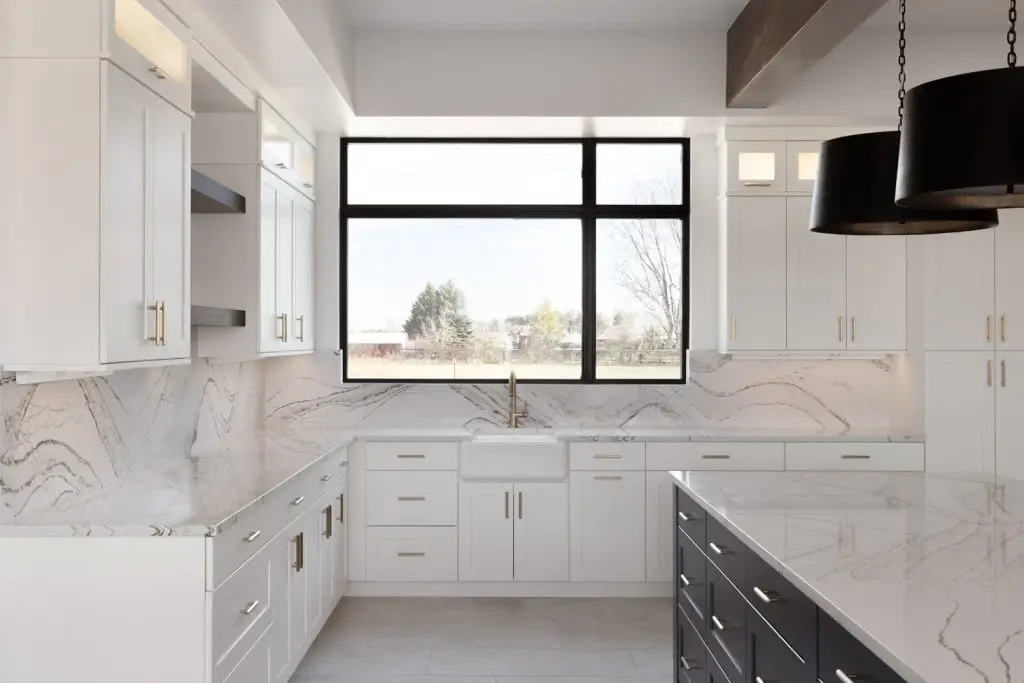
Many luxury kitchens lose their “wow” factor within 24 months because of inferior paint application. Solid wood doors, when painted white or blue, naturally expand and contract with humidity—a major issue in coastal kitchen environments. This leads to unsightly cracks at the stiles and rails (joint separation).
[The Deep Analysis]: HDF Stability vs. Solid Wood Expansion
Why HDF? For lacquered kitchen cabinets, ALLAND utilizes furniture-grade High-Density Fiberboard (HDF) for the center panels. Unlike solid wood, HDF is isotropic; it does not have a grain direction and therefore does not breathe. This provides a perfectly stable substrate for the lacquer, ensuring the finish remains “automotive-smooth” for decades.
The LRV Factor: We meticulously calibrate the Light Reflectance Value (LRV). Our “Pure White” lacquer typically sits at an LRV of 82-85. This ensures the kitchen remains bright without creating the blinding glare often found in cheap, high-gloss finishes.
KCMA Standards: Our factory-applied lacquer undergoes a multi-stage catalyzed process. This creates a chemical bond that is resistant to the salt air and high humidity of coastal regions, far exceeding the durability of on-site “hand-painted” finishes.
Engineering the Interior: Dovetail Joinery and Load-Bearing Excellence
[The Problem]: Drawer Failure in High-Traffic Zones
High-net-worth homeowners utilize their islands for everything from gourmet prep to social gathering. The drawers in an oversized kitchen island are often larger and deeper, carrying significantly more weight in cookware and appliances.
[The Expert Solution]: Dovetail Joinery & Dynamic Load Slides
Dovetail Joinery: Every ALLAND drawer box is constructed using solid wood dovetail joinery. This interlocking joint is the industry benchmark for tensile strength, ensuring the drawer front never detaches from the box, even after thousands of cycles.
Soft-Close Engineering: We specify heavy-duty soft-close hardware with a dynamic load rating of 110 lbs to 150 lbs for oversized pot drawers. This prevents the “rattle and bang” of heavy items and protects the lacquered finish from the micro-vibrations of abrupt closing.
Engineering the Sale: Partner with the Experts in Coastal Luxury
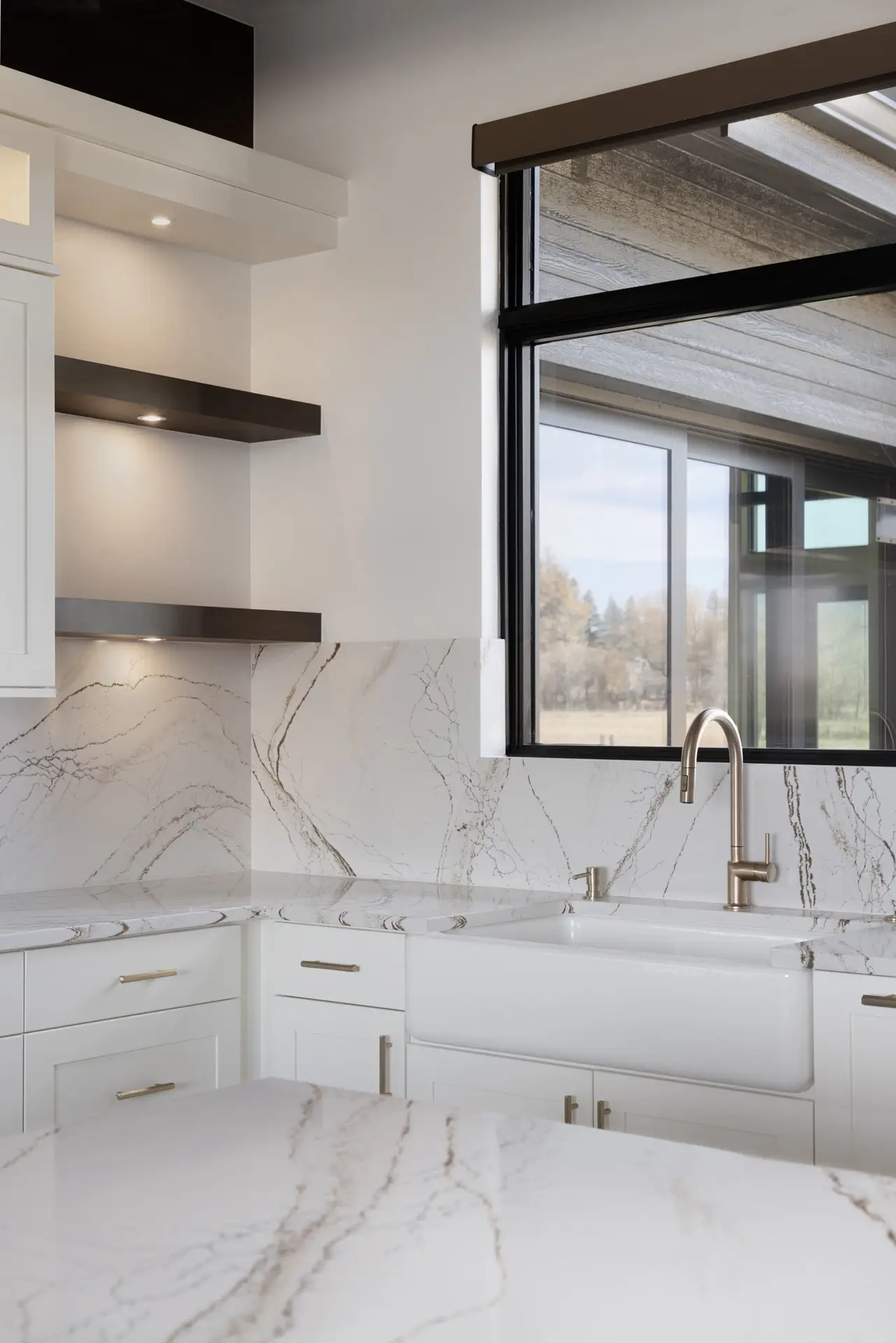
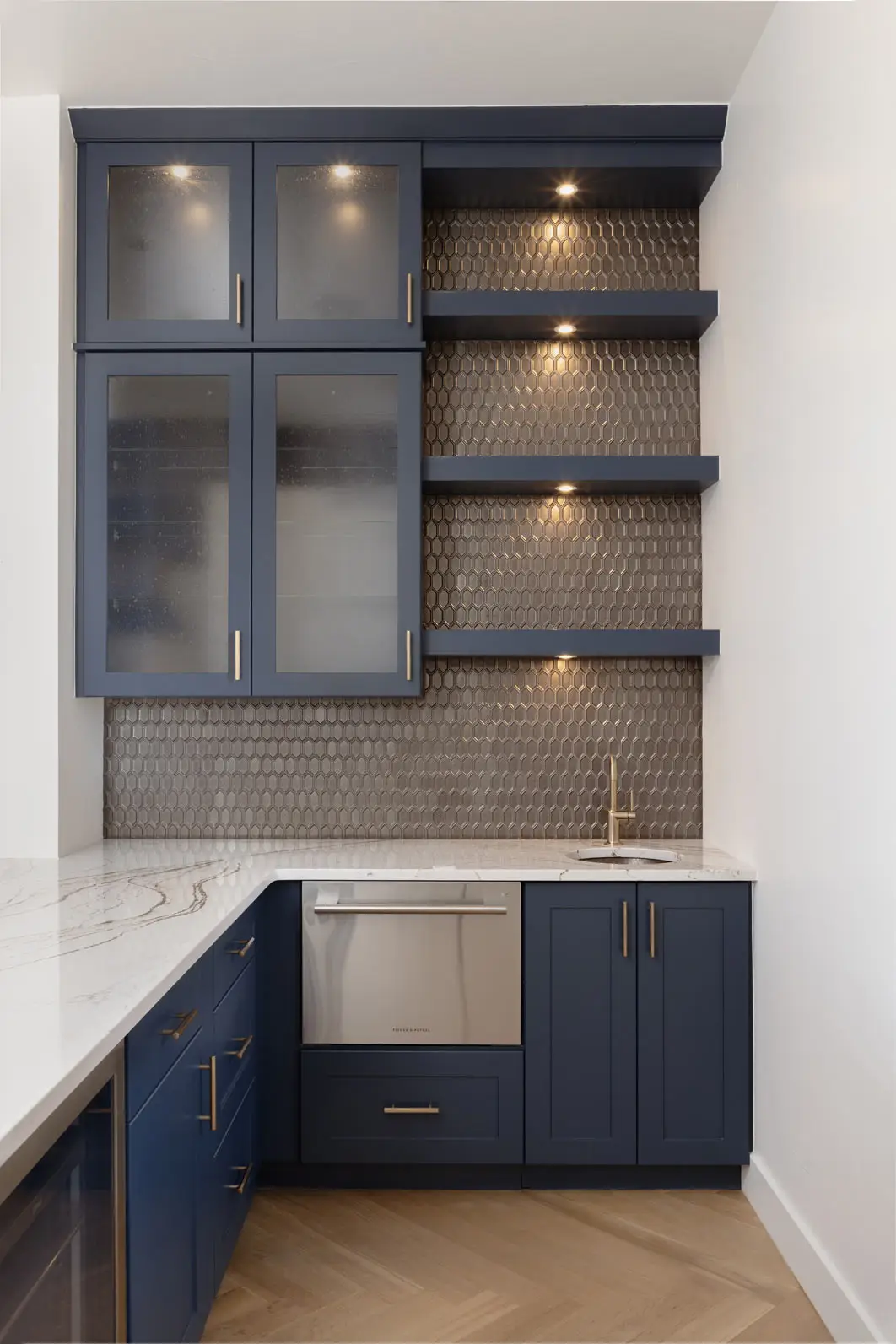
In the competitive landscape of American home building, the kitchen is where the sale is won. Don’t settle for “stock” white cabinets when you can offer an engineered white and blue coastal masterpiece.
ALLAND brings 18 years of factory-direct excellence to your development. Whether you are a custom home builder or a luxury developer, our team is ready to provide the 3D designs, material samples, and structural expertise your next project demands.