
This comprehensive structural design portfolio details the industrial material mechanics, anti-deflection structural framing paths, and stone-load distribution equations required to execute a premium, high-capacity oak kitchen island installation for estate-scale North American residential construction projects. Within modern open-concept floor plans, introducing a massive central multi-functional millwork island introduces dynamic multidirectional shear stresses and structural gravity loads. These stresses become critical when accommodating heavy natural quartzite stone slab drop-downs, extended cantilevered breakfast counters, and integrated deep-basin under-mount plumbing arrays. Standard unreinforced residential cabinetry systems frequently exhibit structural tracking errors, center panel cupping, or catastrophic stone grout line shearing under multi-ton downward forces.
Our industrial manufacturing infrastructure directly mitigates these structural vulnerabilities. By pairing an interior 3/4-inch multi-ply marine-grade plywood box interlocking framework with hand-selected, kiln-dried rift-sawn timbers, we provide a mathematically stabilized foundation. This rigorous technical integration ensures absolute alignment continuity, flat plane uniformity, and permanent leveling across all continuous oak kitchen islands. This systematic engineering approach successfully delivers the precise 3/32-inch linear reveal margins required by custom home builders, structural general contractors, and luxury interior architects.
Wood Science and Volumetric Stability Across Varying Microclimates
Specifying large-scale wood components inside a high-clearance, custom white oak kitchen island layout demands strict environmental control over internal moisture dynamics and organic fiber cell expansion. Natural solid oak timber contains dense, porous ring cells that inherently absorb and release atmospheric vapor based on the surrounding relative humidity. When these wood fibers are exposed to variable seasonal microclimates—such as coastal salt air, heavy sub-zero winter heating dryness, or localized culinary steam zones—improperly dried or poorly cut timber packages will quickly warp, cup, or twist. These material failures result in misaligned door reveals, split finish layers, and binding hardware paths along the main face frame boundaries.
Deflection Control and Cellular Alignment in a Rift Sawn White Oak Kitchen Island
To eliminate long-term cross-grain fiber distortion across our high-end rift sawn white oak kitchen island premium product lines, the raw lumber is sourced exclusively from specialized logs sawn at a strict 90-degree angle relative to the wood’s annual growth rings. This dedicated rift-sawing process yields an exceptionally uniform, straight vertical grain texture across every structural panel surface. More importantly, it provides a remarkably low tangential expansion coefficient compared to standard plain-sawn boards.
For a high-traffic white oak island kitchen deployment, this vertical cellular alignment guarantees that the expansive drawer fronts and structural end panels experience near-zero lateral shifting. By controlling grain direction at the factory level, we ensure that the tight margins between flush inset doors remain permanently square and functional, completely eliminating the wood swelling and splitting that compromises low-tier lumber packages in high-humidity luxury residential environments.
Industrial Moisture Isolation Barriers and Protective Applied Chemistry for Light Oak Kitchen Island Hubs
Lower cabinet bases configured as a custom light oak kitchen island operate as the central work triangle hub, exposing raw wood faces to continuous moisture testing from under-counter apron sinks, high-temperature vegetable prep, and integrated luxury dishwashers. To preserve the raw, organic aesthetic of a modern kitchen island oak assembly without sacrificing long-term surface durability, our automated cleanroom finishing lines seal every component with an advanced, post-catalyzed conversion varnish shield.
Unlike standard architectural oils or field-applied acrylic finishes, this industrial coating chemically cross-links during an automated heat-kiln curing cycle, forming an impermeable molecular barrier across the wood’s open pores. This specialized application achieves a certified AWI Category 5 finish rating. It fully protects the underlying oak island kitchen timber fibers against water pooling, high-temperature steam cleaning cycles, chemical household cleaning agents, and high-acid culinary spills while maintaining a smooth, non-yellowing matte clarity.
Spatial Integration and Heavy-Duty Cantilever Structural Engineering
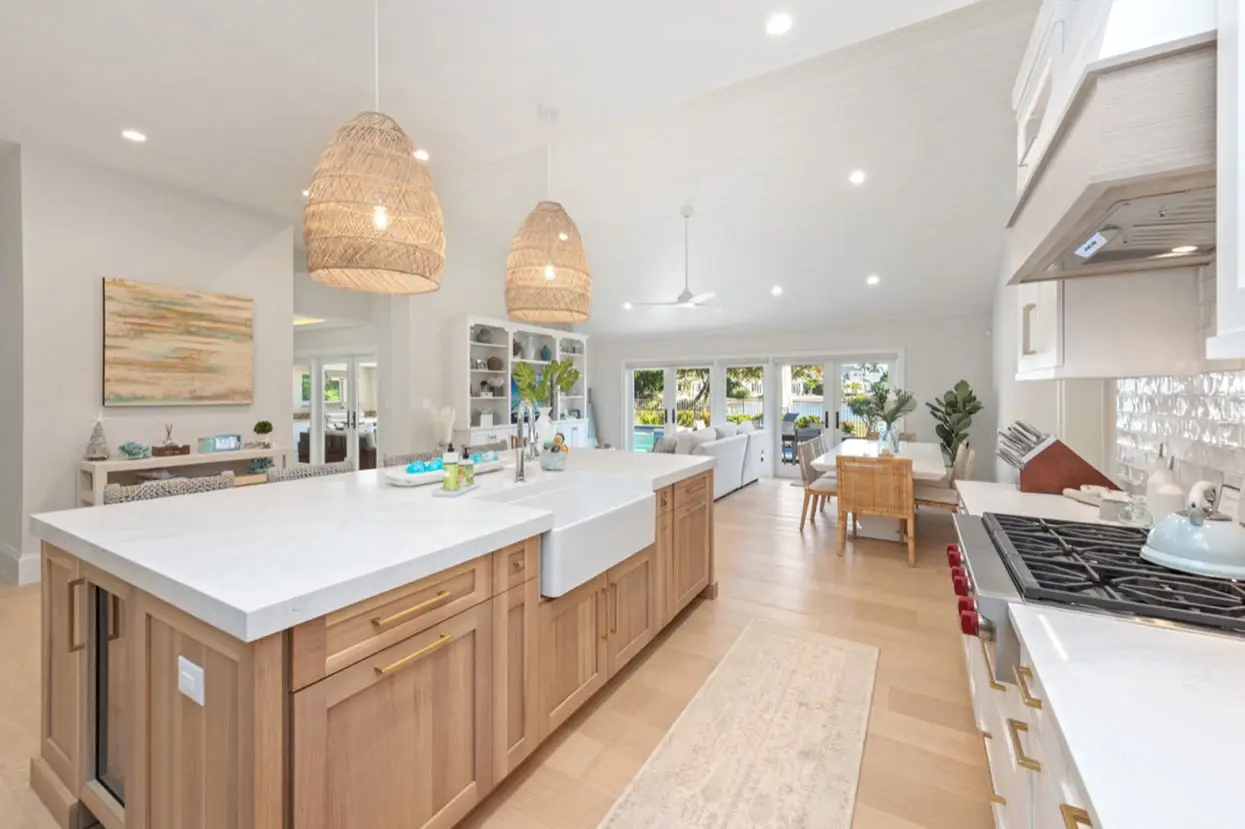
Integrating an oversized oak kitchen island into a custom open great room requires balancing expansive stone counter spans with high-capacity under-counter storage configurations. As contemporary architectural blueprints shift toward maximizing active prep surfaces and creating casual gathering zones, the center island must function simultaneously as a structural support system and a clean visual anchor that bridges cooking zones with formal living environments.
High-Capacity Load Bracing in an Oak Kitchen Island with Seating Architecture
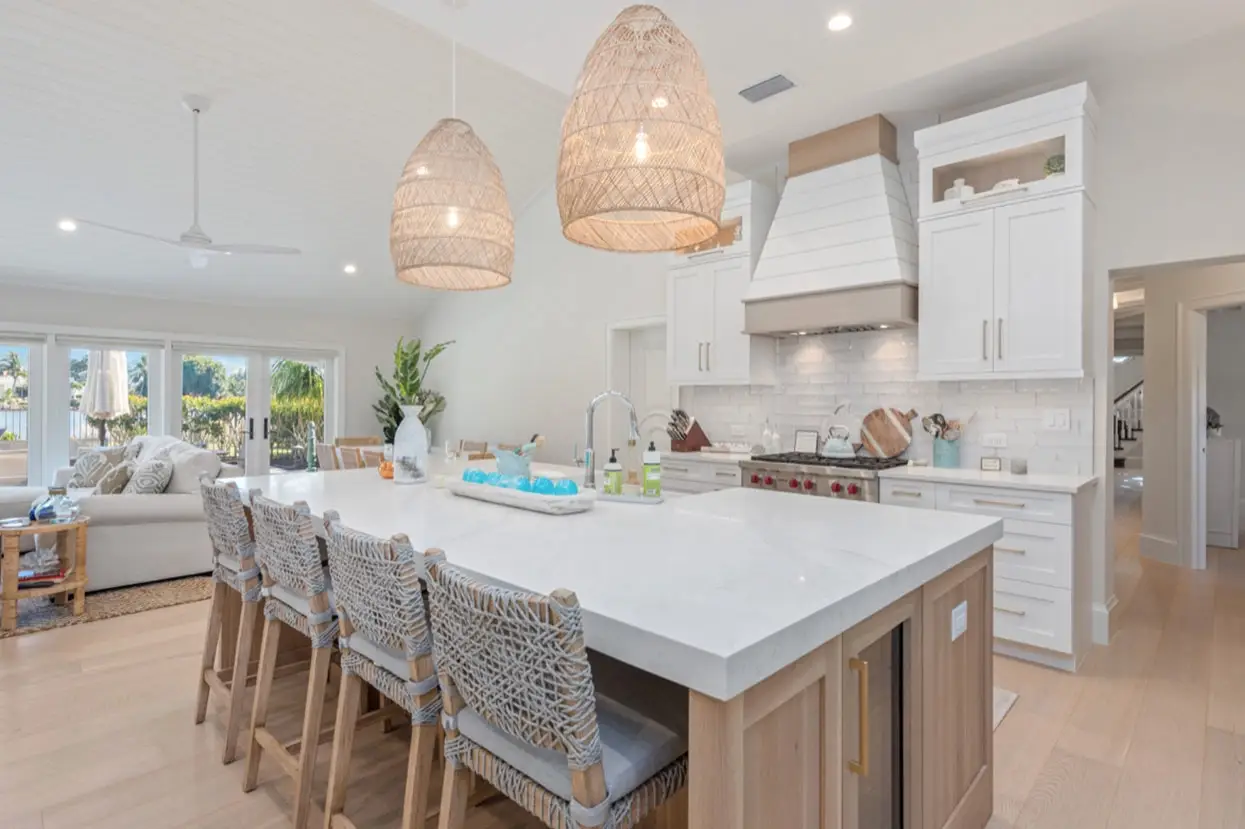
Building a structurally sound, multi-tier oak kitchen island with seating layout demands an engineered internal chassis capable of carrying extended, heavy quartz or marble counter overhangs without relying on visible exterior corbels or bulky leg posts that disrupt seating comfort. Our custom cabinetry box modules combine blind-dado joinery with internal solid maple running stretchers and structural 14-gauge steel corner tie brackets.
When a design calls for a deep cantilevered breakfast bar barstool layout, this hidden internal framework safely transfers the massive dead-weight downward forces of the stone slab straight to the structural subfloor joists. This prevents top countertop deflection, protects delicate mitered stone seams from cracking under dynamic elbow weight, and ensures an entirely unobstructed, high-performance seating footprint for the home’s primary entertainment zone.
Tonal Contrast and Proportional Balance in a Painted Kitchen Island with Oak Cabinets Configuration
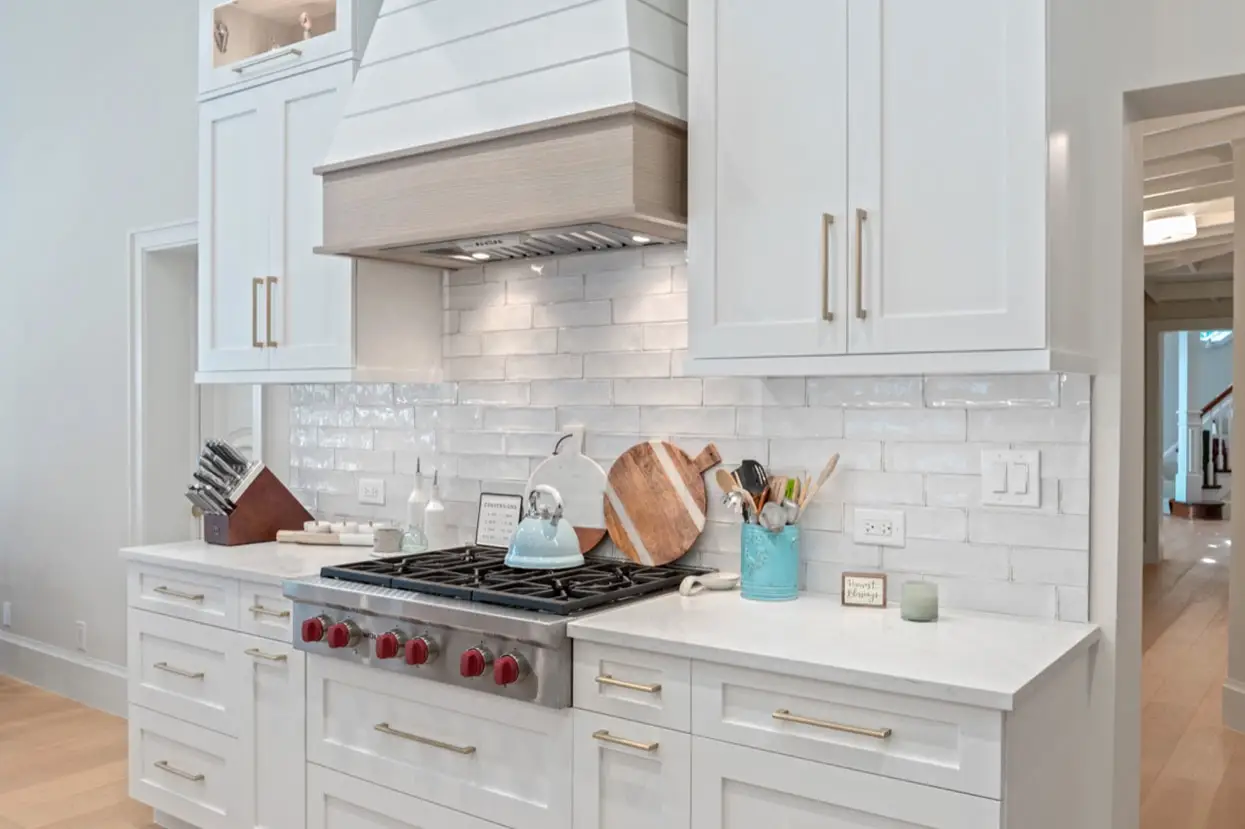
In expansive residential floor plans, designing a custom painted kitchen island with oak cabinets setup allows developers to establish distinct focal points while maintaining an open, airy feeling throughout the layout. The perimeter wall run typically features bright, highly reflective painted cabinet surfaces that maximize vertical wall heights, while the heavy solid oak central island anchors the room’s physical layout with rich, organic wood textures.
This smart play on visual weight can be seamlessly inverted depending on the custom home’s lighting conditions. Designers can introduce a dark painted island frame paired with a premium natural oak kitchen island worktop accent or a solid oak perimeter wall run. This layout creates continuous, clean horizontal sightlines that perfectly match the minimalist aesthetics and demanding design standards of high-end custom properties.
Architectural Flow Control and Cross-Zone Storage Uniformity
Horizontal Grain Matching and Sightline Alignment Across Modern Transitions
Achieving a clean profile transition within a high-end residential layout requires strict horizontal grain matching across all adjacent base cabinet rows and integrated column appliance faces. When installing full-height built-in refrigeration panels or hidden pantry pass-throughs right next to a central island, our manufacturing plants utilize continuous sequential flitch cutting from single oak logs.
This technical process ensures that the rich vertical grain patterns flow uninterrupted across multiple door breaks, hidden touch-latches, and decorative shiplap ventilation shrouds. This uniform grain alignment minimizes broken sightlines, directly addressing the strict, clean profile requirements seen in premium contemporary architectural design specifications.
Engineering Structural Consistency for Secondary High-Traffic Domestic Spaces
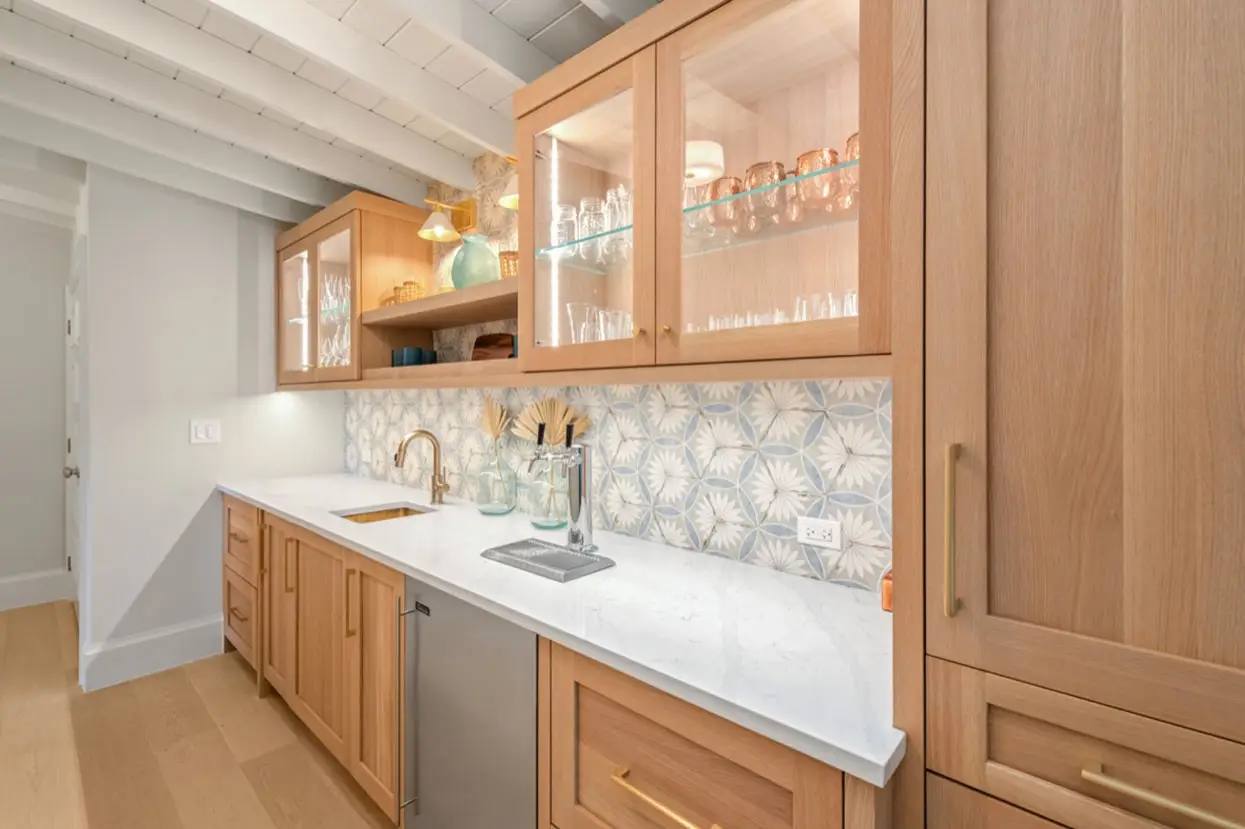
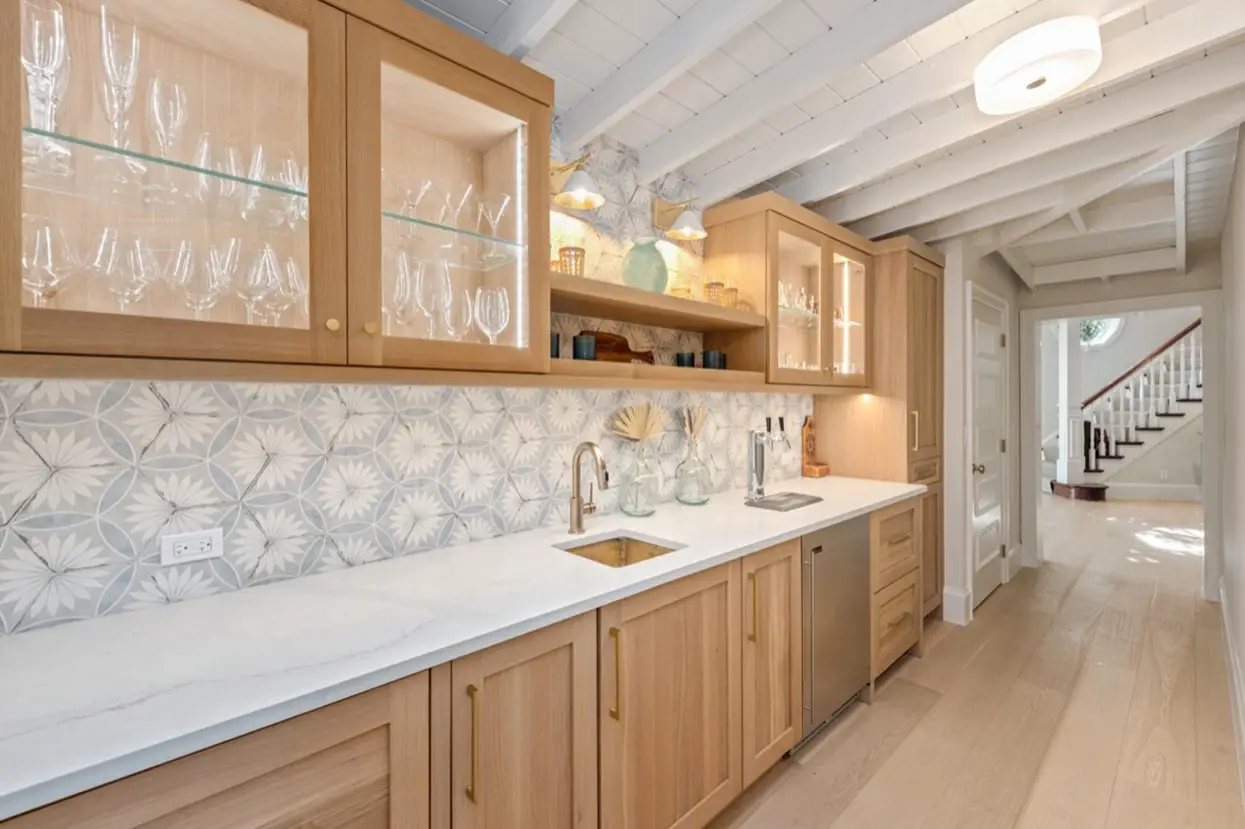
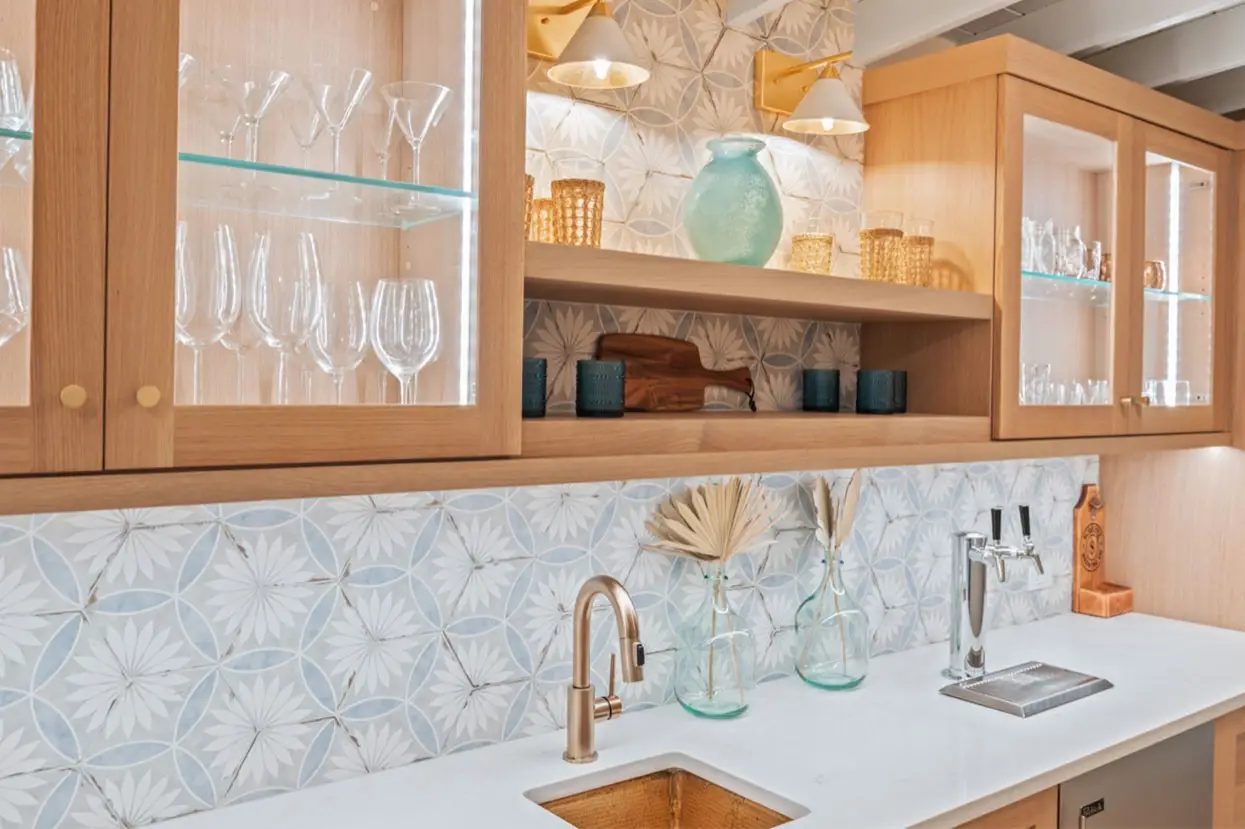
Secondary entertainment hubs—such as walk-in butler pantries, custom under-stair wet bars, and secondary food prep zones—experience significant structural wear and daily chemical cleaning cycles. To maintain high asset value across the entire property, these auxiliary storage zones are built using the exact same multi-ply plywood box structures and durable conversion varnishes engineered for the main kitchen.
Using identical soft-close drawer slides, matching interior box options, and uniform face frame thickness ensures that secondary storage spaces perform with the same quiet luxury as the central island. This thorough engineering focus delivers long-term durability and smooth mechanical movement across all active zones of the custom estate.
Advanced Manufacturing Calibration and Tolerances
The production of premium architectural millwork requires an integration of advanced automated machinery and strict structural quality control check-points. To deliver cabinetry packages that install seamlessly on-site without field modification, our production facilities operate under strict German-standard tolerance metrics, controlling every cut, bore, and finish coat down to a fraction of a millimeter.
Precision Sizing and Squaring Control
Every individual wood blank destined for a custom face frame or door panel undergoes computerized moisture testing before entering the automated sizing line. Our multi-axis computerized sizing cells cut panel substrates with an accuracy margin within 0.1mm, ensuring that every cabinet box is perfectly square. This strict control over sizing tolerances prevents cumulative errors across long cabinetry runs. It guarantees that when multiple custom modules are tied together on the job site, the top leveling lines and vertical vertical tracks align perfectly without requiring on-site cutting or shimming by your installation crews.
Cleanroom Spray Finishing and Sheen Consistency
The application of our high-durability conversion varnishes occurs inside a fully pressurized, dust-free cleanroom environment. Automated spray arrays apply primer and topcoats at an exact, monitored wet-film thickness, eliminating surface runs, orange peel textures, or thin coating vulnerabilities along sharp edge paths. Following application, the finished panels pass through automated flash-off tunnels and forced-air drying ovens. This process ensures complete chemical curing and an entirely uniform finish sheen across both light painted finishes and deep natural oak wood grains, guaranteeing flawless appearance under intense architectural accent lighting.