
Kitchen Countertops Quartz vs Granite: The Cabinet Engineering Guide
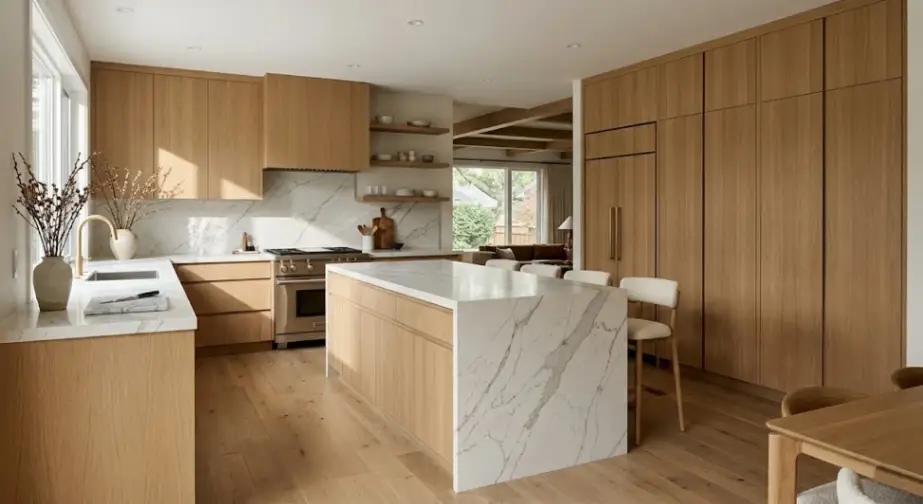
When choosing between kitchen countertops quartz vs granite, the decision shapes not only the visual tone of the kitchen, but also the long-term structural demands placed on the base cabinetry. While natural granite offers one-of-a-kind geological veining and extreme heat tolerance, engineered quartz provides near-zero porosity and consistent pattern predictability across large slab runs.
Beyond surface aesthetics, a 3cm stone slab exerts upwards of 800 to 1,200 lbs of static dead load over base units. Evaluating porosity, stain resistance, cabinet deflection limits, and kitchen countertop and cabinet color combinations is essential to engineering a high-performance culinary space.
Here is the professional specification guide to selecting the best kitchen countertops for luxury residential millwork.
Quartz vs. Granite: The Practical Performance & Maintenance Guide
When choosing between engineered quartz and natural granite for your custom kitchen, the decision comes down to two practical factors: daily lifestyle maintenance and long-term durability under heavy kitchen use.
Engineered Quartz: The Low-Maintenance Modern Standard
For active family kitchens and luxury residential developments, engineered quartz is the most specified surface for one clear reason: effortless everyday living.
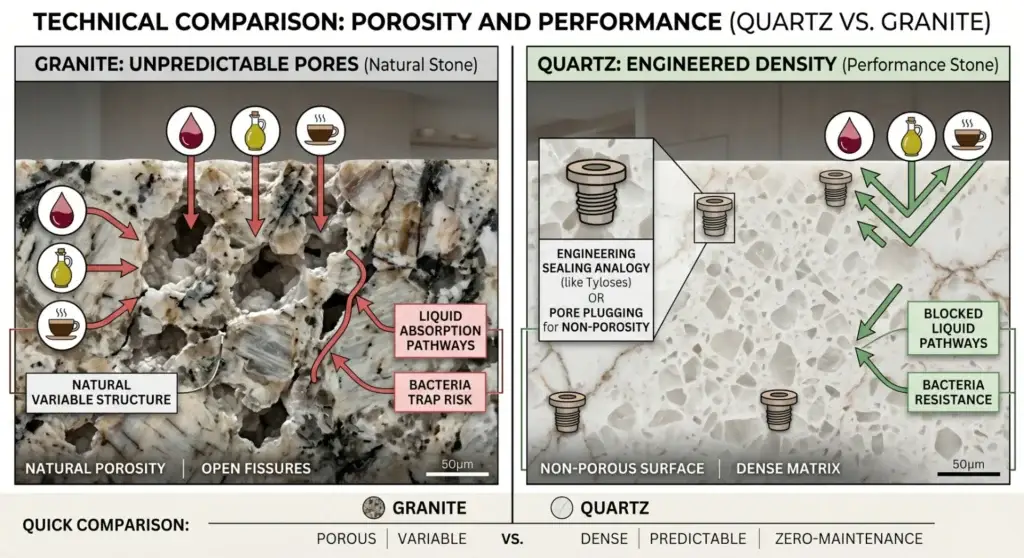
Zero Chemical Sealing: Quartz surfaces are non-porous. Spills from red wine, dark coffee, olive oil, or lemon juice wipe away with a damp cloth without leaving dark stains or absorbing bacteria.
Predictable Aesthetic Flow: When designing large kitchen islands or matching a full-height stone backsplash, quartz provides consistent veining patterns that align smoothly across multiple slabs.
Daily Caution: While quartz is extremely tough and chip-resistant, the resins inside can discolor under direct thermal shock. Homeowners should always use hot pads or trivets beneath screaming-hot cookware.
Natural Granite: Unmatched Organic Character
For homeowners and architects who desire unique natural depth, granite remains a classic luxury statement.
One-of-a-Kind Natural Beauty: Every cut slab of granite is a distinct piece of natural earth art, offering organic crystalline textures that manufactured stone cannot replicate.
Superior Direct Heat Tolerance: Granite is naturally forged in geological heat. It easily withstands hot pots and pans placed directly on the countertop without scorching.
The Maintenance Commitment: Because granite is a natural stone with microscopic pores, it requires a quick topical sealant applied every 6 to 12 months to prevent cooking oils from soaking in. Additionally, because granite slabs are dense and heavy, base cabinets must feature solid 3/4″ plywood boxes to prevent settling cracks along natural stone veins.
Architectural Materiality: Kitchen Countertop Ideas for Oak Cabinets
In contemporary architecture, pairing stone surfaces with natural timber is an exercise in visual balance. When developing millwork packages, reviewing kitchen countertop ideas for oak cabinets requires analyzing the wood’s specific grain direction, cut profile, and surface reflectivity.
Countertop Ideas for White Oak Cabinets
Harmonizing Wood Grain with Stone Character
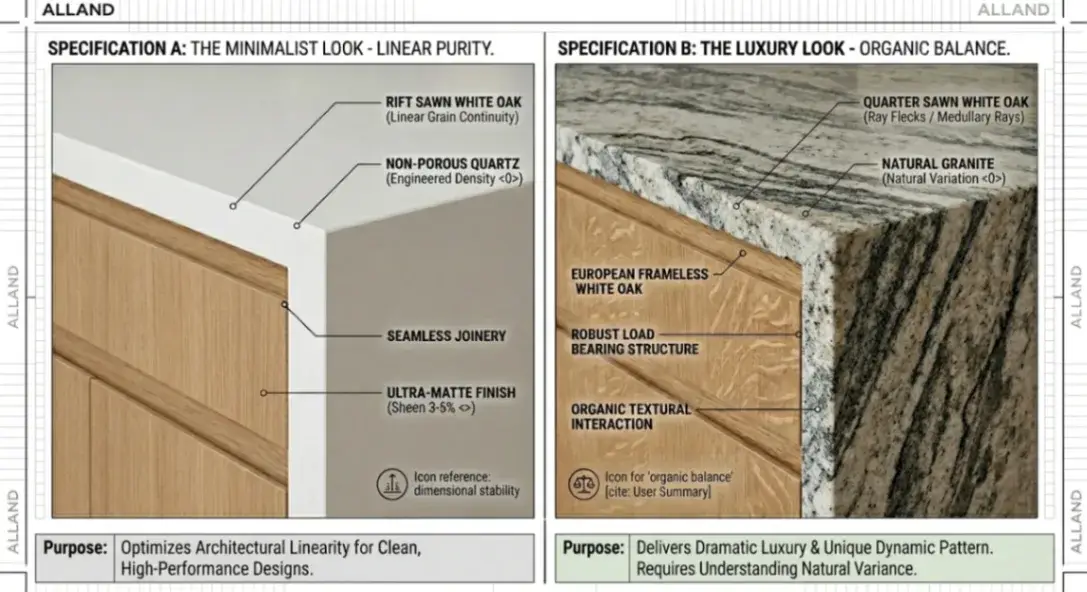
The Minimalist Rift Sawn Pairing: The tight, parallel vertical lines of Rift Sawn White Oak cabinets feature zero cathedral arches. Pairing this disciplined timber with a “Pure Warm White” quartz or a honed “Cast-Concrete” grey creates a calm, linear aesthetic where neither material fights for dominance.
The Dynamic Quarter Sawn Balance: Quarter sawn oak reveals shimmering medullary “Ray Flecks” across its surface. This textural motion pairs with leathered dark granite (such as Absolute Black) or bold, heavily veined Calacatta Quartz, establishing a balanced composition.
Warm Organic Tonal Flow: For transitional residences, pairing wheat-toned natural oak with Taj Mahal Quartzite or creamy, marble-look quartz establishes an inviting, organic atmosphere that reflects soft daylight deep into the home.
Spatial Engineering: The Distance Between Kitchen Counter and Island
Regardless of stone thickness or timber species, a luxury kitchen fails if physical circulation corridors are cramped. Determining the correct distance between kitchen counter and island is governed by strict anthropometric codes.
The 42/48 Clear Walkway Engineering Code
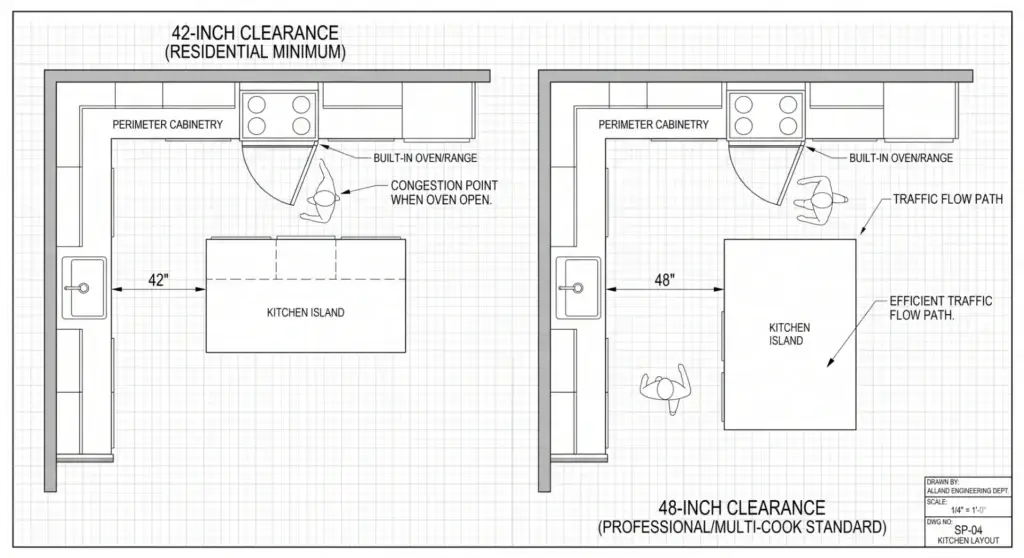
Following the National Kitchen & Bath Association (NKBA) spatial guidelines ensures effortless workflow:
The 42-Inch Residential Baseline: In single-cook layouts, the finished distance from perimeter stone edge to island stone edge must measure a minimum of 42 inches (1,067 mm). This clearance allows lower deep drawer banks to pull out fully without blocking basic walkway passage.
The 48-Inch Professional Standard: In luxury residences where multiple cooks collaborate, a 48-inch (1,219 mm) corridor is required. This allows full-extension 30-inch oven doors and opposing panel-ready dishwasher doors to open simultaneously without colliding.
Cantilever Steel Reinforcement: When specifying deep 15-inch to 18-inch stone seating overhangs, tipping leverage forces escalate dramatically. We pre-route channels into the cabinet top frames to embed 1/2″ (12mm) thick concealed structural steel plates, providing heavy-load cantilever support without requiring awkward diagonal knee-brackets.
Value Engineering: The Most Cost Effective Kitchen Countertops for B2B Builds
For general contractors, multifamily developers, and residential builders, specifying the most cost effective kitchen countertops is an exercise in Value Engineering (VE)—maximizing long-term asset value and aesthetic appeal while driving down the Total Cost of Ownership (TCO).
Factory Pre-Machined Sink & Cooktop Coordination: Sourcing custom cabinetry directly from ALLAND eliminates jobsite fabrication delays. Based on your approved appliance schedules, our CNC centers pre-route under-mount sink cradles, cooktop cutouts, and wire grommets directly into the carcass chassis, reducing on-site trade labor by up to 25%.
Lifecycle ROI Analysis: While entry-level commercial granite may appear cost-effective initially, recurring chemical sealing, tenant stain complaints, and hairline fractures during structural settling significantly increase warranty reserves. Non-porous quartz delivers the highest long-term ROI for multi-family real estate assets.
Factory Quality Standards: Engineering Base Casework for Heavy Stone Loads
To support dense quartz or granite surfaces without sagging, cracking, or binding hardware over time, architectural cabinetry packages must adhere to strict manufacturing protocols before arriving at the jobsite. Sourcing casework directly from an export-focused custom cabinetry factory ensures that dynamic and static loads are engineered into the shop drawings:
Heavy-Load Structural Chassis: High-performance base units must utilize 3/4″ (18mm) CARB-2 / TSCA Title VI birch plywood boxes paired with full-depth interlocking solid-wood I-beam stretchers to support upwards of 1,200 lbs of stone without deflection.
1:1 Shop Drawing & MEP Auditing: Pre-machining precision requires verifying exact appliance cutouts, sink basins, and concealed cantilever steel support plates in CAD before CNC routers touch the board.
100% Factory Dry-Fit QC: To eliminate field adjustments on site, all custom base runs, deep drawer banks, and island modules undergo full horizontal pre-assembly and leveling on the factory floor prior to export packaging.